

War symbols are among the oldest and most powerful forms of human communication ever created. Long before written language spread across civilizations, warriors painted symbols on their shields, carved marks into their weapons, and raised battle flags that enemies could recognize from a distance. These weren’t decorations. They carried meaning, emotion, identity, and fear.
From the Roman eagle standard that legions protected with their lives to the Viking Helm of Awe carved into wood before raids, iconic war symbols shaped how armies fought, how soldiers felt, and how empires presented their power to the world. Understanding these symbols means understanding something deeply human — courage, sacrifice, loyalty, and survival.
Whether you’re researching ancient military emblems, looking for war symbols for tattoos, or simply curious about what different cultures used to represent battle and victory, this complete guide covers over 83 of the most iconic war symbols ever used in human history.
What Are War Symbols?
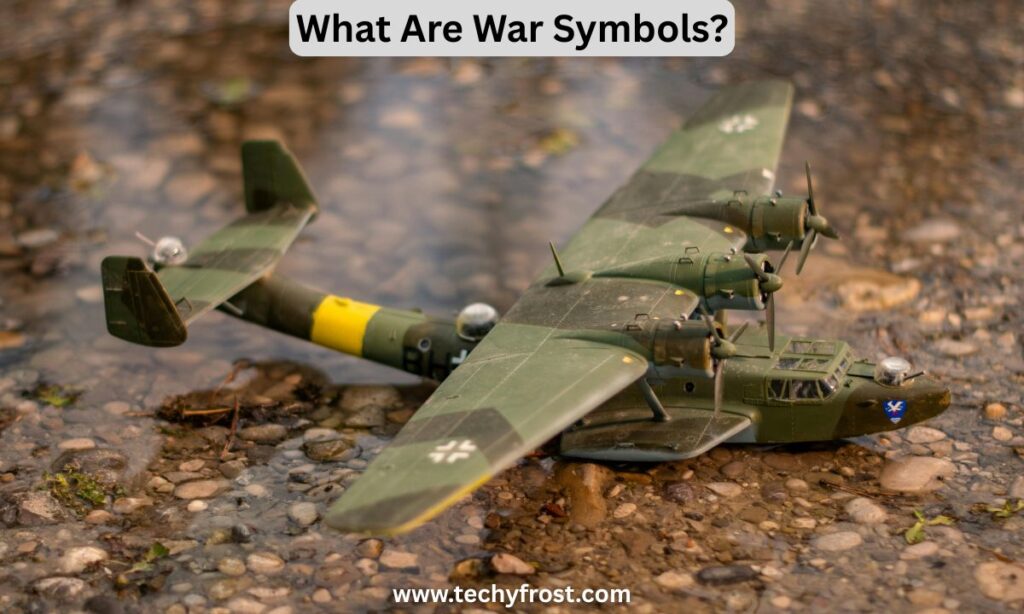
War symbols are visual marks, objects, animals, colors, or emblems directly connected to warfare, military power, victory, protection, or sacrifice. They function as a kind of visual shorthand — instantly communicating strength, allegiance, or warning without a single spoken word.
Historically, they served three key purposes:
- Identification — Soldiers needed to recognize friends from enemies in the chaos of battle.
- Morale — Powerful imagery inspired courage and reminded troops of what they were fighting for.
- Psychological warfare — Terrifying symbols demoralized enemies before a single blow was struck.
Today, war symbols still appear on military insignias, national flags, medals, monuments, and tattoos — a living bridge between ancient battle traditions and modern identity.
Symbols Of War And Their Deep Meanings
Symbols Of War
Across every civilization, certain core images keep reappearing: the eagle, the sword, the shield, the skull, fire, blood-red colors, and armored warriors. These symbols transcend geography because they tap into universal human experiences of danger, courage, and survival.
Here is a quick reference table of the most widely recognized war symbols and their core meanings:
| Symbol | Origin | Core Meaning |
| Eagle | Rome, USA, Aztec | Power, dominance, divine authority |
| Sword | Global | Honor, justice, sacrifice |
| Shield | Global | Protection, defense, identity |
| Skull & Crossbones | Medieval/Pirate/Military | Death, danger, fearlessness |
| Red Poppy | WWI Britain/Commonwealth | Remembrance, fallen soldiers |
| Dragon | Asian/European | Ferocity, chaos, supernatural power |
| Spartan Helmet | Ancient Greece | Discipline, fearlessness, bravery |
| Thor’s Mjolnir | Norse/Viking | Destructive power, divine protection |
| Roman Aquila (Eagle Standard) | Ancient Rome | Military glory, empire, duty |
| Valknut | Norse | Death in battle, Odin’s warriors |
| Torii Gate | Japan | Sacred warrior passage |
| Trident | Greek/Roman | Sea power, war at sea |
| Raven | Norse/Celtic | Battle prophecy, death, wisdom |
| Crescent and Star | Ottoman/Islamic | Faith-based military identity |
| Iron Cross | Germany | Military valor, sacrifice |
| Red Star | Soviet/Communist | Revolutionary warfare |
| Swastika (pre-Nazi) | Ancient global | Solar power (later corrupted) |
| Fleur-de-lis | France/Medieval | Royal military authority |
| Lion | Britain/Persia | Courage, royal power |
| Wolf | Norse/Germanic | Ferocity, pack loyalty |
War Symbolism
War symbolism goes far deeper than just weapons and flags. In many cultures, even colors carried military meaning. Red symbolized blood, aggression, and strength. Black represented death, the unknown, and intimidation. Gold or yellow stood for glory and divine favor. White — ironically — often meant surrender or peace, a concept born directly from battle tradition.
Animals were perhaps the most common symbolic language of war. Eagles soared above enemies. Lions stood for royal courage. Wolves represented pack unity and ferocity. Ravens were seen as messengers of the battlefield gods.
Symbols That Mean War
Not all war symbols are weapons or animals. Some of the most powerful symbols of war are abstract:
- Crossed swords — Conflict, duel, military rank
- Broken chains — Liberation through battle
- Fire — Destruction, but also purification
- Blood-red banner — No mercy, fight to the last
- The fist — Revolutionary resistance and power
- Lightning bolt — Divine military wrath (Zeus, Norse Thor, SS insignia)
War Symbols Copy And Paste
Here are some commonly used war-related Unicode symbols and emojis you can copy and paste:
⚔️ — Crossed swords (conflict, battle) 🛡️ — Shield (defense, protection) 🗡️ — Dagger (combat, assassination) 🏴☠️ — Skull and crossbones flag (pirates, danger) 🪖 — Military helmet (warfare, service) 🎖️ — Military medal (honor, valor) 🔱 — Trident (sea power, Poseidon/Neptune) ⚡ — Lightning bolt (divine power, Zeus/Thor) 🦅 — Eagle (empire, dominance) 🐉 — Dragon (ferocity, mythological war)
War Symbols Tattoos
War symbol tattoos have been popular for centuries. Viking warriors carved runes into their skin. Polynesian warriors wore tribal tattoos as spiritual armor. Today, millions of people wear war-related tattoo designs for deeply personal reasons.
The most popular war symbol tattoo choices include:
- Spartan helmet — Discipline, strength, warrior identity
- Viking runes (Helm of Awe, Valknut) — Courage, Norse heritage, battle protection
- Crossed swords — Honor, conflict, warrior spirit
- Eagle — Freedom, dominance, military service
- Skull — Mortality, fearlessness, defiance of death
- Dragon — Power, ferocity, mythological strength
- Roman SPQR — Classical military heritage, discipline
- Samurai katana — Honor, bushido, Japanese warrior culture
- Red poppy — Remembrance of fallen soldiers
- Mjolnir (Thor’s hammer) — Norse protection, divine warrior strength
Symbols For War
Throughout history, these symbols have officially represented war in art, heraldry, and literature:
- Mars’s spear and shield (Roman mythology)
- Ares’s blood-soaked armor (Greek mythology)
- Crossed muskets (military infantrymen)
- The cannon (artillery power)
- The battle flag (unit identity and morale)
- The war drum (the heartbeat of approaching battle)
Famous Ancient And Historical War Symbols
War Symbols Emoji
Modern emoji culture has incorporated ancient war imagery into everyday digital communication. The ⚔️ crossed swords emoji, originally based on medieval heraldic symbolism, is now used in gaming, sports rivalry, and competitive contexts. The 🛡️ shield emoji represents protection in cybersecurity branding as much as ancient warfare.
War Symbols WW2
World War II produced some of the most visually striking war symbols in modern history. Understanding them is crucial to understanding 20th-century history:
| Symbol | Side | Meaning |
| Iron Cross | Germany | Military valor dating to Napoleonic era |
| SS Bolts (ᛋᛋ) | Nazi Germany | Elite military unit, terror, atrocity |
| Swastika (Hakenkreuz) | Nazi Germany | Corrupted ancient symbol, Nazi ideology |
| Rising Sun Flag | Imperial Japan | Empire, military expansion |
| Red Star | Soviet Union | Communist military power |
| V for Victory | Allied Forces | Resistance, optimism, ultimate victory |
| Uncle Sam Finger | USA | Military recruitment, national duty |
| Red Poppy | Commonwealth Nations | Remembrance of fallen troops |
| Churchill’s V-sign | Britain | Defiance, unbreakable resolve |
War Symbols And Meanings
Every war symbol carries at least two layers of meaning — the original cultural intention, and the meaning it has accumulated through historical events. The swastika, for example, was a sacred solar symbol across ancient India, Greece, and China for thousands of years before the Nazi Party permanently altered its meaning in Western consciousness.
This is why studying war symbols requires historical context. A symbol can shift from sacred to terrifying — or from feared to honored — depending on the hands that carried it.
Ancient War Symbols
Some of the oldest documented war symbols in human history include:
- The Ankh (Egypt) — Warriors carried it for spiritual survival and eternal existence after death in battle.
- The Falcon of Horus (Egypt) — Represented divine military authority; pharaohs carried this symbol into war.
- Achilles’ Shield (Greece) — Described in Homer’s Iliad as a divinely crafted weapon made by the god Hephaestus himself, it became a symbol of warrior supremacy.
- The Carnyx (Celtic) — A tall bronze war horn shaped like a screaming animal, used to terrify enemies with sound before battle began.
- The Mitsu Tomoe (Japan) — A whirlpool symbol of three comma-shaped forms representing Heaven, Earth, and the Underworld, appearing on samurai banners during the Heian era (900–1200 AD).
War Symbols Greek
Greek war symbolism was rich and layered, connected deeply to their pantheon of gods:
- Spear of Ares — The brutal god of war’s personal weapon, representing savage, uncontrolled combat
- Aegis of Athena — The divine shield that represented strategic, wisdom-guided warfare
- Spartan Lambda (Λ) — Painted on every Spartan hoplite’s shield, creating a unified wall of identity in the famous phalanx formation
- Gorgoneion (Medusa’s Head) — Used on shields and armor to terrify enemies with supernatural dread
- Thunderbolt of Zeus — Supreme divine power and military judgment from above
- Owl of Athena — Wisdom in warfare; strategy over brute force
The Greeks made a culturally significant distinction between Ares (savage war) and Athena (strategic war) — a philosophical recognition that not all conflict is the same.
Symbols Of War In Mythology
Mythological war symbols appear across nearly every ancient culture:
- Thor’s Mjolnir (Norse) — Both destructive and protective, this hammer was a warrior’s ultimate divine blessing
- Huitzilopochtli (Aztec) — The Aztec god of war was represented by hummingbird feathers and eagle imagery, linking solar power directly to battle
- Hachiman (Japanese) — The Shinto god of war whose messenger was the dove and whose emblem, the Mitsu Tomoe, appeared on samurai war banners
- Mars’s Sacred Animals (Roman) — The wolf and the woodpecker were sacred to Mars, both representing predatory military instinct
- Odin’s Ravens, Huginn and Muninn (Norse) — These ravens flew over battlefields reporting to Odin, making them symbols of battlefield fate and warrior death
What Symbolizes War?
War is most commonly symbolized by: weapons (swords, spears, arrows), fire and destruction, blood-red colors, armored warriors, predatory animals (eagle, lion, wolf, dragon), battle flags and standards, and skulls representing the mortality that defines every conflict.
Deep Symbolic Meaning of War Symbols
Spiritual Meaning
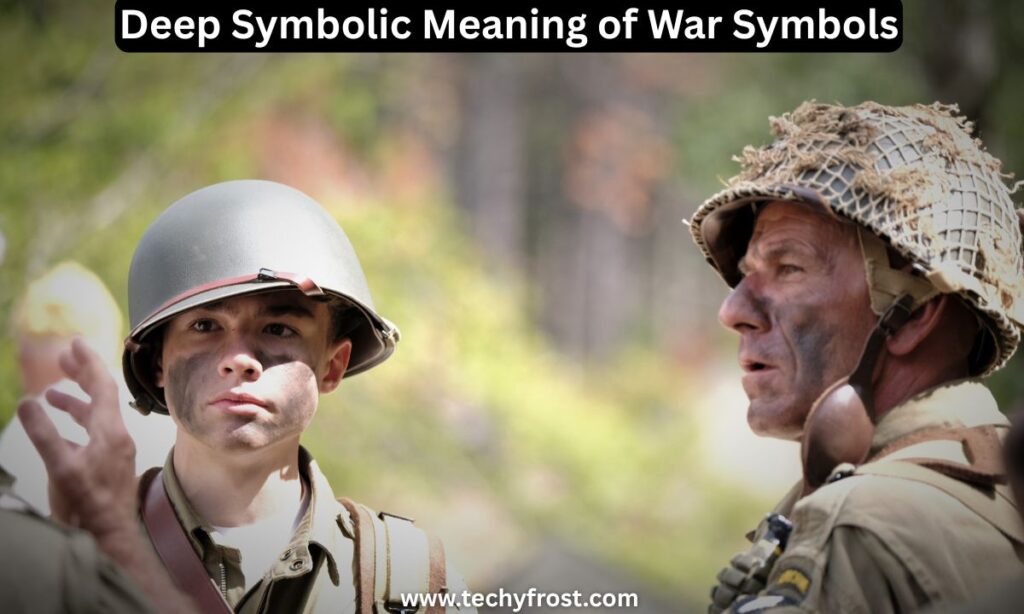
On a spiritual level, war symbols often represent protection, destiny, divine favor, and passage into another state of existence. Many ancient warriors believed that carrying or wearing specific symbols literally invited gods to fight beside them.
The Viking Helm of Awe (Ægishjálmr) was etched on foreheads or carved into helmets not merely as decoration — warriors believed it made them genuinely invincible. Similarly, Japanese samurai prayed to Hachiman before battle, wearing his symbols as a form of divine armor.
War symbols in spiritual traditions also represent the inner battle — the struggle of the soul against fear, weakness, and moral failure. This gives them meaning far beyond military history.
Psychological Meaning
Psychologists recognize that war symbols become powerful when they fuse emotion with identity. They tell complete stories without words. A single symbol on an ancient battlefield can carry centuries of memory, pain, victory, and sacrifice.
War symbols also tap into powerful psychological triggers:
- Fear — Skull and crossbones, dark banners, monstrous imagery
- Pride — National emblems, eagle standards, family crests
- Solidarity — Shared symbols that unify groups under pressure
- Motivation — Imagery that reminds warriors what they fight for
Armies understood this psychology intuitively. That’s why losing a battle standard was considered catastrophic — it wasn’t just a flag, it was the psychological anchor of an entire unit.
Cultural Meaning
Culturally, war symbols serve as identity markers that outlive the warriors who carried them. They become shorthand for entire historical periods, political movements, and national identities. The red poppy now represents Commonwealth remembrance culture. The Rising Sun flag remains deeply controversial in East Asia. The Spartan helmet has become a global symbol of athletic discipline.
War symbols also carry the weight of moral reckoning. As societies reexamine their histories, symbols that once represented pride become contested — a reflection of how war itself is always more complicated than victory or defeat.
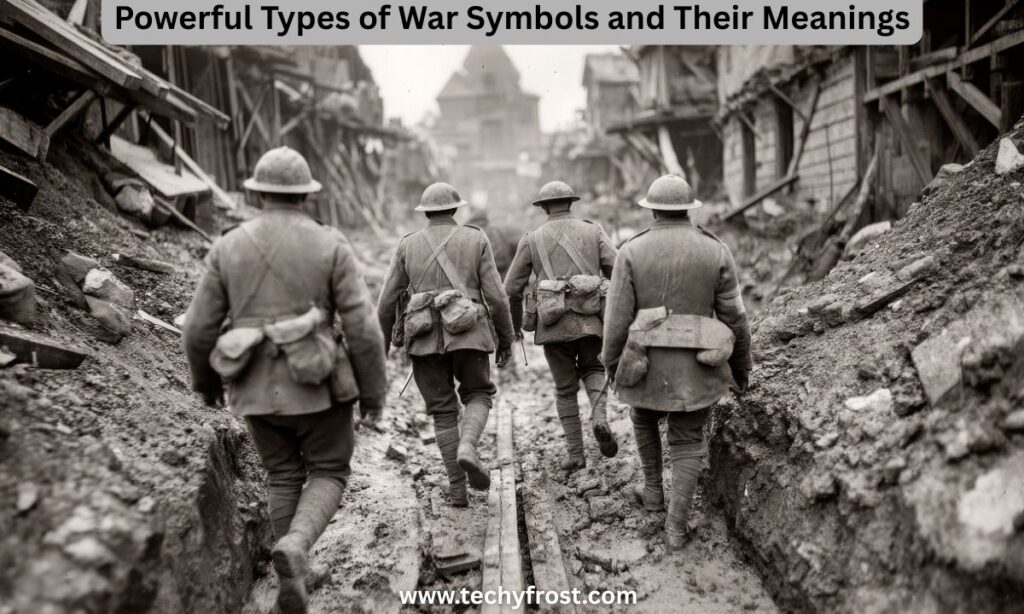
Powerful Types of War Symbols and Their Meanings
Eagle Symbol
Visual Description
A large bird with powerful spread wings, often clutching arrows, a sword, or lightning bolts in its talons. Usually depicted in gold or black, facing left in Western heraldry.
Meaning
Power, dominance, freedom, divine authority, and military victory. The eagle’s ability to soar above all other creatures made it the ultimate symbol of empire-level strength. It sees everything from above — a metaphor for strategic leadership.
Where It Appears
Ancient Rome’s Aquila standards, the US Presidential Seal, Aztec Eagle Warrior orders, Nazi Germany’s Reichsadler, the seal of the Russian Federation, and countless modern military insignias worldwide.
Sword Symbol
Visual Description
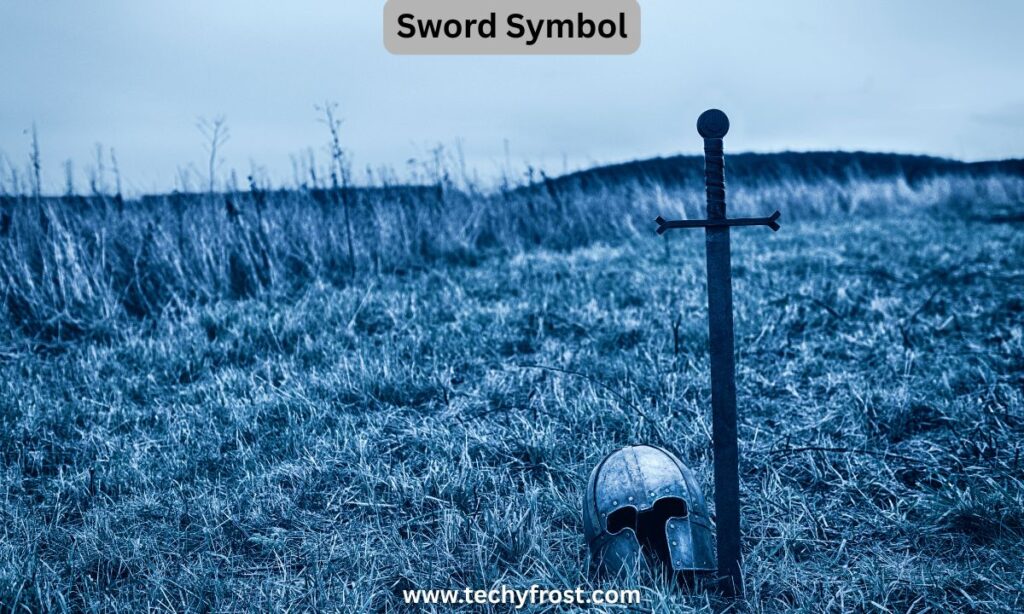
An upright or crossed blade, sometimes wrapped in laurel leaves, flames, or religious imagery. Can appear as a single sword, two crossed swords, or a sword with scales (justice).
Meaning
Honor, justice, sacrifice, and decisive military authority. The sword represents both the power to protect and the power to destroy — making it the most morally complex of all war symbols.
Where It Appears
Every major military tradition in the world, courtroom heraldry, knighthood ceremonies, military rank insignia, religious iconography (Archangel Michael’s flaming sword), and samurai culture.
Skull and Crossbones
Visual Description
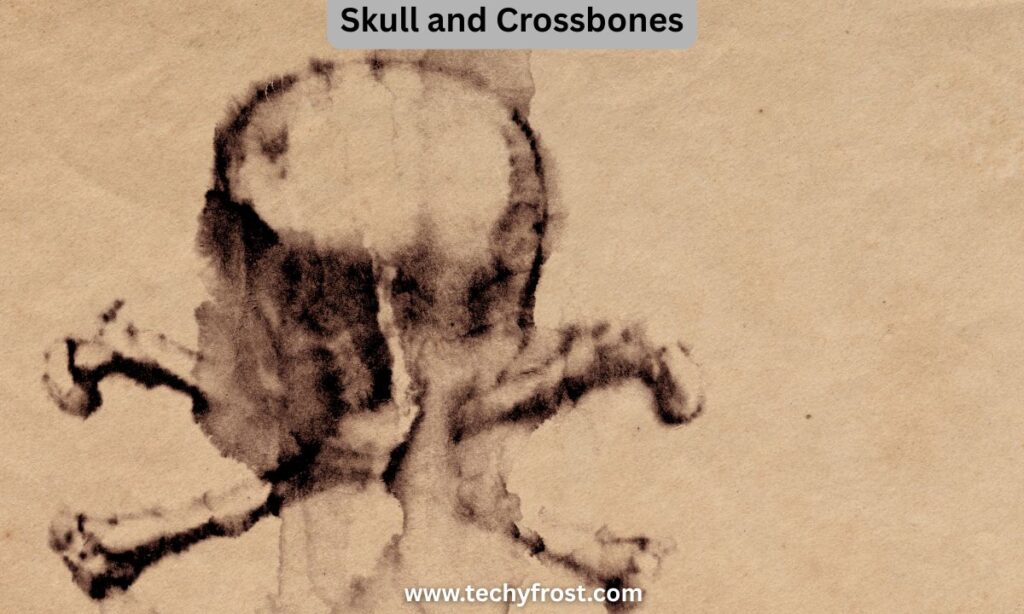
A human skull viewed from the front, placed above two crossed bones, usually femurs. Typically depicted in white on a black background.
Meaning
Death, danger, and fearlessness in the face of mortality. Warriors who displayed skull imagery were sending a direct message: we do not fear death. This psychological weapon often worked.
Where It Appears
Pirate flags (the Jolly Roger), WWI German Death’s Head (Totenkopf) hussar units, motorcycle clubs, poison warnings, WWII SS divisions, and modern military special forces insignia.
Red Poppy Symbol
Visual Description
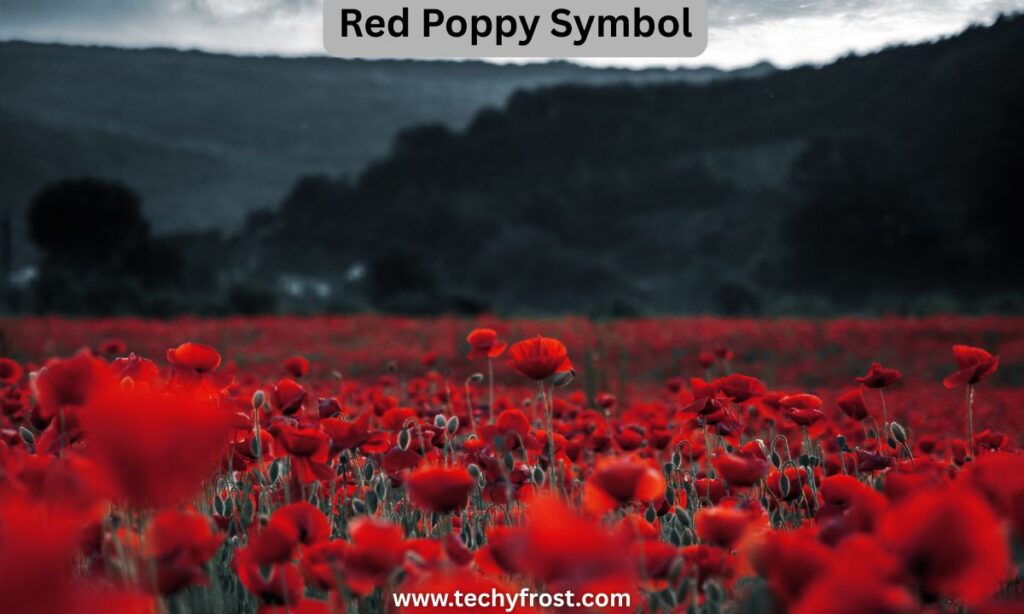
A bright red, four-petaled flower with a dark center, usually depicted as a simple, bold silhouette. Worn as a paper or fabric pin on lapels.
Meaning
Remembrance of soldiers who died in war, particularly WWI. The poppy grew wild across the battlefields of Flanders, Belgium — its blood-red color became permanently associated with the blood of fallen soldiers.
Where It Appears
Commonwealth war memorials, Remembrance Day ceremonies (November 11), military funeral wreaths, and national monuments across the UK, Canada, Australia, and New Zealand.
Shield Symbol
Visual Description
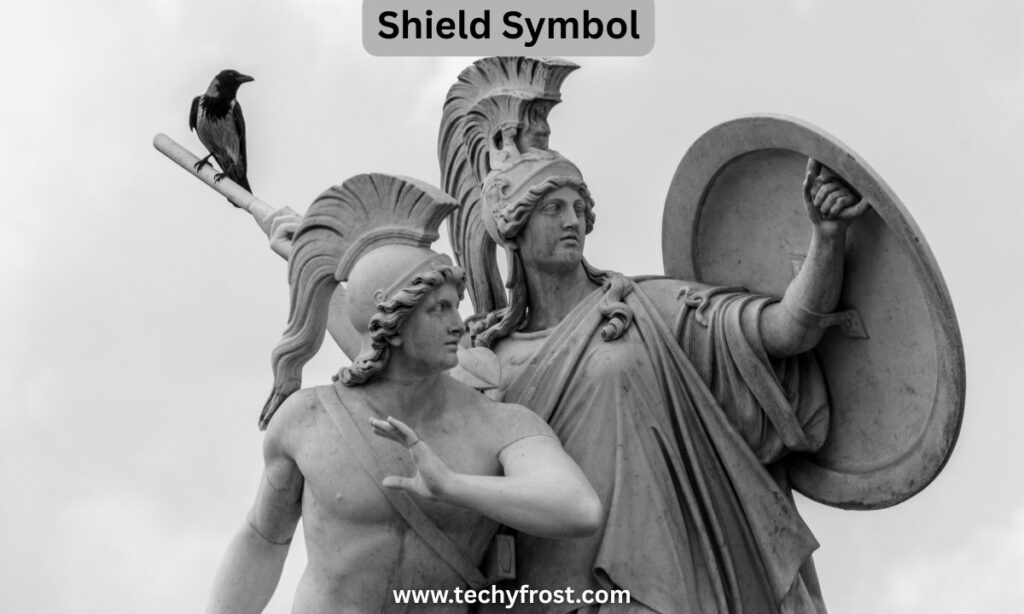
A broad defensive weapon in various shapes — round, kite-shaped, rectangular, or heraldic. Often decorated with clan, family, or national symbols.
Meaning
Protection, defense, resilience, and identity. Achilles’ divinely crafted shield, described in Homer’s Iliad, became one of history’s earliest symbols of warrior superiority and protection.
Where It Appears
Heraldic crests, national coats of arms, police badges, medieval warfare art, Viking ship prows, Native American ceremonial shields, and modern cybersecurity branding.
Dragon Symbol
Visual Description
A large serpentine or reptilian creature, often winged, breathing fire. In East Asian traditions, depicted as long, scaled, and benevolent. In European traditions, shown as more terrifying and destructive.
Meaning
In Asian cultures: divine power, protection, imperial authority, and supernatural military strength. In European cultures: chaos, destruction, and a powerful enemy to be slain. This cultural split makes the dragon one of the most fascinating war symbols ever recorded.
Where It Appears
Welsh national flag (the Red Dragon), Imperial Chinese military standards, Viking longship prows, medieval European heraldry, Japanese clan symbols, and fantasy warfare in popular culture.
War Symbols Across Cultures
Ancient Roman Culture
Romans used the eagle (Aquila) as the supreme symbol of military authority. Each legion carried a single eagle standard into battle, and it represented the soul of the unit itself. Soldiers would die rather than allow an enemy to capture their eagle — losing it brought permanent shame to the entire legion.
Other key Roman war symbols included:
- SPQR (Senatus Populusque Romanus) — The Senate and People of Rome; stamped on shields, armor, and standards
- The Fasces — A bundle of rods with an axe, representing collective Roman military power
- Mars’s Wolf — Sacred to the war god, representing predatory military instinct
- Laurel Wreath — Awarded to victorious generals as the supreme symbol of military triumph
Viking Culture
Vikings believed symbols provided literal supernatural protection in battle. Key Norse war symbols included:
- Helm of Awe (Ægishjálmr) — Eight runic arms radiating from a center; etched on foreheads to induce fear in enemies and courage in the wearer
- Valknut — Three interlocked triangles associated with Odin and death in battle; found on warrior burial stones
- Mjolnir — Thor’s hammer, worn as a pendant for divine protection during raids
- Vegvísir — A runic compass believed to guide warriors safely through storms and battles
- Ravens — Odin’s ravens represented battlefield fate; Viking ships often bore raven imagery
Warriors painted these symbols on shields, weapons, and ships — creating a complete symbolic war environment.
Japanese Samurai Culture
Samurai war symbols reflected the core bushido values of honor, loyalty, and discipline.
- Mon (Family Crests) — Unique clan symbols used for battlefield identification, worn on armor and banners
- Katana — The samurai sword was not merely a weapon but a sacred object believed to contain the warrior’s soul
- Cherry Blossom (Sakura) — Represented the brief, beautiful nature of a warrior’s life — blooming brilliantly and falling quickly
- Mitsu Tomoe — A triple comma whirlpool symbol on samurai banners representing Heaven, Earth, and the Underworld
- Torii Gate — Sacred passage symbolizing the warrior’s journey between the mortal and spiritual worlds
Native American Cultures
Many Native American tribes used rich symbolic systems during warfare. Key examples include:
- War paint colors — Red meant strength and readiness for battle; black symbolized victory and aggression; white represented peace
- Eagle feathers — Warriors earned individual feathers for specific acts of bravery; wearing them was a record of military achievement
- Bear imagery — Represented ferocity, physical strength, and warrior endurance
- Thunderbird — A powerful supernatural being associated with storms, war, and divine protection of the people
- Tomahawk — Both a practical weapon and a deeply symbolic object used in war declaration and peace-making ceremonies
Medieval European Culture
Medieval European warfare produced some of history’s most elaborate symbolic systems through heraldry:
- Lion Rampant — The most popular heraldic symbol; used by English, Scottish, and Persian rulers to represent royal courage
- Fleur-de-lis — The royal flower of France; appeared on battle standards representing divine royal military authority
- Cross symbols — Crusader crosses represented Christian military mission; different orders used different cross designs
- Griffin — Half-eagle, half-lion; represented the dual qualities of the ideal warrior: aerial vision and earthly power
- The Black Knight — Dark, anonymous armor represented mystery, fear, and unidentified military power
War Symbols in Art, Movies and Pop Culture
In Movies
War symbols permeate cinema history. The Imperial eagle in Star Wars was directly inspired by real historical war imagery — specifically the Roman Aquila and Nazi Reichsadler. 300 brought Spartan military symbolism — the lambda shield, the crimson cloak, and the phalanx wall — into mainstream global consciousness. The Lord of the Rings trilogy drew heavily on Norse, Celtic, and medieval European war symbolism for its faction designs.
In Paintings
Francisco Goya’s Disasters of War series used skeletal imagery and fire to symbolize the moral horror of armed conflict. Eugène Delacroix’s Liberty Leading the People used the tricolor flag and a female warrior figure as revolutionary war symbols. Ancient Roman friezes and Greek pottery used the eagle, the spear, and the shield to commemorate military victories for eternity.
In Books
Homer’s Iliad is essentially a study in war symbolism — Achilles’ shield, Hector’s armor, and the walls of Troy all carry layers of symbolic meaning. Tolkien’s deep knowledge of Norse and Celtic mythology filled The Lord of the Rings with authentic war symbolism. Sun Tzu’s The Art of War discusses the psychological power of military symbols extensively.
In Tattoos
War symbol tattoos have become one of the most popular tattoo categories globally. Veterans often wear their unit insignia permanently. Civilians choose war symbols for personal resonance — the Spartan helmet for discipline, the eagle for freedom, the skull for facing mortality without fear. Viking rune tattoos surged in popularity through TV series like Vikings and The Last Kingdom.
In Fashion
Warrior and military symbolism has deeply influenced fashion. Camouflage prints originated as military concealment technology. The skull motif, popularized by Alexander McQueen, draws on pirate and memento mori war traditions. SPQR, Spartan, and Viking-inspired clothing brands have built entire identities around ancient military symbolism.
Spiritual and Dream Meaning of War Symbols
Seeing Swords in Dreams
A sword in a dream typically represents a decision that must be made, a conflict approaching, or the need for personal courage. A broken sword warns of vulnerability or defeat. Drawing a sword suggests readiness to face a challenge. Being given a sword by a figure of authority suggests empowerment and new responsibility.
Seeing Flags or Banners
Dreaming of a battle flag or war banner often reflects feelings of loyalty, identity, and belonging. A torn or fallen flag can represent disillusionment with a group or cause. Raising a flag in a dream suggests victory, pride, or establishing identity in a new situation.
Seeing Battles or Armor
Witnessing or participating in a battle in a dream often represents an internal struggle — competing values, unresolved conflicts, or the feeling of being overwhelmed by external pressures. Wearing armor in a dream suggests emotional protection, the need to guard oneself, or preparation for a difficult period ahead.
Positive vs Negative Meaning of War Symbols
Positive Meanings
Despite their violent origins, war symbols carry many genuinely positive meanings:
| Symbol | Positive Meaning |
| Eagle | Freedom, vision, leadership |
| Shield | Protection of the vulnerable |
| Red Poppy | Remembrance, gratitude, peace |
| Spartan Helmet | Discipline, athletic excellence |
| Crossed Swords | Honor, fair combat, justice |
| Laurel Wreath | Achievement, excellence, recognition |
| Warrior Armor | Resilience, preparation, strength |
| Battle Flag | Unity, shared identity, belonging |
Negative Meanings
The same symbols carry darker shadow meanings:
| Symbol | Negative Meaning |
| Skull & Crossbones | Death, poison, terror |
| Broken Shield | Defeat, vulnerability |
| Blood-red banner | No mercy, destruction |
| Chains | Conquest, enslavement |
| Raven | Death omens, battlefield loss |
| Corrupted Swastika | Hatred, genocide, extremism |
| Burning Flag | Defiance, desecration, conflict |
The dual nature of war symbols reflects the dual nature of war itself — it contains both the best and worst of human behavior simultaneously.
Why Humans Are Attracted to War Symbols
The attraction to war symbols runs deeper than simple fascination with violence. Humans are drawn to them for several compelling reasons:
1. They represent extreme human experience. War is the most intense test of human character — courage, sacrifice, loyalty, and survival under impossible pressure. War symbols carry that intensity in compressed visual form.
2. They connect us to ancestry and heritage. When someone wears a Viking rune or a Roman SPQR tattoo, they’re reaching across centuries to connect with ancestors who faced the ultimate test and survived.
3. They externalize inner battles. Many people who adopt war symbols are not thinking about literal warfare. They see their personal struggles — illness, loss, depression, hardship — reflected in warrior imagery. The symbol becomes a declaration: I am still fighting.
4. They represent communities and belonging. Military units, sports teams, biker clubs, and subcultures adopt war symbols because they create instant group identity. The symbol says: we stand together.
5. They carry aesthetic power. Eagles, dragons, crossed swords, and armored warriors are visually dramatic. They communicate strength and drama in a way that few other symbols can match.
6. They preserve memory. Without symbols, the sacrifices of fallen warriors would fade from cultural memory entirely. War symbols ensure that the people who fought and died are not forgotten.
Psychologists believe that symbols become most powerful when they combine emotion with identity and memory — and war symbols do all three simultaneously, which is why they have survived for thousands of years across every human civilization on Earth.
Conclusion
War symbols are not relics of a violent past. They are living documents of human experience — testaments to courage, identity, sacrifice, and the complex moral reality of conflict. From the Roman eagle that legions protected with their lives to the red poppy pinned to lapels every November, these symbols continue to shape how we understand history, honor sacrifice, and carry warrior traditions into modern life.
Whether you’re drawn to war symbols for their historical significance, their spiritual meaning, their aesthetic power, or their connection to personal heritage, each one carries a story worth understanding. The deeper you look into these symbols, the more you discover about the civilizations that created them — and about what it means to be human in the face of the most extreme circumstances life can offer.
Frequently Asked Questions
What are the most famous war symbols in history? The Roman Aquila, Spartan lambda, Viking Helm of Awe, and red poppy are among the most recognized war symbols across history.
What does a sword symbolize in war? A sword symbolizes honor, justice, sacrifice, and decisive military authority — the power to both protect and destroy.
What is the war symbol emoji? The ⚔️ crossed swords emoji is the most widely used war symbol in digital communication, representing conflict, battle, or rivalry.
What do war symbols mean in dreams? War symbols in dreams typically represent internal conflict, approaching challenges, the need for courage, or unresolved emotional struggles.
Why did ancient armies use symbols? Ancient armies used symbols for identification on the battlefield, to boost soldier morale, and to psychologically intimidate their enemies.
What is the most universal symbol of war? The crossed swords or sword symbol appears in virtually every military culture in history, making it the most universally recognized war symbol.
Are war symbols used in tattoos? Yes — Spartan helmets, Viking runes, eagles, skulls, and crossed swords are among the most popular war-related tattoo designs worldwide.
What do war symbols mean spiritually? Spiritually, war symbols represent divine protection, courage, destiny, and the soul’s journey through hardship toward transformation.

