

From ancient temple carvings to modern tattoo studios, the symbols of Artemis have never truly disappeared. They have simply changed addresses. Whether you encounter a silver crescent moon hanging in a jewelry shop, a deer motif printed on a canvas, or a silver bow raised in a fantasy novel, you are brushing against one of the oldest symbolic languages in human history. Artemis, the Greek goddess of the hunt, wilderness, and the moon, left behind an extraordinarily rich visual legacy that scholars, artists, spiritual seekers, and everyday people continue to draw from thousands of years after her temples fell silent.
This article explores every major Artemis symbol in depth — what each one meant to the ancient Greeks, how those meanings shifted across civilizations, and why these sacred icons still carry psychological and spiritual weight today. By the end, you will understand not just what Artemis symbols look like, but what they genuinely communicate about freedom, protection, and the raw power of the natural world.
What Are Artemis Symbols?
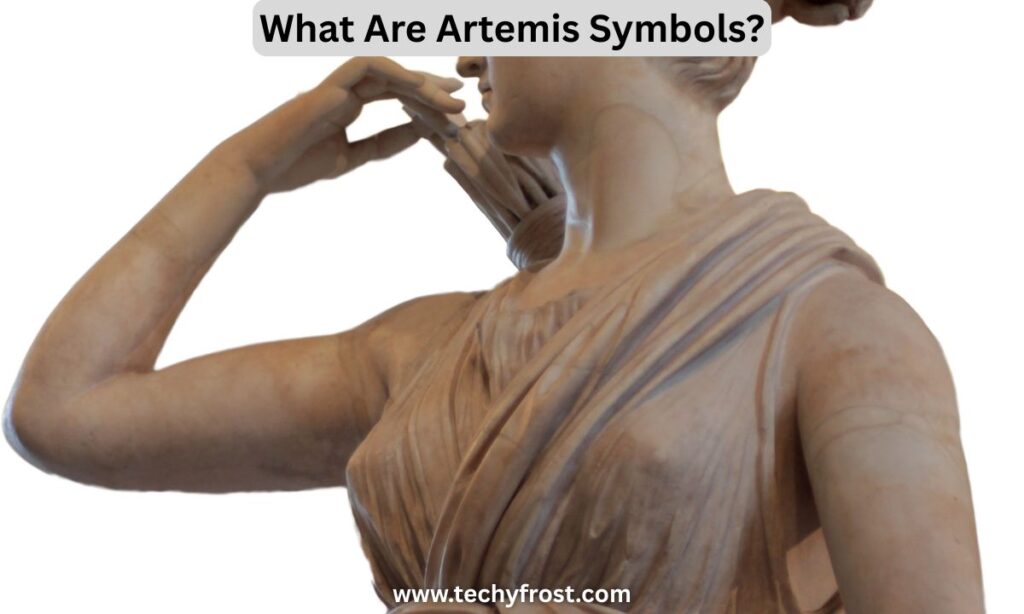
Artemis symbols are the visual, natural, and mythological representations associated with Artemis, daughter of Zeus and Leto, and the twin sister of Apollo. She ruled over wild animals, the hunt, virginity, childbirth, and the protection of young girls and women. Unlike many Olympian deities who were celebrated for their beauty or romantic conquests, Artemis defined herself through autonomy, precision, and an unbreakable bond with the untamed world.
Her symbols reflect exactly that identity. They are not ornamental. Every icon tied to Artemis — the silver bow, the crescent moon, the deer, the cypress tree, the bear — points to specific domains of her divine power. Together, they form a complete symbolic portrait of a goddess who stood apart from the softer domestic ideals of ancient Greek femininity and instead ruled the forests, mountains, and moonlit skies.
Understanding Artemis symbols means understanding a theology of independence. These are not passive emblems. They are declarations.
Artemis Symbols And Meanings

Artemis Goddess
Artemis was one of the twelve Olympian deities and among the most widely worshipped goddesses in the ancient Greek world. She was the daughter of Zeus, the king of the gods, and the Titaness Leto. Born on the sacred island of Delos — one of the few places that dared to shelter her mother from Hera’s jealous wrath — Artemis was said to have emerged first from the womb and immediately turned to assist in the birth of her twin brother Apollo. That single act of birth-assistance became one of the foundations of her identity as protector of childbirth and young life.
She roamed forests and mountains attended by a devoted company of nymphs, all of whom shared her vow of chastity. She was the embodiment of what the Greeks called Potnia Theron, meaning “Mistress of Animals.” Her domain was not the cultivated field or the city square — it was the wilderness beyond human control, the dark wood, the high mountain, the river crossing at night.
Artemis Powers
Artemis possessed a formidable range of divine powers that her symbols directly reflected:
- Hunting mastery: She was an infallible archer. No creature could outrun her arrow, and no target was beyond her reach.
- Protection of wildlife: She guarded wild animals and punished those who hunted without reverence. When King Agamemnon killed one of her sacred stags, she stilled the winds and demanded restitution.
- Childbirth and midwifery: Despite her virginity, Artemis oversaw the safe delivery of children, extending her protection to mothers in labor.
- Lunar influence: She governed the cycles of the moon, affecting tides, seasons, and the rhythms of natural life.
- Disease and healing: Her arrows could bring sudden sickness or painless death, particularly to women. She was both the bringer of plague and its cure.
- Guardian of young girls: She served as the divine protector of girls from birth through the transition to womanhood.
Artemis Meaning In Bible
The name Artemis appears in the New Testament, specifically in the Book of Acts (Acts 19:23–41). The Artemis referenced there is the Artemis of Ephesus — a localized, distinctly different version of the goddess from the classical Greek huntress. According to biblical accounts, a silversmith named Demetrius stirred up a riot in Ephesus because the Apostle Paul’s preaching threatened the lucrative trade in silver shrines dedicated to the goddess. The crowds filled the city theater shouting “Great is Artemis of the Ephesians” for two hours.
The Ephesian Artemis was primarily a goddess of fertility, virginity, and the protection of childbirth. Her temple, the famous Temple of Artemis at Ephesus, was considered one of the Seven Wonders of the Ancient World. Biblical scholars note that she functioned more as an earth mother deity — a “queen of heaven” — than a huntress. Her name in Greek, derived from roots suggesting “safe and sound” or “soundness and recovery,” carried meanings of divine protection and wholeness.
Artemis Roman Name
In the Roman religious tradition, Artemis was identified with the goddess Diana. The name Diana comes from the Latin root dium, associated with light, the sky, and the brightness of day. While Diana largely inherited Artemis’s attributes — the hunt, the moon, wild animals, and the protection of women — the Roman adaptation gave the goddess a somewhat warmer, more accessible character. Diana became enormously popular among common Roman citizens and was worshipped with great fervor in sacred groves, particularly the famous sanctuary at Lake Nemi near Rome. The Romans celebrated her feast on August 13, a date that fell within the hunting season.
Artemis Personality
Few Greek deities display as clear and consistent a personality across myths as Artemis. Her defining traits include:
- Fierce independence: She asked her father Zeus for eternal virginity and the freedom to roam the wilderness without constraint. He granted both without hesitation.
- Protectiveness: She was intensely loyal to those under her care — her nymphs, young girls, pregnant women, and the animals of the wild.
- Swift and merciless justice: She punished violations of her domain without deliberation. Actaeon, who accidentally stumbled upon her bathing, was transformed into a stag and torn apart by his own hunting dogs.
- Compassion alongside severity: She interceded to save Iphigenia at the last moment, substituting a deer in her place on the sacrificial altar. She could be brutal, but she was never gratuitous.
- Self-sufficiency: Unlike Aphrodite or Hera, Artemis neither sought nor required the approval or love of men. She was complete within herself.
Who Was Artemis In The Bible?
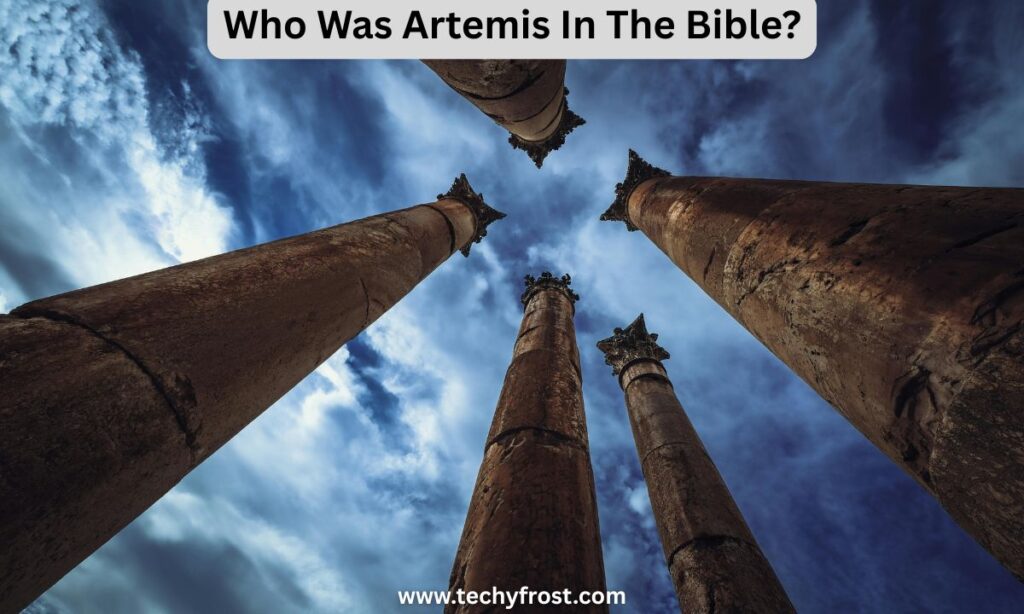
The Artemis mentioned in the Bible was the patron goddess of Ephesus, a city in what is now western Turkey. She was not identical to the classical Greek Artemis, though she shared the name. The Ephesian goddess was an ancient Anatolian deity of fertility, nature, and protective motherhood who absorbed the Greek name and some Greek attributes over centuries of cultural exchange. Her statues — depicting a standing figure covered with rows of protuberances on her chest, surrounded by wild animals in her skirts — bear little resemblance to the slender huntress of Greek myth. Some scholars identify her with the Phrygian mother goddess Cybele and similar Near Eastern deities including Astarte and Ishtar. What the biblical account confirms is that her worship was economically and culturally central to Ephesus, so powerful that a religious dispute over her shrines nearly turned into a city-wide riot.
Artemis Constellation
Artemis is not directly named in a constellation, but her influence is embedded deeply in the night sky through mythology. The most significant connection is the constellation Orion, the great hunter who appears in legend as either Artemis’s companion or the man she inadvertently killed — depending on which version of the myth you follow. One story holds that Apollo, wishing to preserve his sister’s chastity, tricked Artemis into shooting Orion herself. When she realized what she had done, she placed him among the stars in grief.
The Ursa Major (Great Bear) and Ursa Minor (Little Bear) constellations connect to Artemis through the story of Callisto, one of her devoted nymphs. When Callisto was discovered to be pregnant after being seduced by Zeus, Artemis transformed her into a bear. Zeus later placed Callisto in the sky as Ursa Major, with her son Arcas nearby as Ursa Minor. The bear constellations, therefore, are among the most direct celestial symbols of Artemis’s domain.
Deep Symbolic Meaning of Artemis Symbols
Spiritual Level
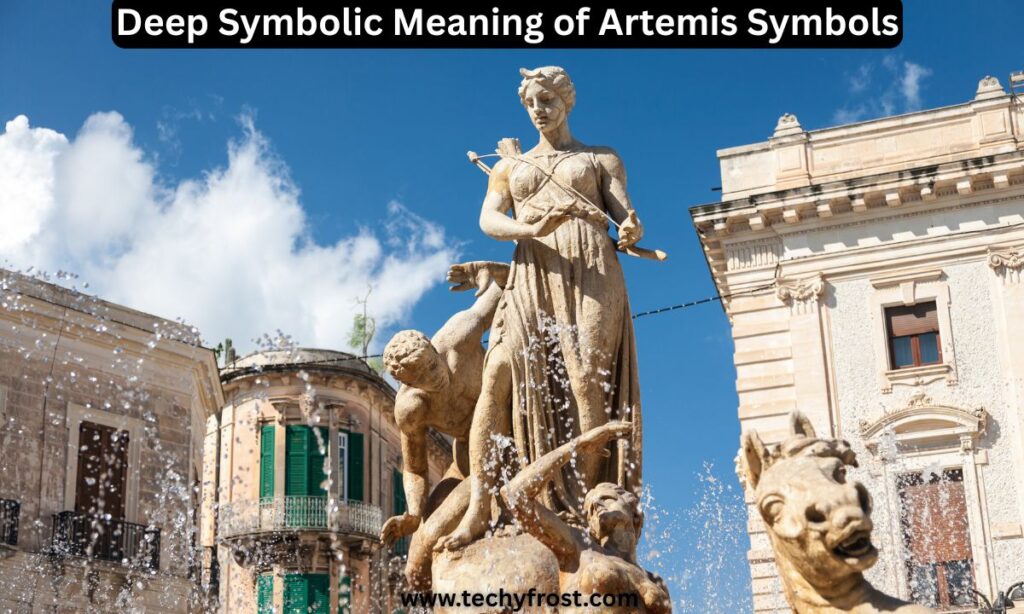
On a spiritual level, Artemis symbols represent the sacred feminine in its most untamed, sovereign form. The crescent moon aligns her with the rhythms of nature — the waxing and waning of life, the cycles of growth and release that govern everything from the tides to the seasons of the human soul. Her bow represents focused intention: spiritual arrows drawn back in preparation, aimed with clarity, released without hesitation. In many goddess traditions, Artemis is invoked for protection, for courage in solitude, and for the ability to navigate wild or uncertain terrain — both literal and metaphorical.
The deer, particularly the sacred golden-horned Ceryneian Hind, represents the soul’s natural state before it is captured and domesticated by social expectation. Artemis herself could never be tamed, and her sacred animals shared that quality. To connect with Artemis symbols spiritually is to affirm the value of inner wilderness — the part of the self that refuses to be fully civilized.
Psychological Level
The Swiss psychiatrist Carl Jung and his followers — particularly Jean Shinoda Bolen in her landmark work Goddesses in Everywoman — identified Artemis as a core psychological archetype. She represents the aspect of the psyche that values independence over relationship, mission over belonging, and principle over compromise. People who strongly identify with the Artemis archetype tend to be fiercely goal-oriented, deeply connected to nature, protective of vulnerable people and creatures, and resistant to being defined by their relationships to others.
Her symbols carry psychological weight precisely because they represent untapped autonomy. The bow pulled back is not aggression — it is readiness. The crescent moon is not darkness — it is the quiet before transformation. The wilderness she inhabits is not emptiness — it is space for the self to exist undistorted by the demands of civilization.
Cultural Level
Culturally, Artemis symbols functioned as markers of specific social roles and transitions in ancient Greece. Young girls in Athens participated in the ritual of the arkteia at Brauron, where they “played the bear” — enacting a rite of passage under Artemis’s protection before they were considered ready for marriage. The bear, the deer, and the wilderness symbols were not merely decorative in this context; they were the sacred grammar of coming-of-age. Artemis symbols marked the threshold between girlhood and womanhood, between wild freedom and social contract.
In later periods, her symbols became associated with chastity movements, female independence, and the rejection of patriarchal norms. This cultural valence has only deepened in the modern era, where Artemis symbols have been reclaimed by feminist spiritual movements as icons of female autonomy.
Types and Variations of Artemis Symbols
1. The Silver Bow and Arrows
The silver bow is the most universally recognized symbol of Artemis, and rightly so. According to myth, her bow and arrows were forged for her by the Cyclopes at the request of the god Hephaestus — gifts given when she was still a child and made her formal request to Zeus for the equipment of a huntress. The silver color distinguished her weapon from the golden bow of Apollo, linking her specifically to the moon rather than the sun.
| Aspect | Meaning |
|---|---|
| Silver material | Lunar energy, purity, female power |
| The draw | Focused intention, readiness |
| The release | Swift justice, decisive action |
| The arrow in flight | Purpose, precision, inevitability |
| The quiver | Infinite capacity for action |
In ancient statuary, Artemis is typically shown with her bow either relaxed at her side or drawn back at full tension — two modes that perfectly capture her dual nature as guardian and avenger. Her arrows could deliver swift death to women dying in childbirth (a mercy) or punish those who violated her sacred spaces (a warning).
2. The Crescent Moon
The crescent moon became Artemis’s celestial emblem as her identity merged over time with the lunar goddess Selene and, to some degree, with Hecate. Ancient artworks show a crescent moon resting on her forehead like a crown — a celestial diadem that marked her as sovereign of the night sky.
The crescent specifically, rather than the full moon, carries particular meaning. The crescent represents the moon in transition — neither fully formed nor fully absent. This liminal state aligns perfectly with Artemis’s role as goddess of thresholds: the moment before birth, the edge of the forest before civilization begins, the instant between drawing and releasing the bow. Modern spiritual practitioners and Wiccans consider the crescent moon one of the most potent symbols of the divine feminine in its independent, pre-partnered form.
3. The Deer (especially the Ceryneian Hind)
The deer is perhaps Artemis’s most intimate animal symbol. She was often depicted riding a chariot pulled by golden-antlered deer. The most mythologically significant of her deer was the Ceryneian Hind — an extraordinary creature with golden horns and bronze hooves, sacred to Artemis, which Heracles was tasked with capturing as his third labor. The point of the myth is not that the deer was captured, but that even Heracles — the greatest of Greek heroes — had to struggle and negotiate carefully to do so without killing it, and ultimately had to return it.
The deer as an Artemis symbol represents grace under pressure, the sacred nature of wild life, and the principle that some things are not meant to be owned. It also symbolizes Artemis’s compassion: the gods and the myth both affirm that this creature deserves to run free.
4. The Bear
The bear is one of Artemis’s oldest symbols, predating many of her other associations and rooted in pre-Hellenic religious traditions. At her sanctuary at Brauron in Attica, young Athenian girls performed the arkteia — a ritual in which they dressed in saffron robes and enacted bear-like behavior — before being considered ready for adult female life. A sacred bear lived at the sanctuary, and its accidental killing by a hunter was considered a grave religious offense.
The bear as an Artemis symbol carries meanings of raw maternal power, fierceness in protection of the young, and the cyclical nature of hibernation and renewal. The she-bear in particular — a mother protecting her cubs — mirrors Artemis’s role as a protector of young girls and children.
5. The Cypress Tree
The cypress tree is a tall, evergreen, narrow tree that has been associated with sacred spaces, mourning, and immortality across Mediterranean cultures. In Artemis’s case, cypress groves were planted at her sanctuaries and were considered sacred to her specifically because of the tree’s enduring nature — it stays green throughout the year, bending in the wind but never breaking.
The cypress represents the permanence of the wilderness itself. While human lives are seasonal, the wild world endures. It also connects Artemis to the underworld and to transition: the cypress appears at thresholds between life and death, between the human world and the divine domain. Sacred groves of cypress were inviolable spaces — to cut them was to invite the goddess’s wrath.
6. The Quiver and Hunting Boots
Less celebrated than the bow but equally important in classical iconography, the quiver and hunting boots complete the practical portrait of Artemis as an active, mobile deity. Unlike the seated goddesses of hearth and home, Artemis was always shown in motion — her skirt hitched up for running, her boots laced for rough terrain, her quiver slung across her back with arrows ready.
These symbols communicate something vital: Artemis’s divinity is not passive or receptive. It is kinetic. She goes to the wilderness rather than waiting for the wilderness to come to her. The quiver, holding multiple arrows, also speaks to her preparedness — she is never caught without resources. The hunting boots root her in the earth even as the crescent moon on her brow connects her to the sky.
Artemis Symbols Across Cultures
Ancient Greece
In classical Greece, Artemis symbols appeared in temple sculpture, pottery painting, and coinage across hundreds of city-states. She was worshipped as Artemis Orthia in Sparta, where her rituals included endurance competitions. In Athens, the festival of Brauronia honored her with processions and the bear rites already described. On the island of Delos, her birthplace, she was venerated alongside Apollo in a major sanctuary that drew pilgrims from across the Greek world.
Ephesus (Asia Minor)
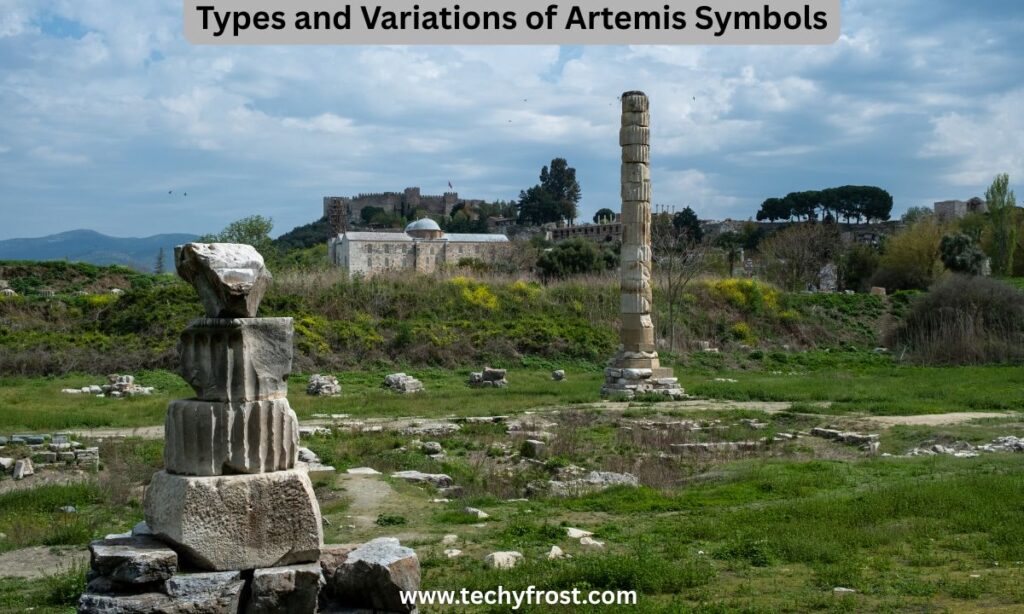
The Temple of Artemis at Ephesus, one of the Seven Wonders of the Ancient World, housed a dramatically different symbolic vocabulary. The Ephesian Artemis was depicted as a multi-breasted (or multi-ornamented) standing figure covered in wild animals from neck to hem. Her symbols here emphasized fertility, abundance, and the nurturing of all living things rather than the hunt. Archaeological excavations at Ephesus have unearthed thousands of votive offerings — jewelry, mirrors, clothing, and small figurines — left by women seeking her protection in pregnancy and childbirth.
Roman Empire
The Romans worshipped Artemis as Diana, absorbing her symbols wholesale but adapting their meaning to Roman sensibility. Diana became particularly popular among the lower classes and rural populations, who identified her with the freedom of the forest and protection during difficult journeys. Her sacred grove at Nemi hosted the famous “King of the Wood” ritual — a priesthood maintained through combat that fascinated later scholars including Sir James George Frazer, who made it the opening image of The Golden Bough.
Modern Neopaganism
In contemporary Wiccan and neopagan practice, Artemis symbols are among the most actively used of any Greek deity. The silver bow, crescent moon, and deer appear on altars, in ritual jewelry, and in spellwork focused on protection, independence, healing, and connection to nature. The goddess is typically invoked during new or crescent moon phases. Many practitioners who follow a “maiden goddess” theological framework consider Artemis the clearest expression of that archetype.
Feminist Spirituality
Since the 1970s and the emergence of feminist theology, Artemis has been claimed as a central icon of female independence and spiritual sovereignty. Her refusal of marriage, her command of a female-only wilderness community, her protection of young girls, and her willingness to punish men who violated her boundaries all made her an obvious patron for women seeking divine models of autonomy. Writers including Charlene Spretnak and Barbara Walker highlighted her symbols as pre-patriarchal feminine power — the bow not as aggression but as self-determination.
Artemis Symbols in Art, Movies, and Pop Culture
Movies
Artemis appears or is directly referenced in numerous films. In Percy Jackson and the Olympians (both the films and the Disney+ series), Artemis leads the Hunters of Artemis — a group of girls who swear off romantic relationships in exchange for eternal youth and supernatural strength. The silver bow and crescent moon feature prominently. In Wonder Woman, the Amazons’ warrior culture clearly draws on Artemis’s archetype. The NASA Artemis program, which aimed to return humans to the moon, named itself after the goddess specifically to invoke her lunar symbolism and her association with the feminine — a notable instance of mythological imagery entering the highest levels of modern technology.
Paintings
Classical paintings of Artemis proliferated during the Renaissance and Baroque periods. Titian’s Diana and Actaeon (1556–1559) remains one of the most celebrated mythological paintings in the Western canon, depicting the moment Actaeon stumbles upon the goddess bathing — her bow and quiver visible nearby, her nymphs surrounding her in alarm. Rembrandt’s Diana Bathing (1634) offers a quieter, more human interpretation of the same subject. In these works, the symbols of bow, quiver, crescent, and deer consistently appear as visual shorthand for her identity.
Books
Artemis figures prominently in Rick Riordan’s Percy Jackson series and his Trials of Apollo sequence, introducing her to millions of young readers. In Madeline Miller’s work, she appears as a powerful secondary force. Josephine Angelini’s Starcrossed trilogy places her at the center of the narrative. Literary portrayals consistently emphasize her crescent moon, her bow, and her fierce protectiveness — the same core symbols that ancient poets used.
Tattoos
Artemis-inspired tattoos rank among the most popular mythological body art choices worldwide. Common designs include a silver crescent moon (often worn near the collarbone or behind the ear), a bow and arrow (frequently across the forearm or shoulder blade), a leaping deer, or a full depiction of the goddess in hunting stance. People choose these designs to communicate personal values: independence, survivorship, connection to the natural world, or dedication to protecting others.
Fashion
The crescent moon symbol, in particular, has entered mainstream fashion as jewelry, print motifs, and embroidery. Silver bow-and-arrow pendants, deer antler hair accessories, and forest-green color palettes all carry the influence of Artemis’s symbolic vocabulary into everyday aesthetic choices — often without the wearer consciously recognizing the mythological source.
Spiritual and Dream Meaning of Artemis Symbols
Encountering Artemis symbols in dreams or during spiritual practice often carries specific interpretive weight. A silver bow appearing in a dream typically signals a need for focus — something important in your life requires a clear aim and decisive action. Dreaming of a deer, particularly a fleeing one, may suggest that something pure or natural in your inner life is being pursued or threatened. A crescent moon in a dream is frequently associated with transitions: something is neither fully formed nor absent, and your dreaming mind is processing a threshold moment.
In spiritual practice, Artemis symbols are called upon for protection in solitude, courage when navigating unfamiliar territory, clarity of purpose when choices are complex, and connection to one’s own instincts when social pressure threatens to override personal truth. She is often invoked by people who feel they must make a difficult stand alone, without a community to lean on — a goddess for the solitary journey.
From a Jungian perspective, Artemis appearing in dreams or creative visions often signals that the psyche’s autonomous feminine energy is activating. It may indicate a need to retreat from social demands, reassert personal boundaries, or reconnect with instinctual wisdom that has been suppressed.
Positive vs. Negative Meanings of Artemis Symbols
Positive Meanings
| Symbol | Positive Meaning |
|---|---|
| Silver bow | Precision, focused purpose, spiritual readiness |
| Crescent moon | Intuition, lunar wisdom, sacred femininity |
| Deer | Grace, natural beauty, peaceful coexistence |
| Bear | Fierce protection, maternal strength, resilience |
| Cypress tree | Immortality, endurance, sacred sanctuary |
| Hunting boots | Active engagement, groundedness, purposeful movement |
Beyond specific symbols, the broader Artemis symbolic complex carries powerfully positive associations: freedom from societal control, the courage to remain whole in the face of pressure to conform, the ability to protect oneself and others, deep attunement to the rhythms of the natural world, and the kind of quiet confidence that comes from genuine self-knowledge.
Negative Meanings
Artemis symbols are not without shadow. Her bow, after all, brought sudden death. Her justice was swift and often absolute — she was not known for second chances. The negative dimensions of her symbolic world include:
- Isolation: Her rejection of relationships and community life can, taken to an extreme, become emotional unavailability or a refusal of healthy vulnerability.
- Merciless judgment: Actaeon’s fate — transformation into a stag and death by his own hunting dogs — for the accidental violation of seeing her bathing was, by most readings, wildly disproportionate. Artemis symbols can represent a kind of rigid moral absolutism that admits no gray areas.
- Destructive wildness: The wilderness she protects is beautiful, but it is also genuinely dangerous. Her domain encompasses real predation, real death, and real indifference to human comfort.
In shadow psychology, an overidentification with the Artemis archetype can manifest as an inability to connect with others, an addiction to solitude that becomes isolation, or a pattern of punishing imperfection in others rather than extending forgiveness.
Why Humans Are Attracted to Artemis Symbols
The enduring appeal of Artemis symbols, across three thousand years and dozens of cultures, is not an accident. These icons tap into something fundamental in the human relationship with freedom, nature, and the self.
In a world defined by social performance, constant connectivity, and the pressure to be perpetually available, Artemis represents the radical act of being fully oneself without apology. Her wilderness is not just a physical place — it is a psychological one. It is the interior space where your thoughts belong to you, where no one is watching, where you are accountable only to your own sense of what is true and right.
Her symbols speak to the part of every human being that feels most alive in nature, most honest in solitude, most powerful when acting from instinct rather than calculation. The silver bow says: you have the capacity for precision and purpose. The crescent moon says: trust your intuition even in darkness. The deer says: wild things are sacred and deserve protection. The bear says: fierce love is still love.
People are also drawn to Artemis symbols in moments of recovery and reclamation. Survivors of difficult experiences — of violations, of relationships that eroded their sense of self, of periods in which they lost their own voice — often find in Artemis a divine mirror for the work of becoming themselves again. She was never broken in the myths. But the qualities she embodies are the exact qualities required to put oneself back together: clarity of aim, willingness to move through darkness, connection to one’s own wildness, and an absolute refusal to be defined by anyone else’s story.
That is why her symbols survive. Not because of nostalgia for ancient Greece, but because the human soul still recognizes what a silver bow in the forest moonlight is really trying to say.
Frequently Asked Questions
What is the most important symbol of Artemis? The silver bow and arrows are her most iconic symbols, representing her mastery of the hunt, divine precision, and fierce independence.
What does the crescent moon represent for Artemis? The crescent moon symbolizes her lunar identity, intuition, purity, and her rule over natural cycles and transitions.
What animals are sacred to Artemis? The deer, bear, hunting dogs, boar, and various birds including guinea fowl and partridges are all sacred animals associated with Artemis.
What does Artemis symbolize in modern spirituality? In modern neopagan and feminist spiritual practice, Artemis symbolizes female autonomy, protection of the vulnerable, and deep connection to the natural world.
What is Artemis’s Roman name? Her Roman equivalent is Diana, a name derived from the Latin root meaning light or sky.
Is Artemis mentioned in the Bible? Yes, in Acts 19, the Artemis of Ephesus is mentioned in connection with a silversmith’s riot in the city — though this Ephesian goddess differed significantly from the classical Greek huntress.
What does an Artemis tattoo symbolize? An Artemis tattoo generally represents personal independence, survivorship, protectiveness, or a deep bond with nature and wilderness.
What tree is sacred to Artemis? The cypress tree is most closely associated with Artemis, planted in her sacred groves and symbolizing endurance, immortality, and the permanence of the wild.
Conclusion
Artemis symbols — the silver bow, the crescent moon, the deer, the bear, the cypress tree, the quiver and hunting boots — constitute one of the most coherent and enduring symbolic systems in human history. Each icon is a complete statement about a specific dimension of divine power: precision, intuition, grace, protective ferocity, endurance, and readiness. Together, they form the portrait of a goddess who was never defined by her relationships, never diminished by expectation, and never tamed by the demands of civilization.
Whether you encounter these symbols in a museum, a tattoo parlor, a spiritual practice, or a dream, you are meeting an invitation. The invitation to be precise about what you aim for, to trust your instincts in the dark, to recognize the sacred in the wild, and to protect what deserves protecting — starting, perhaps, with the untamed parts of yourself.
Artemis’s sacred icons have survived because the values they represent are not ancient. They are perennial. And in a world that can feel relentlessly loud and demanding, the silence of her forest — with its crescent moon overhead and deer moving quietly between the trees — remains one of the most powerful things a human being can imagine.

