

Naruto isn’t just a story about ninjas chasing dreams — it’s a world built on symbols. Every swirl, cloud, and crest carries weight far beyond decoration. From the leaf on Naruto’s headband to the red clouds of the Akatsuki, these symbols tell stories of identity, loyalty, pain, and power.
If you’ve ever paused mid-episode wondering what a clan emblem really represents, you’re not alone. This guide breaks down over 69 Naruto symbols and their meanings, covering everything from clan crests and village headbands to the deeper spiritual and psychological ideas hidden inside them. Whether you’re a longtime fan or just getting into the series, you’ll walk away seeing Naruto in a whole new light.
What Are Naruto Symbols?

Naruto symbols are the visual marks, crests, and emblems used throughout the series to represent villages, clans, organizations, and individual characters. They appear on headbands, clothing, weapons, and even on characters’ skin as tattoos or curse marks.
Unlike random design choices, almost every symbol in Naruto was created with intention. Masashi Kishishima, the creator of the series, drew heavily from real Japanese heraldry, called “kamon,” as well as broader Asian spiritual traditions to give each symbol layered meaning.
Origin of Symbols in the Naruto Universe
Most Naruto symbols trace back to family crests, a tradition rooted in real Japanese history. For centuries, Japanese clans used kamon to mark their lineage, much like Western coats of arms. These crests appeared on banners, armor, and family belongings, instantly signaling who someone was and where they belonged.
Kishimoto adapted this tradition for the shinobi world. Clan symbols like the Uchiha fan or the Uzumaki spiral aren’t just cool logos — they’re rooted in the same visual language used by real samurai families. Village symbols, meanwhile, often connect to natural elements (leaves, sand, clouds, waves) tied to each hidden village’s geography and philosophy.
Role of Symbols in Shinobi Culture
Symbols in the Naruto world function as identity markers, much like uniforms or flags do in real life. Here’s how they operate within shinobi society:
- Headbands (forehead protectors) mark a ninja’s home village and represent the day they officially became a shinobi
- Clan crests appear on clothing and accessories to show family lineage and inherited abilities
- Slashed symbols indicate a ninja has defected or gone rogue, breaking ties with their village
- Organizational marks, like the Akatsuki cloud, signal membership in a group with shared goals
Naruto headband symbols specifically carry emotional weight throughout the series. When Sasuke leaves Konoha, he scratches out the leaf symbol on his headband — a moment fans still consider one of the most heartbreaking in the entire franchise. That single scratch communicates betrayal, rebellion, and loss without a single word of dialogue.
The Deep Symbolic Meaning Behind Naruto Symbols
Beyond their in-universe function, Naruto symbols resonate with real audiences because they tap into universal human experiences. Let’s break down the three layers of meaning fans connect with most.
Spiritual Meaning
Many Naruto symbols echo spiritual concepts found in Buddhism, Shinto, and Hindu traditions. The Sage of Six Paths’ symbol, for instance, mirrors mandala imagery used in Eastern meditation practices, representing balance, enlightenment, and the cyclical nature of existence.
The recurring battle between light and dark — seen in the Nine-Tails’ chakra, the Curse Mark, and Sasuke’s Sharingan — reflects spiritual themes of inner conflict and the struggle for balance between destructive and constructive forces.
Psychological Meaning
On a psychological level, Naruto symbols often represent emotional states or personal growth arcs. The Uzumaki spiral, for example, isn’t just a clan crest — it visually represents cycles, resilience, and the way trauma can either trap a person or push them toward transformation.
Characters like Naruto and Sasuke wear symbols that mirror their inner journeys. Naruto’s headband represents acceptance and belonging after a childhood of isolation, while Sasuke’s clan symbol becomes a constant reminder of grief, vengeance, and eventually, redemption.
Cultural Meaning
Culturally, these symbols connect modern anime fans to centuries-old Japanese traditions. The use of kamon-style crests gives Naruto an authenticity that resonates with viewers familiar with Japanese history, while also introducing global audiences to these traditions in an accessible way.
This blend of old and new is part of why Naruto symbols have such staying power — they feel both ancient and fresh at the same time.
Most Important Naruto Symbols and Their Meanings
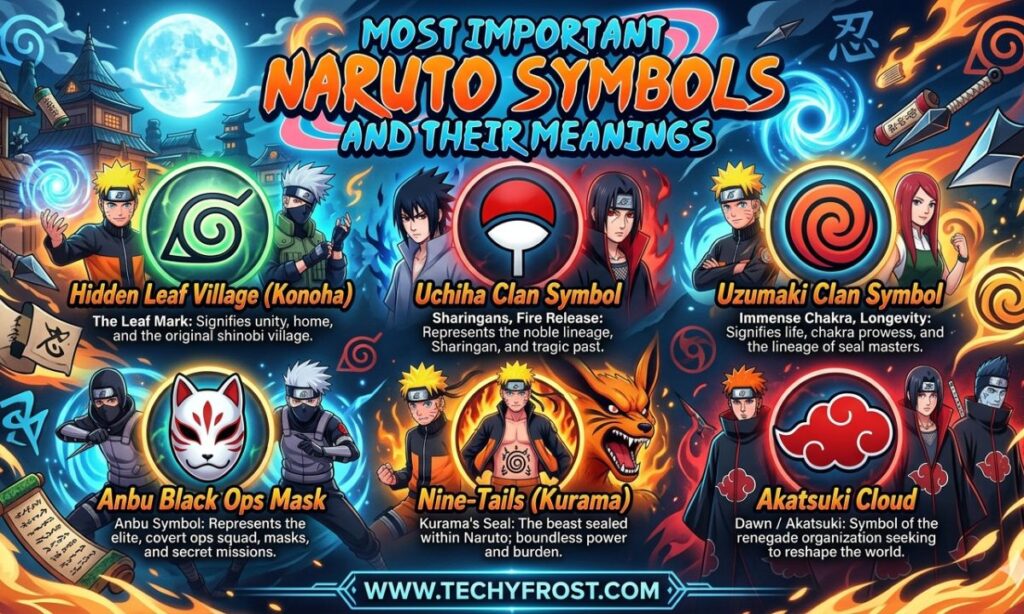
Let’s look at the most iconic and frequently searched Naruto symbols, breaking down their design, meaning, and where you’ll see them throughout the series.
Uzumaki Clan Symbol
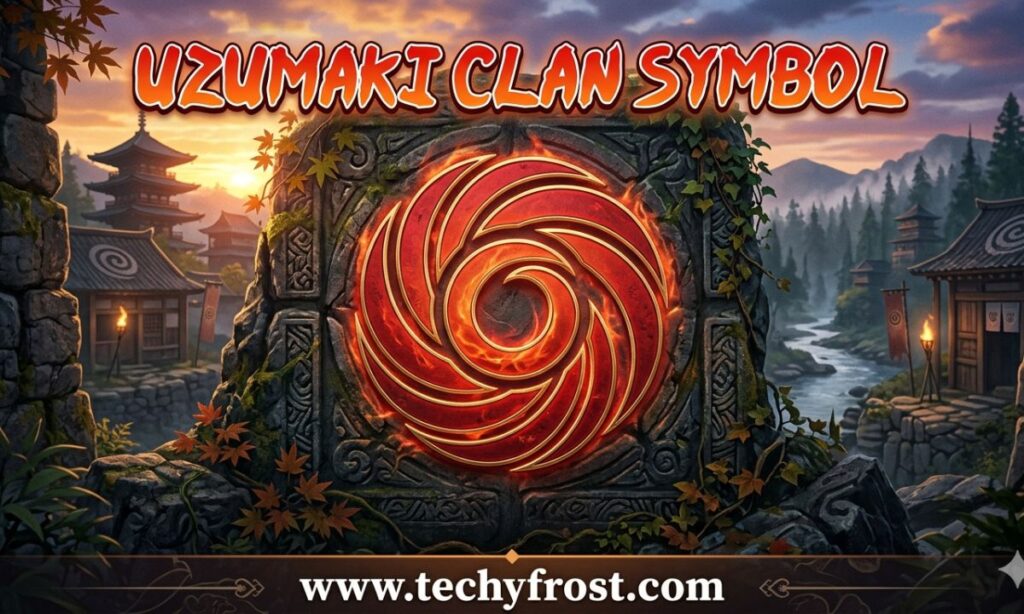
Visual Description
A single red spiral, often drawn as a swirl that curves inward toward a central point.
Meaning
The word “Uzumaki” translates to “whirlpool” or “maelstrom,” and the symbol is a literal representation of that. It reflects the clan’s reputation for longevity, powerful chakra reserves, and mastery of sealing techniques — fitting, since seals themselves are often spiral-shaped.
Where It Appears
You’ll spot this symbol on Naruto’s jacket (a tribute to his mother Kushina’s heritage), on flak jackets worn by Konoha shinobi, and on various Uzumaki clan artifacts and buildings in the Land of Whirlpools.
Uchiha Clan Symbol
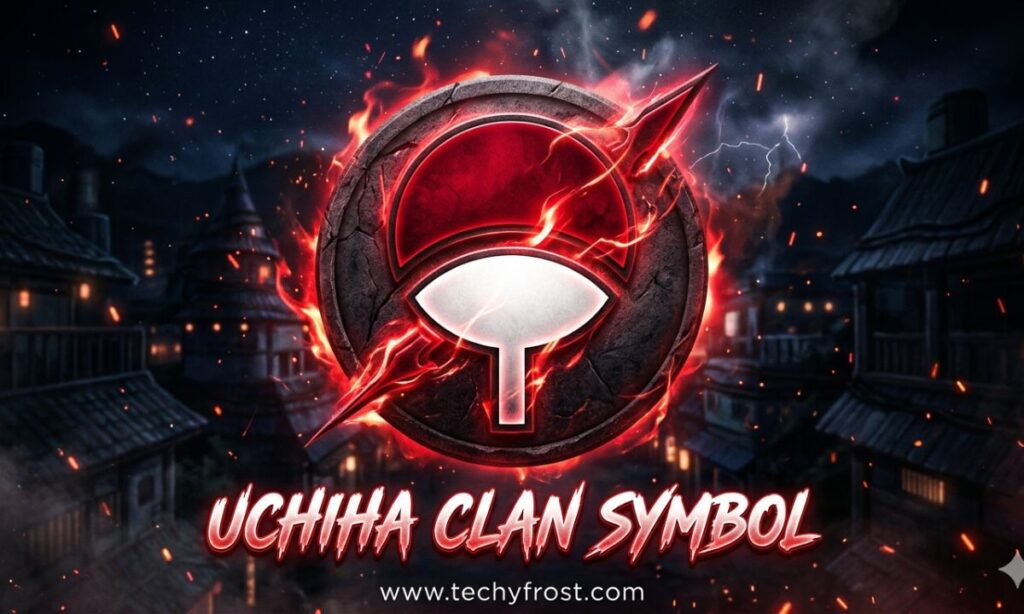
Visual Description
A red and white fan shape, known as a “uchiwa,” split into a red upper half and white lower half.
Meaning
The uchiwa fan was historically used by samurai commanders to direct troops during battle, symbolizing leadership and authority. For the Uchiha, it represents their status as one of Konoha’s founding clans and their legacy of powerful warriors and tragic history.
Where It Appears
This symbol appears on the back of every Uchiha character’s clothing, including Sasuke, Itachi, and Madara, as well as throughout the Uchiha clan district in Konoha.
Akatsuki Cloud Symbol

Visual Description
Red clouds with white outlines, scattered across solid black robes.
Meaning
The red clouds symbolize the organization’s ominous, almost supernatural presence. Red is associated with blood, danger, and intensity, while the cloud shapes give an otherworldly, almost ghost-like impression — fitting for a group of S-rank criminals operating in the shadows.
Where It Appears
The cloud pattern covers the iconic black Akatsuki cloaks worn by members like Itachi, Kisame, Deidara, and Pain throughout the series.
Hidden Leaf Village Symbol
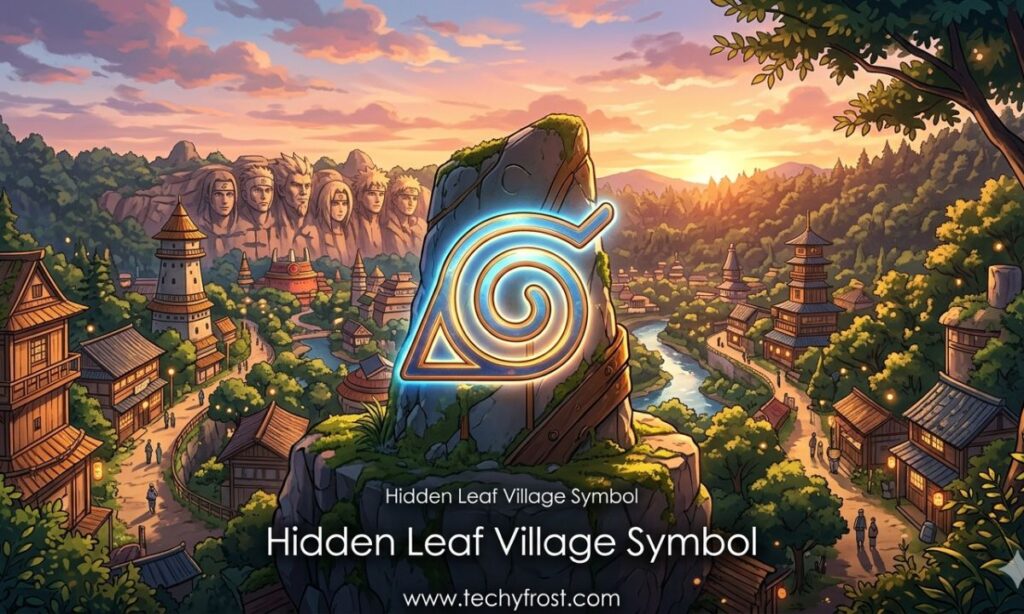
Visual Description
A stylized leaf shape, usually engraved on a metal plate.
Meaning
The symbol represents Konohagakure, “the Village Hidden in the Leaves,” and reflects the village’s connection to nature, growth, and renewal. It’s also a quiet nod to the idea of hiding in plain sight — a leaf among countless others, blending into the forest.
Where It Appears
This is the most recognizable Naruto headband symbol, worn by Naruto, Sasuke, Sakura, Kakashi, and nearly every major Konoha shinobi.
Curse Mark Symbol
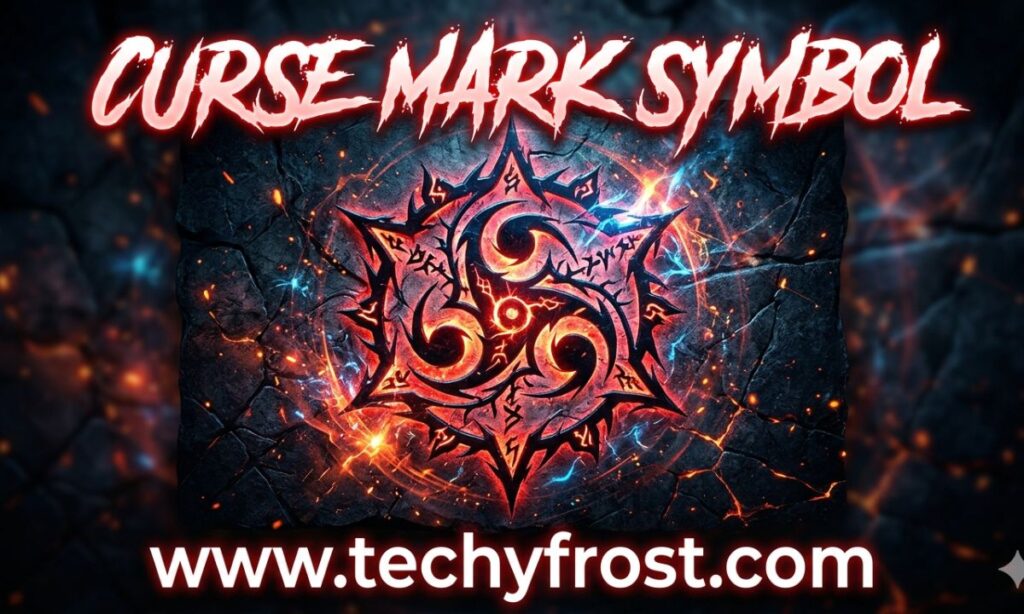
Visual Description
Black, flame-like markings that spread across the skin, often starting from a small dot and expanding outward.
Meaning
The Curse Mark represents corruption, forbidden power, and loss of control. Given by Orochimaru, it grants immense strength at the cost of the user’s humanity, making it one of the series’ clearest symbols of the “power versus identity” theme.
Where It Appears
Most famously seen on Sasuke’s neck after his encounter with Orochimaru during the Chunin Exams, spreading further as he embraces darker power.
Here’s a quick comparison table summarizing these core symbols:
| Symbol | Represents | Primary Color | Key Character |
|---|---|---|---|
| Uzumaki Spiral | Resilience, sealing power | Red | Naruto Uzumaki |
| Uchiha Fan | Leadership, legacy | Red & White | Sasuke Uchiha |
| Akatsuki Cloud | Danger, secrecy | Red & Black | Itachi Uchiha |
| Hidden Leaf | Growth, belonging | Green/Beige | Naruto, Team 7 |
| Curse Mark | Corruption, forbidden power | Black | Sasuke Uchiha |
Naruto Symbols Across Cultures
Part of what makes Naruto symbolism so compelling is how it borrows from — and resonates with — multiple cultural traditions around the world.
Japanese Culture
At its core, Naruto symbolism is deeply Japanese. The kamon-style clan crests, the use of kanji on headbands, and the emphasis on village loyalty all reflect feudal Japan’s social structure. Concepts like honor, duty, and ancestral pride run through nearly every major symbol.
Chinese Culture
Several Naruto symbols also draw from Chinese philosophical concepts, particularly yin and yang. The balance between light and dark chakra, the duality of the Sharingan and Rinnegan, and even the design of certain seals reflect this idea of opposing forces that depend on one another.
Hindu Spiritual Influence
The Senju clan symbol resembles a vajra, a ritual weapon from Hindu and Buddhist traditions representing indestructibility and spiritual power. Similarly, the Sage of Six Paths’ iconography borrows from mandala designs common in Hindu and Buddhist meditation art, emphasizing enlightenment and cosmic balance.
Western Interpretation
For Western audiences, many Naruto symbols are read through a more individualistic lens. The Uzumaki spiral, for example, is often interpreted by Western fans as a symbol of personal identity and self-discovery rather than purely clan heritage — reflecting how symbols can shift meaning depending on cultural context.
Modern Global Culture
Today, Naruto symbols have become a kind of universal shorthand within fan communities worldwide. Regardless of language or background, fans instantly recognize the Leaf symbol, the Akatsuki cloud, or the Uchiha fan — proof that strong visual design can transcend cultural boundaries entirely.
Naruto Symbols in Art, Movies and Pop Culture
Naruto’s influence has long since outgrown the anime itself, with its symbols becoming fixtures in fashion, art, and entertainment.
Tattoos
Naruto-inspired tattoos remain some of the most popular anime tattoos worldwide. Common choices include:
- The Uzumaki spiral, often chosen for its personal meaning around resilience
- The Akatsuki cloud, popular for its bold, edgy aesthetic
- The Sharingan, frequently inked as a detailed eye design
- The Hidden Leaf symbol, often combined with other village emblems for “shinobi sleeve” tattoos
Fashion
Streetwear brands regularly feature Naruto symbols on hoodies, jackets, sneakers, and accessories. The Akatsuki cloud pattern in particular has become a staple design element, appearing on everything from limited-edition sneaker collaborations to everyday graphic tees.
Movies and Media
Naruto’s symbolic visual language has influenced other anime and even some Western productions, particularly in how they use color-coded factions and emblem-based storytelling to communicate character allegiance without dialogue.
Art and Fan Creations
Fan art communities have expanded on official symbols, creating original clan crests, alternate universe designs, and symbol mashups that blend Naruto iconography with other franchises — a testament to how flexible and recognizable these designs have become.
Spiritual and Dream Meaning of Naruto Symbols
For fans who connect deeply with the series, Naruto symbols sometimes appear in dreams — and many wonder what that might represent on a personal level.
Seeing the Uzumaki Spiral in Dreams
Dreaming of a spiral often relates to feelings of change, cycles, or personal transformation. For fans, seeing the Uzumaki symbol in a dream may reflect a period of resilience or a sense of returning to something familiar after a difficult chapter.
Seeing the Akatsuki Cloud
The Akatsuki cloud in a dream might symbolize feelings of being watched, pressure from outside forces, or navigating a situation where motives aren’t fully clear — mirroring the secretive nature of the organization itself.
Seeing the Hidden Leaf Symbol
Dreaming of the Leaf symbol can represent a desire for belonging, community, or a sense of “home.” It often appears during times when someone is seeking stability or reconnecting with close relationships.
Seeing the Curse Mark
This symbol in a dream may point to internal struggle — perhaps a temptation toward shortcuts or a fear of losing control over a situation. It can be a signal to reflect on choices before they spiral further.
Positive and Negative Meanings of Naruto Symbols
Most Naruto symbols carry dual meanings depending on context, much like real-world symbols do.
| Symbol | Positive Meaning | Negative Meaning |
|---|---|---|
| Uzumaki Spiral | Resilience, life-force, continuity | Isolation, being caught in a cycle |
| Uchiha Fan | Leadership, legacy, pride | Tragedy, generational trauma |
| Akatsuki Cloud | Ambition, unity of purpose | Danger, moral compromise |
| Hidden Leaf | Belonging, growth, peace | Bureaucracy, hidden secrets |
| Curse Mark | Hidden potential, raw power | Corruption, loss of self |
This duality is part of why Naruto symbols feel so realistic — they reflect the show’s central message that power and identity are rarely black and white.
Why Humans Feel Drawn to Naruto Symbols
There’s a reason these designs stick with people long after they finish the series. A few key factors explain the pull:
- Simplicity with depth — each symbol is visually clean but carries layered backstory, making them satisfying to learn about
- Emotional attachment — symbols are tied to specific characters and pivotal story moments, so seeing them triggers nostalgia
- Universal themes — concepts like belonging, identity, and resilience are things every viewer relates to, regardless of culture
- Visual identity — humans are naturally drawn to strong, recognizable shapes and color contrasts, which Naruto’s design team understood well
Essentially, these symbols work because they function the way real-world symbols do — they communicate complex ideas instantly, without needing words.
Naruto Symbols and Their Hidden Connection to Real Life
What makes Naruto symbolism so enduring is how closely it mirrors real human experiences. The Uzumaki spiral’s connection to resilience speaks to anyone who’s faced hardship and come out stronger. The Uchiha fan’s ties to legacy and inherited expectation resonate with anyone who’s felt the weight of family history. Even the Curse Mark’s theme of power at a cost reflects real dilemmas people face when chasing success.
In many ways, Naruto symbols act as a mirror — reflecting struggles with identity, belonging, and personal growth that exist far outside the anime world. That’s the real reason these designs have stayed relevant for over two decades, and why new fans continue discovering meaning in them today.
Frequently Asked Questions
What does the Naruto headband symbol mean?
The headband symbol represents a shinobi’s home village and marks their official status as a ninja after graduating from the academy.
Why does Sasuke scratch his headband?
Sasuke scratches his headband to symbolize his rejection of Konoha and his decision to leave the village as a missing-nin.
What does the Uzumaki spiral represent?
The Uzumaki spiral represents “whirlpool,” symbolizing resilience, strong chakra, and the clan’s mastery of sealing techniques.
Is the Akatsuki cloud symbol evil?
The Akatsuki cloud doesn’t represent evil itself, but it signals membership in a secretive, dangerous organization with controversial goals.
What clan symbol looks like a fan?
The Uchiha clan symbol looks like a red and white fan, known as an “uchiwa,” representing leadership and legacy.
Do all Naruto villages have their own symbol?
Yes, every hidden village in Naruto has a unique symbol displayed on headbands, representing that village’s identity and shinobi.
Conclusion
Naruto symbols are far more than stylish logos slapped onto headbands and cloaks — they’re storytelling devices that carry history, emotion, and cultural depth. From the resilience behind the Uzumaki spiral to the haunting presence of the Akatsuki cloud, each design adds another layer to a series already known for its rich world-building.
Whether you’re getting a tattoo, designing fan art, or just rewatching the series with fresh eyes, understanding these symbols deepens your appreciation for just how much thought went into every corner of the Naruto universe. Next time you spot a familiar crest on screen, you’ll know there’s a whole story hiding behind it.

