

Have you ever looked at a symbol and felt something stir inside you — something ancient, something bigger than yourself? That feeling is not accidental. God symbols have carried spiritual weight across thousands of years, cultures, and religions. From the Egyptian Ankh to the Christian Cross, from Zeus’s lightning bolt to the Hindu Om, these sacred marks are visual languages that speak directly to the soul.
In this comprehensive guide, you will explore 55+ powerful god symbols, their deep meanings, cultural roots, psychological significance, and how they show up in modern life — from tattoos to pop culture. Whether you are a student of mythology, a spiritual seeker, or simply curious, this is the most complete guide to divine symbols you will find.
What Are God Symbols?
God symbols are sacred images, shapes, objects, or marks that represent a deity, divine concept, or higher spiritual power. They are used across every major religion and mythology — past and present — to communicate ideas that words alone cannot fully express.
These symbols serve several important functions:
- Visual shorthand for complex spiritual ideas
- Devotional tools used in prayer, meditation, and ritual
- Cultural identity markers that bind communities through shared belief
- Protective talismans worn or displayed to invite divine energy
Most ideas surrounding God are grounded in metaphysical descriptions of venerated spirits and divine beings. Symbolism and iconography help capture what language cannot fully define. That is precisely why god symbols have appeared in ancient runes, religious scriptures, temple carvings, and modern tattoos for millennia.
God Symbols You Can Copy And Use Easily
Many people look for god symbols to use in writing, social media, design, or personal notes. Here is a quick-reference collection of popular divine symbols in text form.
God Symbols Text
Below are commonly recognized god symbols expressed through Unicode characters and text:
| Symbol | Name | Meaning |
| ✝ | Cross | Christianity, salvation |
| ☥ | Ankh | Life, Egyptian divinity |
| ☪ | Star and Crescent | Islam, divine guidance |
| ✡ | Star of David | Judaism, protection |
| 🕉 | Om | Hinduism, primordial sound |
| ⚡ | Lightning Bolt | Zeus, divine power |
| 🔱 | Trident | Poseidon/Shiva, authority |
| ☸ | Dharma Wheel | Buddhism, the path |
| 𓂀 | Eye of Horus | Egypt, protection and healing |
| ♾ | Infinity | Eternity, divine boundlessness |
God Symbols Copy And Paste
These symbols are copy-paste ready for use in documents, social captions, or personal projects:
✝ ☥ ✡ ☪ 🕉 ⚡ 🔱 ☸ ♾ 🌙 ☀ 🌟 ⛧ 𓂀 ✴
Note: Symbol rendering may vary depending on your device and font. Unicode support differs across platforms.
Powerful God Symbols And Meanings
God Symbols And Meanings
Every culture across human history has used specific symbols to represent divine power. Here is a breakdown of the most recognized ones:
| Symbol | Culture/Religion | Core Meaning |
| Ankh | Ancient Egypt | Eternal life, divine breath |
| Cross | Christianity | Salvation, sacrifice of Christ |
| Om (ॐ) | Hinduism | Primordial sound of the universe |
| Star of David | Judaism | Divine protection, covenant with God |
| Crescent & Star | Islam | Faith, divine guidance |
| Thor’s Hammer | Norse | Strength, protection, blessing |
| Eye of Providence | Western esotericism | Divine oversight, all-seeing God |
| Dharma Wheel | Buddhism | The eightfold path, cosmic order |
| Valknut | Norse | Odin’s power, fallen warriors |
| Trident | Hinduism/Greek | Cosmic authority, Shiva/Poseidon |
Powerful Spiritual Symbols And Meanings
Some symbols transcend a single religion and carry universal spiritual weight:
- The Circle: No beginning, no end. Represents eternity, wholeness, and the infinite nature of God.
- The Triangle: Three in one — reflects trinity concepts found in Christianity (Father, Son, Holy Spirit) and Hinduism (Brahma, Vishnu, Shiva).
- Sacred Geometry: Patterns like the Flower of Life and the Seed of Life appear across cultures, believed to encode divine mathematical truths.
- The Spiral: Found in Celtic and Native American traditions, it represents the continuous cycle of life, death, and rebirth.
- The Lotus Flower: Prominent in Hinduism and Buddhism, it symbolizes spiritual awakening and the emergence of divine consciousness from worldly suffering.
Powerful Spiritual Symbols
The following symbols are considered especially potent across multiple traditions:
- Om (ॐ) — connected to Brahma, Vishnu, and Shiva; the sound of creation itself
- The Ankh — life-giving energy in both physical and spiritual dimensions
- The Eye of Horus — protection from evil and restoration after loss
- The Cross — the single most recognized symbol of divine love and sacrifice in the world
- Mjolnir (Thor’s Hammer) — both a weapon of the gods and a symbol of blessing
- The Valknut — three interlocked triangles tied to Odin’s magical power
Greek God Symbols And Meanings
God Symbols Greek
The ancient Greeks gave each Olympian god a set of personal symbols — sacred animals, objects, and natural elements that told worshippers exactly who they were and what they ruled. These symbols appeared on pottery, temple walls, coins, and statues across ancient Greece.
Greek God Symbols
Here is a comprehensive table of Greek god symbols and their meanings:
| Greek God | Domain | Primary Symbols |
| Zeus | Sky, thunder, king of gods | Lightning bolt, eagle, oak tree |
| Poseidon | Sea, earthquakes | Trident, horse, dolphin |
| Hades | Underworld, death | Helm of Darkness, pomegranate, Cerberus |
| Athena | Wisdom, warfare | Owl, olive tree, shield (Aegis) |
| Apollo | Sun, music, prophecy | Lyre, laurel wreath, bow and arrow |
| Ares | War, violence | Spear, helmet, vulture, dog |
| Hermes | Messengers, trade, travel | Winged sandals, caduceus, winged helmet |
| Artemis | Hunt, moon, wilderness | Silver bow, deer, crescent moon |
| Aphrodite | Love, beauty | Dove, rose, scallop shell, mirror |
| Hephaestus | Fire, forge | Hammer, anvil, fire |
| Dionysus | Wine, festivity | Grapevine, thyrsus, tiger |
| Hera | Marriage, family | Peacock, pomegranate, diadem/crown |
| Demeter | Harvest, agriculture | Wheat sheaf, torch, cornucopia |
| Pan | Nature, wilderness | Pan flute, goat, ivy |
Greek Gods Symbols And Meanings
Each symbol in Greek mythology was chosen deliberately. They were not decorative — they told a complete story about who a god was, what power they held, and how mortals should approach them.
Zeus’s lightning bolt, for example, symbolized both his absolute authority as king of Olympus and his role as the enforcer of divine justice. Athena’s owl connected her to the night — a time of deep thought and wisdom. Hermes’s winged sandals represented not just physical speed but the swift flow of communication and trade between gods and mortals.
Greek God Symbol
One of the most fascinating aspects of Greek god symbols is how they were used in everyday life. Ordinary Greeks would leave offerings shaped like these symbols at temple altars. A bronze thunderbolt for Zeus. Silver owls for Athena. Laurel wreaths to honor Apollo.
Greek God Symbols Percy Jackson
Rick Riordan’s beloved Percy Jackson series brought Greek mythology back into mainstream consciousness, especially for younger audiences. In the books, god symbols serve to identify a demigod’s divine parentage:
- Percy Jackson — son of Poseidon (trident symbol)
- Annabeth Chase — daughter of Athena (owl symbol)
- Thalia Grace — daughter of Zeus (lightning bolt symbol)
- Nico di Angelo — son of Hades (skull/helm of darkness)
These modern interpretations honor the original mythological symbolism while making it accessible and exciting for new generations.
Symbols Of Greek God
Each major Greek god held multiple symbols. Zeus alone is associated with the lightning bolt, the eagle, the oak tree, and the bull. Together, these symbols paint a complete picture of a being who rules the sky, commands natural forces, and carries supreme authority.
Greek God Symbols Tattoos
Greek mythology tattoos have exploded in popularity in recent years. The most requested god symbols for tattoos include:
- Zeus’s lightning bolt — for strength, authority, and ambition
- Apollo’s laurel wreath — for creativity, achievement, and artistic expression
- Athena’s owl — for wisdom, learning, and intelligence
- Hermes’s caduceus — popular among medical professionals and communicators
- Hades’s helm — for mystery, transformation, and depth of character
- Poseidon’s trident — for power over emotion and the subconscious
Other God Symbols
Roman God Symbols
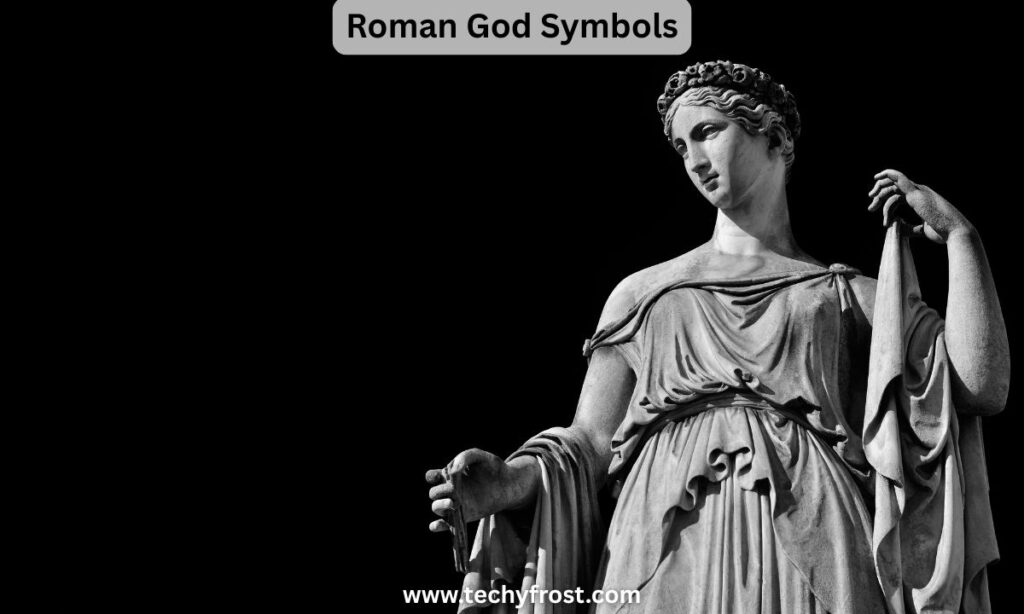
Roman religion borrowed extensively from Greece but gave the gods new names and slightly different attributes. Key Roman god symbols include:
- Jupiter (Zeus): Thunderbolt, eagle, oak
- Mars (Ares): Spear, shield, wolf, woodpecker
- Mercury (Hermes): Winged staff (caduceus), winged sandals, rooster
- Neptune (Poseidon): Trident, horse, dolphin
- Janus: Two faces looking forward and backward — unique to Rome, representing transitions and new beginnings
- Saturn: Scythe, symbolizing time, harvest, and the cycle of ages
Egyptian God Symbols
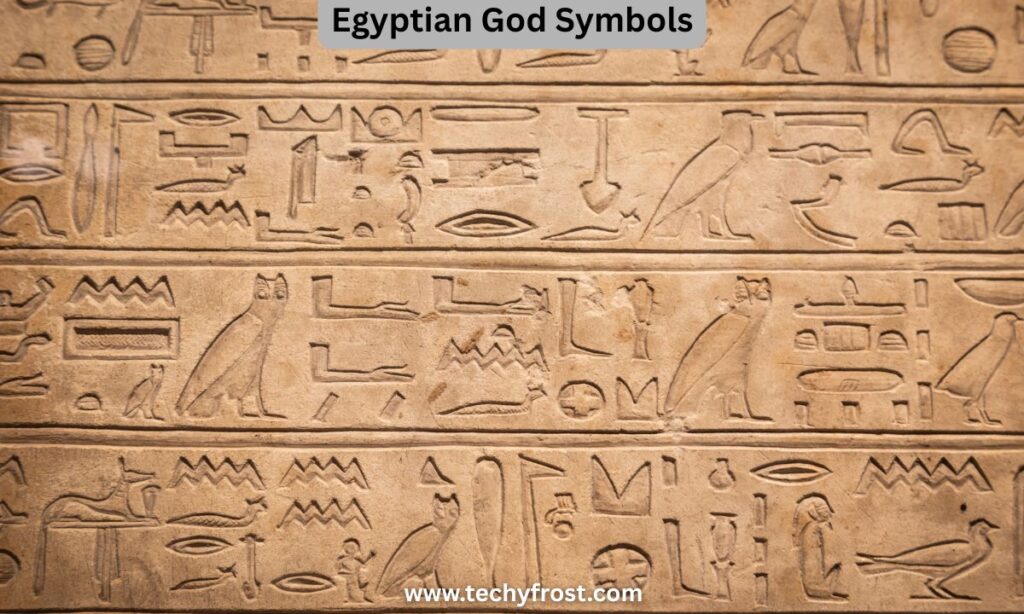
Ancient Egyptians believed symbols carried actual divine power. They were not merely decorative — they were spiritual tools:
- Ankh (☥): The key of life, held by almost every major deity
- Eye of Horus: Protection, healing, and royal power; connected to the falcon god Horus
- Was Scepter: Authority and dominion, carried by gods and pharaohs
- Djed Pillar: Stability and resurrection, associated with Osiris
- Scarab Beetle: Rebirth and the rising sun, connected to the god Khepri
- Feather of Ma’at: Truth, justice, and cosmic balance
Norse God Symbols
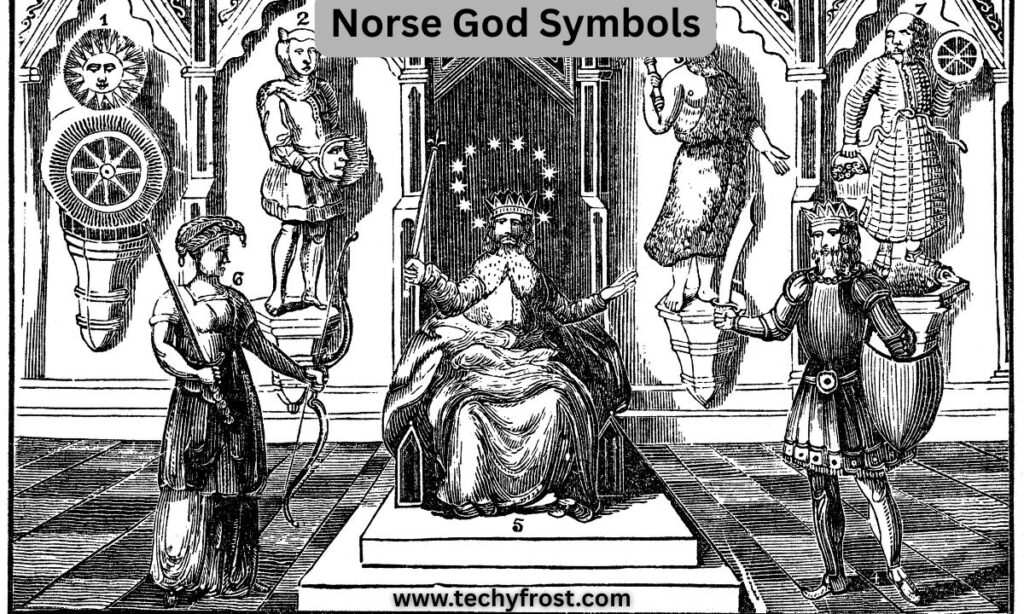
Norse symbols were carved into runes, weapons, and burial stones. The most powerful include:
- Mjolnir (Thor’s Hammer): Protection, strength, and blessing; worn as amulets by Vikings
- Valknut: Three interlocked triangles; associated with Odin and the afterlife of fallen warriors
- Vegvisir: The Viking compass; a symbol of guidance and safe passage
- Gungnir: Odin’s spear; represents authority, power, and the initiation of battle
- Yggdrasil: The World Tree; connects the nine realms and symbolizes cosmic unity
- Huginn and Muninn (Ravens): Odin’s ravens representing thought and memory
Hindu God Symbols
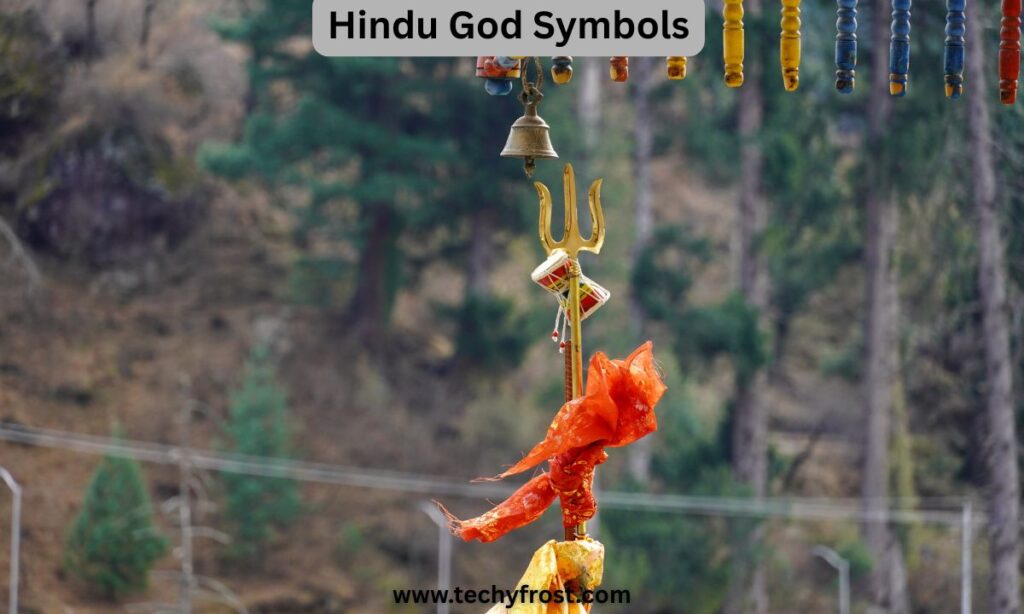
Hinduism offers one of the richest traditions of divine symbolism in the world:
- Om (ॐ): The primordial sound connecting all creation; central to Brahma, Vishnu, and Shiva
- Trishul (Trident): Shiva’s weapon representing creation, preservation, and destruction
- Lotus: Divine purity and spiritual awakening; connected to Brahma, Vishnu, and Lakshmi
- Chakra (Wheel): Vishnu’s spinning discus; cosmic order and divine law
- Conch Shell (Shankha): Vishnu’s sacred instrument, producing the primordial sound of creation
- Swastika: In Hindu tradition (pre-Nazi appropriation), an ancient symbol of good fortune, divinity, and the sun, still used in wedding ceremonies
Aztec God Symbols
The Aztec pantheon is visually dramatic, with gods “dressed” in distinctive symbolic accessories:
- Eagle: The sun god Huitzilopochtli’s sacred animal; warriors who died in battle were said to be reborn as hummingbirds in his entourage
- Serpent: Quetzalcoatl, the feathered serpent god; represented knowledge, wind, and resurrection
- Sun Stone: The Aztec calendar stone; encoded cosmic cycles, divine time, and religious mythology
- Tlaloc’s Rain Mask: The rain and storm god’s goggle-eyed mask; represented agriculture and fertility
- Xochitl (Flower): Symbol of the god Xochipilli, representing creativity, beauty, dance, and joy
Chaos God Symbols
In mythology, chaos gods represent primordial disorder from which creation emerges:
- Apophis (Egyptian): The serpent of chaos; eternal enemy of Ra and divine order
- Jörmungandr (Norse): The World Serpent; circles the earth and represents destructive, uncontrollable force
- Eris (Greek): Goddess of discord; her golden apple sparked the Trojan War
- In modern fantasy gaming (such as Warhammer 40K), chaos god symbols represent corruption, entropy, and dark divine power
Zeus God Symbols
Zeus, king of the Olympian gods, carries some of the most recognizable symbols in all of mythology:
- Lightning Bolt: His primary weapon and symbol of absolute divine authority; originated from the war against the Titans (Titanomachy)
- Eagle: His sacred bird, representing kingship and dominion over the sky
- Oak Tree: Sacred to Zeus; the oracle of Dodona was an oak grove where priests interpreted the will of Zeus through rustling leaves
- Bull: Used in many myths; represents Zeus’s power and his transformative nature
Apollo Greek God Symbols
Apollo is one of the most complex and beloved of all Greek deities. His symbols reflect his wide domain:
- Lyre: Music, poetry, and artistic inspiration
- Laurel Wreath: Victory and honor; originated from the myth of Daphne
- Bow and Arrow: Both healing and plague; Apollo could bring illness or cure it
- Sun Chariot: Apollo was linked to Helios and represented the sun’s daily journey across the sky
- Raven: Prophecy and truth; his sacred bird
Ares Greek God Symbols
Ares, god of war, carries symbols of brutal conflict and raw power:
- Spear and Shield: The primary weapons of warfare
- Helmet and Armor: Divine protection in battle
- Vulture: Sacred to Ares; a scavenger bird that follows the dead
- Dog: Loyalty in war and aggression
- Torch: The fire of conflict
Apollo God Symbols And Ares God Symbols
Comparing these two gods reveals the difference between harmonious and destructive divine force. Apollo represents order, beauty, and light — a balanced, civilizing power. Ares represents raw, instinct-driven conflict — passion without reason. In art, Apollo is often depicted with serene, classical beauty, while Ares is shown as fierce and armored. Together, they represent the full spectrum of what it means to be powerful.
Greek God Symbols
Hermes God Symbols
Hermes is the divine messenger, guide of souls, and patron of travelers, traders, and thieves. His symbols are:
- Caduceus: A staff entwined by two serpents with wings at the top; represents communication, commerce, and duality
- Winged Sandals (Talaria): Speed and the ability to move between realms
- Winged Helmet (Petasos): Swiftness of thought and divine communication
- Tortoise: Associated with the lyre Hermes invented from a tortoise shell
Hermes Greek God Symbols
In ancient Greece, Hermes’s caduceus was a symbol of peace between opposing forces — his staff could stop conflict and put people to sleep. Today it is sometimes (incorrectly) used as a medical symbol, though the true medical symbol is the Rod of Asclepius, which features a single serpent.
Hades Greek God Symbols
Hades, ruler of the Underworld, is one of the most misunderstood gods in Greek mythology. His symbols include:
- Helm of Darkness (Helmet of Invisibility): His most distinctive symbol; granted him the power to become unseen
- Cerberus: The three-headed dog who guards the entrance to the underworld
- Pomegranate: Connected to the myth of Persephone; represents the binding power of the underworld
- Bident (Two-Pronged Spear): His divine weapon, analogous to Zeus’s lightning bolt and Poseidon’s trident
- Cypress Tree: Sacred to Hades; the cypress was associated with death and mourning in ancient Greece
Hades God Symbols
In modern popular culture — from the Percy Jackson series to the Disney animated film Hercules — Hades is often portrayed as villainous. However, ancient Greeks were more nuanced: Hades was seen as stern and just, not evil. His symbols reflect mystery, hidden power, and the inevitability of death rather than malice.
Pan God Symbols
Pan is the ancient Greek god of the wild, shepherds, and rustic music:
- Pan Flute (Syrinx): His signature instrument; born from his myth with the nymph Syrinx
- Goat Horns and Hooves: His half-human, half-goat form represents wild nature
- Ivy and Pine: His sacred plants, connecting him to untamed wilderness
- The Word “Panic”: Derived from Pan; he was said to cause sudden terror in lonely places
Deity Symbol
A deity symbol is any image, object, or mark that officially represents a god or divine being within a specific religion or mythological tradition. Deity symbols serve as focal points for worship and as identity markers that distinguish one divine being from another.
Symbol Of The Gods
Across ancient cultures, the concept of a “symbol of the gods” referred to objects that carried genuine divine power — not merely representations. The Ankh in Egypt, Thor’s Hammer among the Norse, and the Om in Hinduism were all believed to carry actual spiritual energy that could protect, heal, or transform the bearer.
Jesus Symbols
Symbol For Jesus
Jesus Christ is represented by several powerful symbols in Christian tradition, each carrying layered theological meaning:
- The Cross (✝): Most universally recognized; represents his crucifixion and the gift of salvation
- Chi-Rho (☧): Combines the first two Greek letters of “Christ” (Χριστός); one of the earliest Christian symbols
- ΙΧΘΥΣ (Ichthys/Fish): The fish symbol; early Christians used it as a secret identifier during persecution
- Alpha and Omega (Α Ω): “I am the beginning and the end” — from Revelation; symbolizes Christ’s eternal divine nature
- Lamb: Jesus as the “Lamb of God”; symbolizes sacrifice and innocence
Jesus Symbol
The Chi-Rho symbol (☧) was one of the first symbols used to represent Jesus Christ, predating the widespread use of the cross. Emperor Constantine reportedly saw this symbol before a major battle and adopted it, marking a turning point in the Christian faith becoming a dominant world religion.
Jesus Symbols And Symbols For Jesus
| Symbol | Meaning |
| Latin Cross | Crucifixion and salvation |
| Chi-Rho (☧) | Christ’s name in Greek |
| Ichthys (Fish) | Believer identifier in early church |
| Alpha & Omega | Eternal divine nature |
| Crown of Thorns | Suffering and humility |
| Sacred Heart | Divine love and compassion |
| Good Shepherd (with lamb) | Care and guidance of believers |
Christian Symbols for God
God Symbols Christian
Christianity uses a rich set of symbols to represent God the Father, the Holy Spirit, and the Trinity:
- Hand of God (Manus Dei): A hand emerging from clouds; used in the early church to represent God the Father when depicting him in human form was considered inappropriate
- Eye of Providence: An eye within a triangle, representing the all-seeing nature of God and the Holy Trinity
- Trefoil/Shamrock: Three leaves in one; represents the Holy Trinity
- Jerusalem Cross: A central cross surrounded by four smaller crosses; represents Christ’s wounds and the spread of the Gospel worldwide
Symbol For God
There is no single universal symbol exclusively for “God” as an abstract divine being — instead, each religion offers its own visual language. However, several symbols have come to be broadly associated with a supreme divine force:
- The Circle: Eternity and boundlessness
- Light/Sun Rays: Divine presence and illumination
- The All-Seeing Eye: Divine omniscience
- The Hand: Divine authority and providence
Universal Symbol For God And Universal God Symbol
Across cultures, the closest thing to a universal god symbol is radiant light — whether as a sun disk, a halo, a flame, or glowing rays. From Ra’s solar disc in Egypt to the nimbus (halo) in Christian art to the divine light in Hindu iconography, luminosity is the near-universal visual language for the presence of God.
God Symbols and Tattoos
Symbols Of God
People choose god symbols as tattoos for deeply personal reasons. Some of the most popular include:
- Cross: Expressing Christian faith or family heritage
- Om: Connection to Hindu philosophy, yoga, or meditation
- Eye of Horus: Protection and spiritual awareness
- Ankh: Love of Egyptian culture or belief in eternal life
- Thor’s Hammer: Norse heritage or personal strength
- Trident: Power, authority, and connection to Poseidon or Shiva
God Symbolism
God symbolism refers to the broader system of visual codes that humans have developed to represent the divine. Unlike literal portraits of gods, symbolism communicates abstract qualities — justice, mercy, power, love — through visual shorthand that transcends language barriers.
Divine Symbols
Divine symbols are those specifically attributed to a god, goddess, or supreme being. They carry authority in religious contexts — appearing on temple walls, religious artifacts, and sacred texts — and personal meaning when used in devotional practices like prayer, meditation, or ritual.
Divine Symbol
A single divine symbol can carry enormous power. The Om syllable, for instance, is considered so sacred in Hindu tradition that simply reciting or meditating on it is believed to align the practitioner with the cosmos itself. Similarly, tracing the sign of the cross is a complete act of prayer and devotion for millions of Christians worldwide.
Deep Symbolic Meaning of God Symbols
On a Spiritual Level
Spiritually, god symbols are far more than artistic designs. Many traditions teach that these symbols function as portals — focal points that connect the human mind and spirit to divine energy. Symmetrical sacred shapes and radiant imagery are believed to attune the believer to higher frequencies of consciousness.
When believers meditate on a sacred symbol, they enter what mystics describe as a state of divine communion. The circle, for instance, has no beginning and no end — when used as a god symbol, it expresses the infinite, uncreated nature of divinity itself.
On a Psychological Level
From a psychological standpoint, god symbols activate powerful unconscious processes. Carl Jung identified certain symbols — the mandala (circular sacred diagram), the cross, and the tree — as archetypes: primordial images stored in the collective unconscious of all humanity.
Symmetrical shapes, radiant imagery, and sacred geometry create feelings of harmony, order, and meaning. On an emotional level, god symbols communicate that you are not alone. They offer protection and purpose — a sense that a larger intelligence holds the world together.
On a Cultural Level
Culturally, god symbols are the DNA of civilizations. They encode belief systems, social hierarchies, and shared values into a single image. The prominence of the cross in Western architecture, the Om in South Asian art, and Thor’s hammer in Scandinavian jewelry all testify to how deeply these symbols are woven into the fabric of their cultures.
Types and Variations of God Symbols
1. The Ankh
The Ankh (☥) is perhaps the oldest known god symbol, originating in ancient Egypt. It resembles a cross with a loop at the top, and represents the breath of life — both physical vitality and the immortal soul. Nearly every major Egyptian deity was depicted holding an Ankh.
2. The Eye of Horus
According to Egyptian mythology, the falcon god Horus lost his eye in battle with Set, the god of chaos and violence. The eye was restored by Thoth, god of wisdom. The restored eye became a symbol of protection, healing, and royal power — and was placed in tombs and worn as amulets for thousands of years.
3. Om
Om (ॐ) is the sacred syllable of Hinduism, Buddhism, and Jainism. It represents the primordial sound from which the universe was created. The written symbol contains three curves representing waking, dreaming, and deep sleep states — and a dot representing the transcendent fourth state of pure consciousness.
4. The Cross
The Latin Cross is the most widely recognized symbol in the world, representing the crucifixion and resurrection of Jesus Christ. Christianity teaches that through the cross, humanity receives redemption and eternal life. The cross predates Christianity by centuries in other forms, but was transformed into history’s most powerful religious symbol by the life of Jesus.
5. The Star of David
The Star of David (✡) is a six-pointed star formed by two overlapping triangles. In Jewish tradition, it symbolizes the legendary shield of King David and God’s covenant of protection with his people. The six points represent the directions of God’s dominion — north, south, east, west, up, and down.
6. The Crescent and Star
Though its origins predate Islam, the Crescent and Star (☪) became associated with the Islamic faith during the Ottoman Empire. Today it appears on the flags of numerous Muslim-majority nations and is considered the most visually recognized symbol of Islam worldwide.
7. Thor’s Hammer
Mjolnir — Thor’s hammer — is the most recognizable Norse divine symbol. It was carried as an amulet by Norse warriors and farmers alike, believed to offer protection, strength, and divine blessing. Archaeologists have found hundreds of Mjolnir pendants across Scandinavia, testifying to its widespread devotional use.
God Symbols Across Cultures
Ancient Egypt
Egyptians believed their symbols held real divine power. The Ankh, Eye of Horus, and Scarab Beetle were inscribed on amulets, tomb walls, and royal jewelry — not as decoration, but as active spiritual protection for both the living and the dead.
Ancient Greece
Greek god symbols were highly systematic. Each Olympian had a specific set of symbols tied to their domain, personality, and mythology. These appeared on coins, temple friezes, and everyday household items, making divine symbolism part of daily Greek life from 900 BCE onwards.
India
India’s symbolic vocabulary is possibly the most extensive in the world. Hindu, Buddhist, Jain, and Sikh traditions each contribute thousands of sacred symbols — from the Om and lotus to the Dharma Wheel and the Khanda. These symbols remain living, active parts of daily spiritual practice for over a billion people.
Abrahamic Traditions
Judaism, Christianity, and Islam each developed rich symbolic systems — the Star of David, the Cross, the Crescent — that have shaped the visual identity of Western and Middle Eastern civilization for over two millennia. Despite theological differences, all three traditions use symbols to point toward an invisible God.
Norse and Celtic Cultures
Norse runes were simultaneously alphabetic characters and sacred symbols with spiritual power. Celtic traditions produced intricate knotwork, the Triquetra, and the Triskelion — symbols of eternal cycles, the triple goddess, and the interconnection of all life.
God Symbols in Art, Movies and Pop Culture
God symbols have never been more visible in popular culture than they are today. Consider:
- Movies and TV: The Norse mythology of the Thor Marvel films brought Mjolnir to global recognition. The Percy Jackson series reintroduced Greek god symbols to millions of young readers.
- Music: Artists from Beyoncé to Kanye West incorporate religious imagery and god symbols into album art and performances.
- Fashion and Jewelry: The Ankh, Cross, Om, and Hamsa Hand appear on everything from high fashion to streetwear.
- Gaming: Titles like God of War, Hades, and Smite have made Greek, Norse, and Egyptian god symbols central to their visual identity.
- Tattoo Culture: Divine symbols consistently rank among the most requested tattoo designs globally, with the cross, Om, Eye of Horus, and Greek god symbols leading the list.
Spiritual and Dream Meaning of God Symbols
Seeing god symbols in dreams is widely interpreted as significant across spiritual traditions:
- Dreaming of a Cross: Spiritual calling, need for faith, or a period of sacrifice and transformation
- Dreaming of a Lotus: Spiritual awakening, rising above difficulties, imminent clarity
- Dreaming of the Eye of Horus: A warning of spiritual danger, but also divine protection watching over you
- Dreaming of Lightning (Zeus): A sudden revelation, a moment of clarity, or divine judgment on a decision
- Dreaming of Om: A call to deepen meditation, reconnect with your spiritual practice, or simply rest in peace
In Jungian dream analysis, god symbols represent the archetype of the Self — the deepest, most integrated aspect of a person’s psyche reaching toward wholeness.
Positive vs Negative Meaning
Most god symbols carry primarily positive meanings, but context — and history — can add shadow:
| Symbol | Positive Meaning | Cautionary Context |
| Cross | Salvation, love, hope | Associated with crusades, religious conflict historically |
| Swastika | In Hinduism: good fortune, divinity | Permanently associated with Nazism in Western contexts |
| Eye of Providence | Divine watchfulness, protection | Associated with conspiracy theories in modern culture |
| Mjolnir | Strength, blessing, protection | Sometimes co-opted by white supremacist groups |
| Ankh | Life, vitality, eternal soul | Occasionally misappropriated as purely aesthetic |
Understanding the original spiritual meaning of a symbol — rather than its cultural baggage — allows for a more informed, respectful relationship with these powerful marks.
Why Humans Are Attracted to God Symbols
The attraction to god symbols is not merely cultural or religious — it is deeply wired into human psychology and evolution.
1. The Need for Meaning Humans are meaning-making creatures. God symbols offer compressed meaning — a single image that can represent an entire worldview, a complete theology, a lifetime of faith.
2. The Power of Visual Memory The brain processes visual information 60,000 times faster than text. A symbol bypasses the analytical mind and speaks directly to emotion and intuition — which is why seeing a cross or an Om can produce an immediate emotional response even in someone who has not actively practiced the associated religion.
3. Connection to Something Larger God symbols remind us that we are not alone in the universe. They are evidence that countless humans before us grappled with the same questions — and found answers powerful enough to carve in stone, paint on temple walls, and wear close to their hearts.
4. Ritual and Sacred Space Symbols create sacred space. When you place a cross, an Om, or a Hamsa in your home or on your body, you are creating a visual boundary between the ordinary and the divine — an invitation for higher energy to enter your awareness.
Frequently Asked Questions
What is the most powerful god symbol? The Om (ॐ) and the Cross are considered the most spiritually powerful in their respective traditions; globally, the Cross is the most recognized divine symbol.
What symbol represents God universally? No single universal symbol exists, but radiant light and the circle come closest across multiple cultures.
What are Greek god symbols used for today? They are used in tattoos, art, literature, movies, and spiritual practice to express strength, identity, and connection to mythology.
What is the symbol for Jesus? The Cross (✝), Chi-Rho (☧), and Ichthys (fish) are the primary symbols for Jesus Christ.
What does the Ankh symbolize? The Ankh represents eternal life, the breath of the divine, and both physical and spiritual vitality in ancient Egyptian tradition.
What is a deity symbol? A deity symbol is any mark, image, or object that officially represents a specific god or divine being in a religious or mythological tradition.
Are god symbols used in tattoos? Yes — the Cross, Om, Eye of Horus, Thor’s Hammer, and Greek god symbols are among the most popular tattoo choices worldwide for their spiritual meaning and visual power.
Conclusion
God symbols are among the most remarkable creations of human culture. From the sun-drenched temples of ancient Egypt to the Viking longships of Scandinavia, from the synagogues of Jerusalem to the yoga studios of modern cities, these sacred marks have carried divine meaning across every era and every corner of the world.
Whether you are drawn to the ancient power of the Ankh, the universal hope of the Cross, the cosmic depth of the Om, or the fierce protection of Thor’s Hammer, these symbols offer something rare: a direct visual line between the human heart and whatever lies beyond the edge of what we can see.
Understanding them does not require belonging to a specific religion. It only requires curiosity, respect, and a willingness to look at the world and ask — as humans have always asked — is there something more?
The symbols say yes.

