

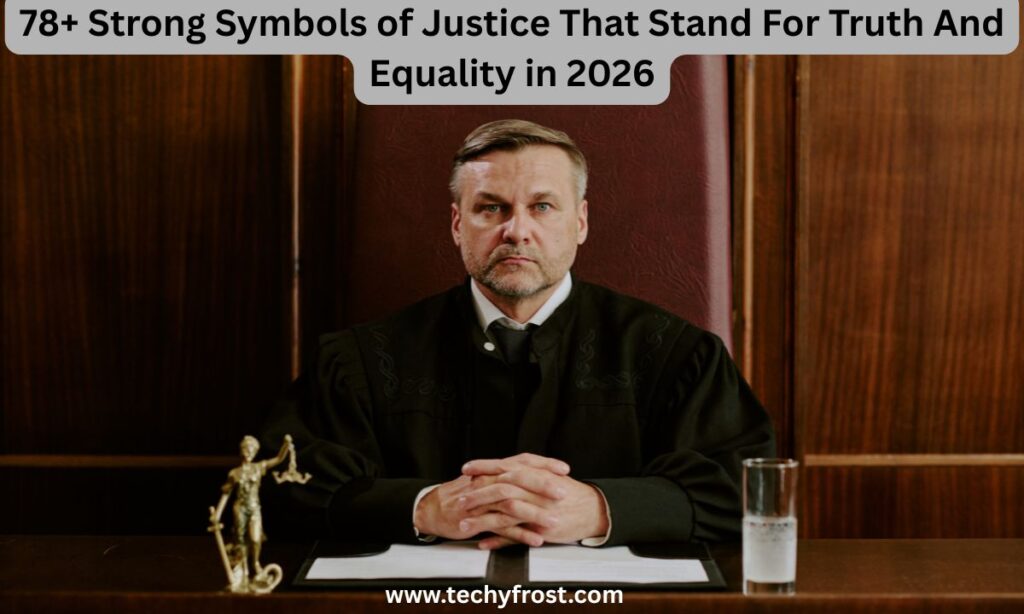
Every time you walk past a courthouse and spot those iconic scales balanced in perfect equilibrium, something stirs inside you. That moment is not accidental — it is the power of symbols at work. Across every civilization, every era, and every legal tradition, humans have used visual imagery to communicate one of their deepest values: justice.
Symbols of justice are far more than decorative images carved into stone or painted on government walls. They are living, breathing language — a universal grammar that speaks of fairness, truth, accountability, and moral order without uttering a single word. From ancient Egypt’s feather of Ma’at to the Dharma Chakra of India’s Supreme Court, these symbols have evolved, adapted, and endured because what they represent never goes out of style.
In this guide, you will explore 78+ strong symbols of justice, understand their deep roots, discover their psychological impact on society, and see how they continue to shape legal systems worldwide in 2026.
What Are Symbols of Justice?
Symbols of justice are visual representations — figures, objects, or images — that communicate the principles of fairness, law, moral order, equality, and truth. They serve as powerful shorthand for complex legal and ethical ideas, allowing entire philosophies of governance and morality to be expressed in a single image.
These symbols appear in courtrooms, government seals, currency, architecture, art, literature, tattoos, and popular culture. Whether it is the scales balanced on a courthouse façade or the gavel struck at the end of a legal proceeding, each image carries centuries of meaning compressed into one recognizable form.
The most universally recognized symbols of justice include:
- The Scales of Justice — representing balance and impartial weighing of evidence
- Lady Justice (Justitia) — the personification of law, fairness, and legal authority
- The Sword — symbolizing enforcement, authority, and the power of law
- The Blindfold — representing impartiality and equal treatment regardless of status
- The Gavel — a modern symbol of legal authority and final judgment
- The Feather of Ma’at — from ancient Egypt, representing moral purity and truth
Understanding Symbols Of Justice Meaning And Their Deep Roots
Symbols Of Justice Meaning
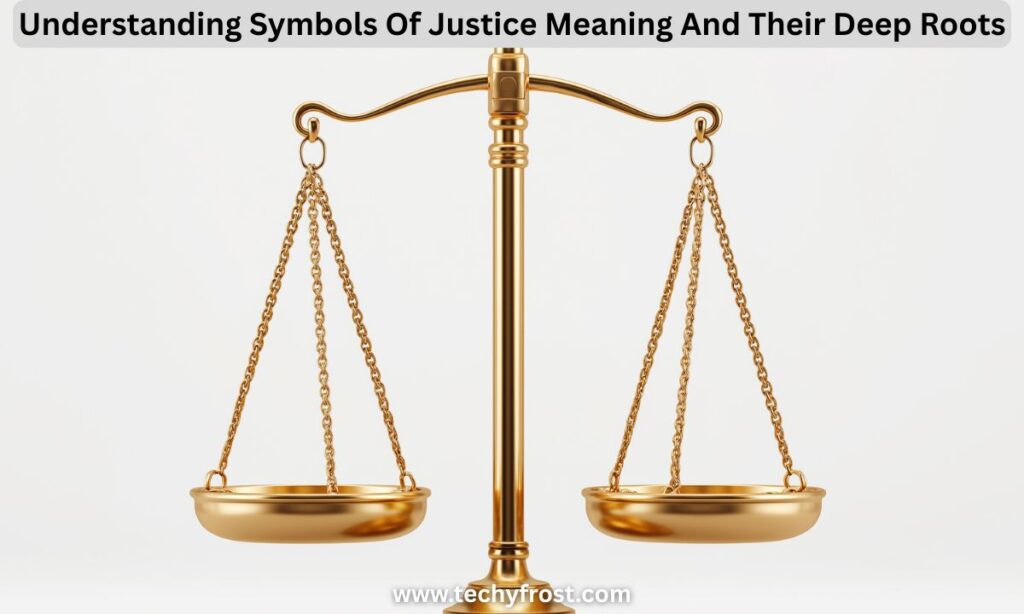
At their core, symbols of justice meaning revolves around three universal concepts: balance, truth, and authority. Every justice symbol, regardless of its cultural origin, points back to one or more of these pillars.
Balance reflects the idea that law must weigh competing interests without tipping toward wealth, power, or prejudice. Truth suggests that outcomes must be grounded in facts and moral reality, not manipulation. Authority reminds us that justice requires enforcement — a rule that cannot be upheld is no rule at all.
These meanings are not arbitrary. They grew out of humanity’s experience with conflict, inequality, and the longing for a world where wrongs are corrected and fairness prevails. Over thousands of years, communities encoded these desires into images that everyone could immediately understand, regardless of language or literacy level.
Justice Symbols
Justice symbols are the specific visual vocabulary of this universal language. Below is a comprehensive reference list of the most important justice symbols recognized globally:
| Symbol | Origin | Core Meaning |
|---|---|---|
| Scales of Justice | Ancient Egypt / Greece | Balance, impartiality, fairness |
| Lady Justice (Justitia) | Ancient Rome | Personification of law and equality |
| Feather of Ma’at | Ancient Egypt | Truth, moral purity, divine order |
| Themis | Ancient Greece | Divine law, order, prophetic wisdom |
| The Sword | Multiple civilizations | Enforcement, authority, punishment |
| The Blindfold | 15th-century Europe | Impartiality, objectivity |
| The Gavel | Modern Western courts | Authority, finality of legal judgment |
| The Fasces | Ancient Rome | Collective strength, judicial authority |
| The Dharmachakra | Ancient India | Righteousness, the wheel of law |
| The Owl | Ancient Greece | Wisdom in legal decisions |
| The Lion | Global | Strength, power, justice enforcement |
| The Torch | Global | Truth, enlightenment, transparency |
| The Scroll | Ancient Egypt / Rome | Knowledge, accumulated law |
| The Pillar | Multiple civilizations | Foundation, stability of legal systems |
| The Laurel Wreath | Ancient Greece / Rome | Civic honor, moral victory |
History and Evolution of Justice Symbols Through Civilizations
The history of justice symbols stretches back over 5,000 years. It begins not in marble courtrooms but in the temples and religious traditions of the ancient world, where divine authority and legal authority were deeply intertwined.
In ancient Mesopotamia, the Code of Hammurabi (c. 1754 BCE) was inscribed beneath an image of King Hammurabi receiving laws directly from Shamash, the sun god and deity of justice. This carved scene is arguably one of the world’s earliest justice symbols — law as divinely ordained.
In Ancient Egypt, the goddess Ma’at embodied truth, balance, and cosmic order. Pharaohs aligned themselves with her principles as a matter of religious duty, and her feather became the standard by which every human soul was weighed after death. The concept is direct: only a life lived in truth and fairness could pass the ultimate judgment.
The Greeks developed this tradition with goddesses Themis and Dike. Themis, whose name literally means “divine law,” was the organizer of communal affairs and the keeper of natural and moral law. Dike was the goddess of justice and human law. These figures were later absorbed and adapted by Roman civilization.
In Ancient Rome, the goddess Justitia became the canonical figure of legal justice. During the imperial era under Emperor Tiberius, she received her most recognizable attributes — scales and sword. Later, in the 15th and 16th centuries, European artists added the blindfold, transforming her from a seeing figure into a symbol of absolute impartiality.
In South Asia, the concept of Dharma — moral law and righteousness — became the foundation of justice. The Dharmachakra (Wheel of Law), central to Buddhist and Hindu thought, was adopted by Emperor Ashoka in the 3rd century BCE and is today the centerpiece of India’s national emblem and Supreme Court symbolism.
Across East Asia, the image of a balanced scale appears in Chinese and Japanese legal traditions, alongside the dragon as a symbol of imperial justice and authority.
This evolutionary arc — from divine symbols to civic and legal ones — shows that every society has felt the need to make justice visible, tangible, and sacred.
Difference Between Justice Symbols and Legal Symbols
While often used interchangeably, justice symbols and legal symbols are not the same thing:
| Feature | Justice Symbols | Legal Symbols |
|---|---|---|
| Scope | Universal, moral, philosophical | Specific to legal institutions |
| Purpose | Represent ideals of fairness and truth | Represent authority and legal process |
| Examples | Scales, Lady Justice, Feather of Ma’at | Gavel, law book, court seal, robes |
| Emotional tone | Inspirational, aspirational | Procedural, institutional |
| Cultural reach | Cross-cultural and historical | Often specific to legal traditions |
Justice symbols express the why of law — the moral foundation. Legal symbols express the how — the machinery of legal process. The scales of justice inspire a feeling; the gavel marks a procedure. Both matter, but they function differently in the human psyche.
Why Lady Justice Is Blindfolded – Hidden Meaning Explained
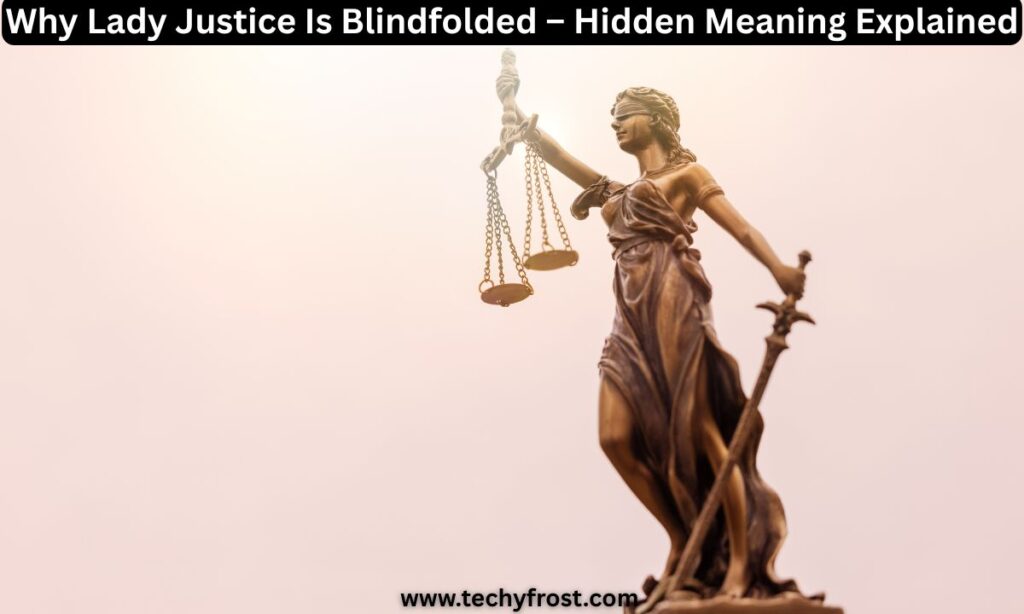
The blindfold on Lady Justice is one of the most debated and misunderstood elements in the history of legal symbolism. Many people assume it has always been there. In reality, the blindfold only appeared around the late 15th century.
In early Roman depictions, Justitia could see perfectly well. The addition of the blindfold came during the Renaissance period in Europe — and its meaning has been interpreted in two completely opposite ways ever since.
The aspirational interpretation: The blindfold represents ideal impartiality. Justice cannot be swayed by the appearance of the parties before her — not by wealth, social status, race, gender, or political power. She weighs only the facts and the law. This is the meaning most legal traditions choose to celebrate.
The satirical interpretation: Interestingly, the blindfold originally appeared in satirical art — images mocking a justice system that was literally blind to corruption and couldn’t see the truth even when it stood right in front of it. What began as criticism was later reabsorbed as a positive ideal.
Today, the blindfold’s meaning is firmly aspirational. However, it is worth noting that in 2024, India’s Supreme Court made a deliberate choice to remove the blindfold from their new Lady Justice statue — a powerful statement that justice should be wide-eyed, fully aware, and actively engaged with constitutional reality rather than passively indifferent.
Misuse and Misinterpretation of Justice Symbols
Like all powerful symbols, justice symbols are vulnerable to misuse. Throughout history, these images have been co-opted by political regimes, propaganda movements, and individuals seeking to legitimize unjust actions under the cover of justice’s visual authority.
- Authoritarian regimes have placed scales and swords on their seals while systematically denying equality before the law
- Corporations use Lady Justice imagery in advertising to invoke trust, even when their practices undermine fairness
- Extremist groups have distorted legal symbols to suggest divine sanction for discriminatory ideologies
- Popular culture sometimes reduces justice symbols to aesthetic decoration, stripping them of their philosophical depth
The critical lesson is that displaying a symbol of justice is not the same as practicing justice. When symbols are divorced from the values they represent, they become tools of manipulation. An informed society must learn to ask not just whether a justice symbol is present, but whether the institution displaying it actually lives up to its meaning.
Justice Symbols in Modern Courtrooms and Legal Systems
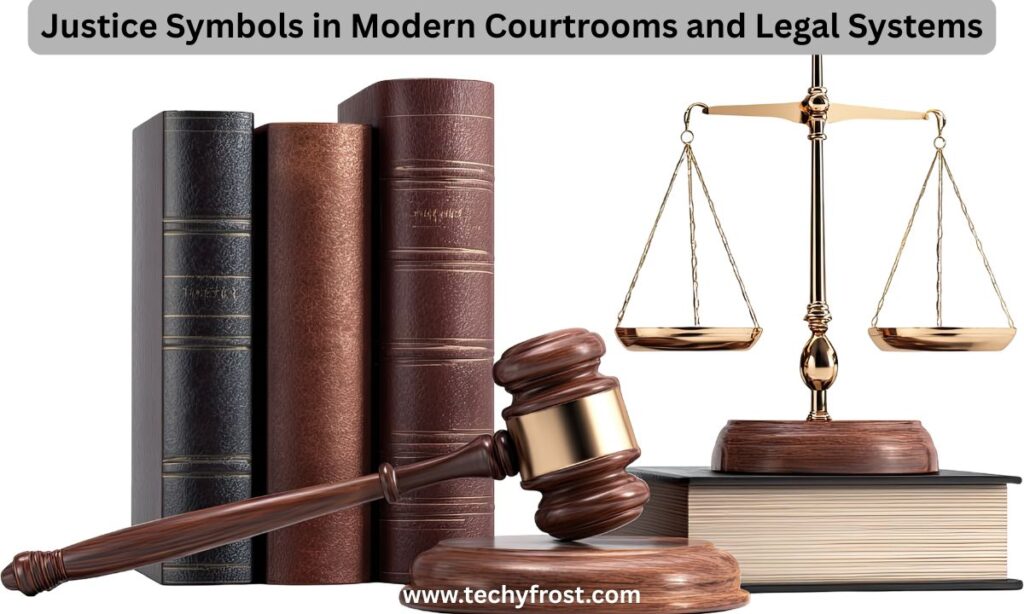
Walk into almost any courtroom in the world today and you will encounter justice symbols, often in multiple forms simultaneously. These are not incidental decorations — their placement is intentional and psychologically significant.
In Western courtrooms, Lady Justice typically appears above the judge’s bench or outside the building’s entrance, reinforcing the legitimacy of the proceedings and reminding all participants of the ideals the court aspires to uphold. The scales of justice appear on judicial seals, stamps, and official documents.
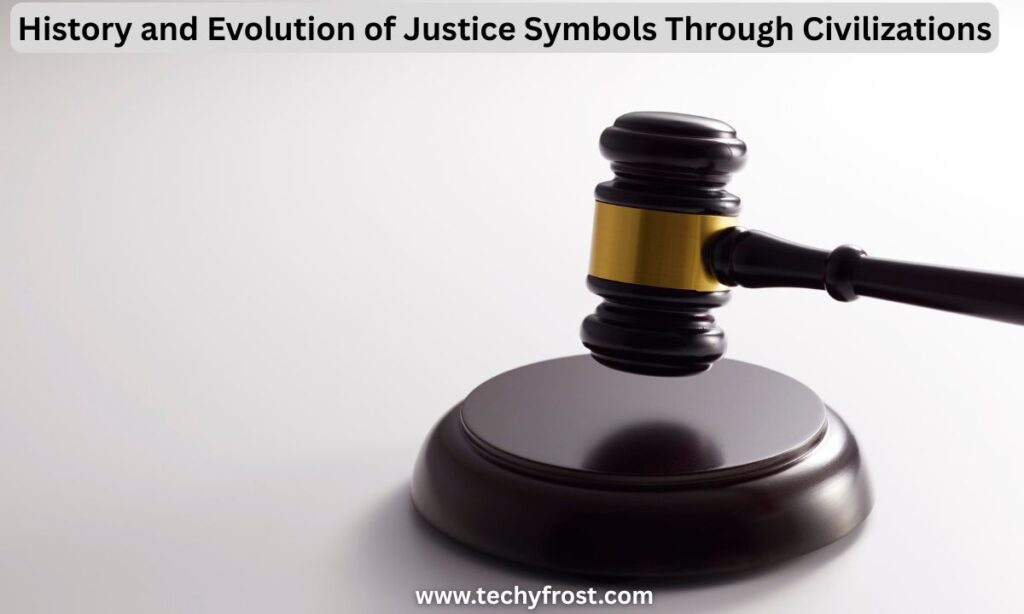
The gavel — a distinctly modern justice symbol — marks moments of finality in legal proceedings. Its sharp crack signals authority, conclusion, and the transition between legal states (guilty/not guilty, open/closed, ordered/upheld).
In Indian courts, the Ashoka emblem with its four lions and central Dharmachakra is displayed prominently. India’s 2024 redesign of the Supreme Court’s Lady Justice statue — showing her without a blindfold, holding the Constitution instead of a sword — reflects how living legal systems continuously renegotiate the meaning of their symbols.
In Islamic legal traditions, Quranic calligraphy and specific geometric patterns carry the symbolic weight of divine justice, replacing figurative imagery with scriptural authority.
Justice Symbols in Flags, Seals and Government Logos

Justice symbols appear with remarkable frequency in the official visual identity of nations and institutions:
- United States: The Department of Justice seal features a bald eagle and the scales of justice
- Canada: The Supreme Court of Canada is flanked by statues of Justitia and Veritas (Truth)
- United Kingdom: The scales of justice crown the Old Bailey courthouse in London
- India: The national emblem (Ashoka Lions with Dharmachakra) appears on all official courts and legal documents
- European Union: The Court of Justice of the EU uses a balance scale motif in its institutional identity
- Israel: The Supreme Court building incorporates a scales motif into its architectural design
Government logos that incorporate justice symbols serve a dual purpose: they communicate institutional values and they establish psychological authority. Citizens who see the scales of justice on an official seal are primed to associate that institution with fairness and moral weight.
Psychological Impact of Justice Symbols on Society
The psychological power of justice symbols should not be underestimated. Decades of research in social psychology confirm that visual symbols influence behavior, expectations, and emotional states in measurable ways.
When people see the scales of justice, studies suggest their thinking shifts toward greater fairness, moral reasoning, and impartiality. Exposure to justice symbols in courtroom settings has been shown to increase participants’ belief in the fairness of the legal process — regardless of the actual outcomes.
This is both the power and the danger of justice symbols. They can inspire genuine commitment to fairness, or they can create a veneer of legitimacy that obscures systemic inequality.
Ancient Symbols Of Justice
Ancient symbols of justice carry a distinctive weight because they connect human legal traditions to their deepest roots. The Egyptian Feather of Ma’at, the Greek Themis, and the Roman Justitia all emerged from religious and cosmological worldviews where justice was not simply a human invention but a fundamental principle of the universe.
These ancient symbols remind us that the desire for fairness is not culturally specific — it is universally human.
Symbols Of Justice Around The World
Justice symbols are genuinely global. While Lady Justice dominates Western imagery, the world contains rich diversity in how cultures visualize fairness and law:
- Africa: The Adinkra symbol Nyansapo (Wisdom Knot) from Ghana represents wisdom and judgment
- China: The dragon-tortoise represents long-standing judicial authority
- Japan: The chrysanthemum seal appears on Supreme Court documents
- Islamic cultures: The Quran itself is displayed as the source of divine justice
- India: The Ashoka Lion Capital and Dharmachakra represent righteousness and universal law
Symbols Of Justice Drawing
Justice symbols have inspired an entire tradition of artistic representation. Students, lawyers, artists, and activists have all engaged with justice imagery in their drawings and designs. The most commonly drawn justice symbols include the balanced scales, the blindfolded Lady Justice, the gavel, and the torch of truth.
Symbols Of Justice And Law
The relationship between justice symbols and legal systems is bidirectional. Legal systems adopt symbols to establish legitimacy; symbols, over time, shape public expectations of what legal systems should be. The most powerful symbols of justice and law include:
- The scales of justice
- The gavel
- Lady Justice
- The law book / Constitution
- The pillars of the courthouse
- The judicial robe
- The court seal
Symbolic Symbols Of Justice
Some symbols operate on a purely symbolic level, carrying profound philosophical weight without any literal legal function. The Feather of Ma’at, for instance, is not used in any modern court — but it continues to resonate as a perfect metaphor for the lightness of a morally pure life measured against the weight of wrongdoing.
Lady Justice Symbol
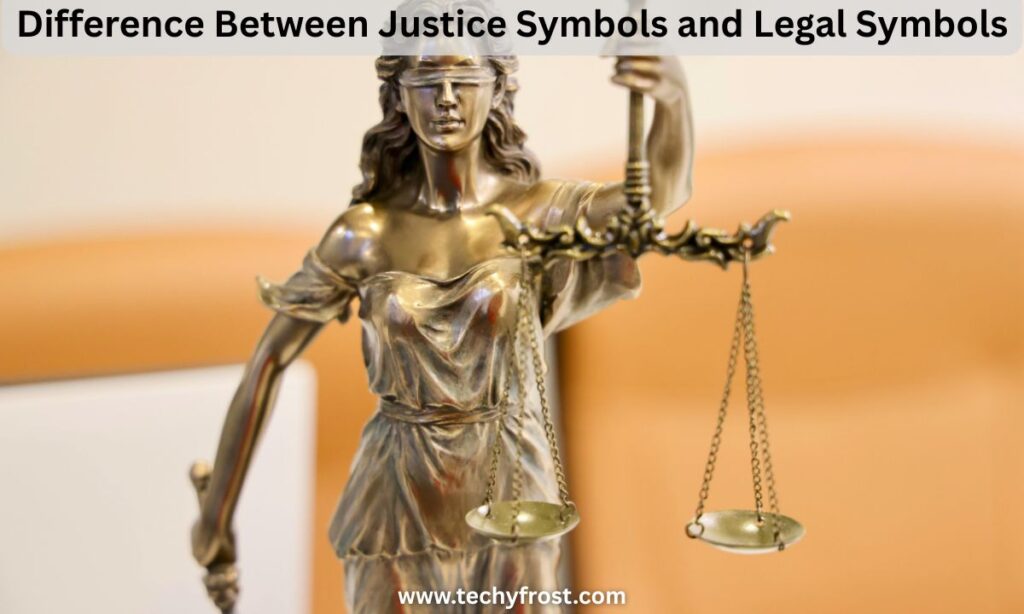
Lady Justice is the most globally recognized symbol of justice. She appears as a robed woman holding scales in one hand and a sword in the other, typically blindfolded. Each element has precise meaning:
- Scales: impartial weighing of evidence and arguments
- Sword: the power to enforce judgments and maintain order
- Blindfold: objectivity, freedom from prejudice and favoritism
- Robe: dignity, solemnity, and the authority of the law
Exploring Global And Cultural Justice Symbols
Law And Justice Symbols
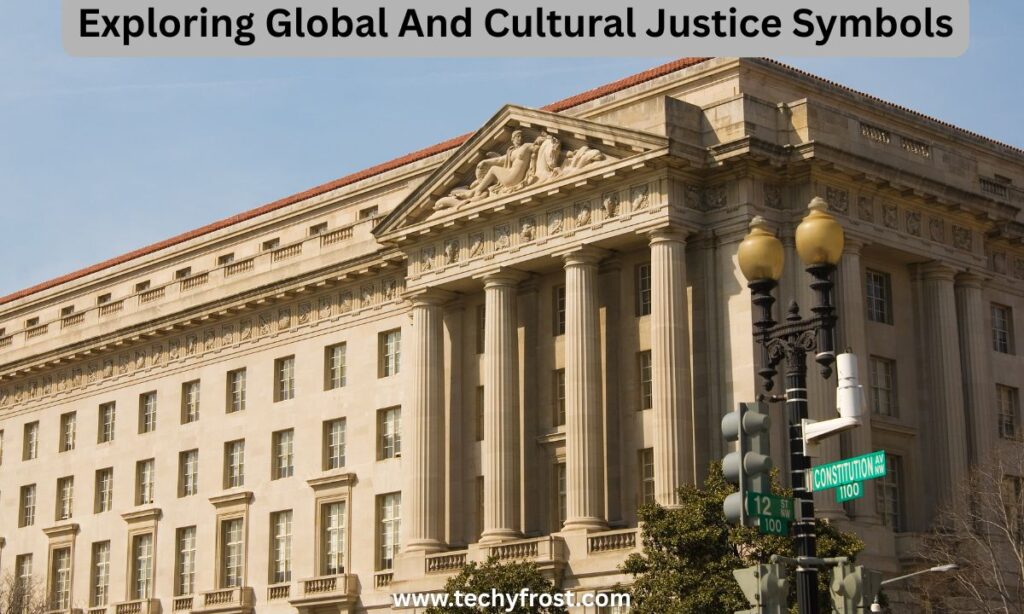
Law and justice symbols together form the visual grammar of legal civilization. They range from ancient divine figures to modern procedural objects, but all share the common purpose of making the abstract concept of justice visible and tangible.
Symbols Of Fairness
Symbols of fairness specifically highlight the principle of equal treatment. The balanced scales are the most direct symbol of fairness — two pans held in perfect equilibrium, neither weighted toward power nor toward poverty. Other fairness symbols include the open hand (offering and receiving equally), the circle (no beginning, no end, no hierarchy), and the level scale.
Symbols For Justice
The most widely used symbols for justice across legal systems worldwide:
- ⚖️ Scales of justice
- 🔨 Gavel
- 👁️ Eye of Ma’at
- 🪶 Feather of Truth
- 🏛️ Courthouse pillars
- 📜 Scroll of law
- 🗡️ Sword of justice
- 🌿 Laurel wreath
Symbols That Represent Justice
Symbols that represent justice span the artistic, architectural, religious, and cultural domains. Beyond the familiar scales and Lady Justice, symbols that represent justice include:
- The rainbow in some Indigenous traditions, representing harmony restored
- The olive branch, associated with peace achieved through just resolution
- The mirror, reflecting truth without distortion
- The compass, pointing to moral direction
- The anchor, representing stability and firm legal grounding
Symbolism For Justice
The broader symbolism for justice draws on themes of balance, light, truth, and order. Light (torches, flames, the sun) appears across cultures as a symbol for truth that exposes wrongdoing and guides fair judgment. Order (geometric patterns, structured architecture) represents the systematic nature of just legal processes.
Symbols Of Equality And Justice
Equality and justice are deeply intertwined, and their symbols overlap significantly:
| Symbol | Equality Meaning | Justice Meaning |
|---|---|---|
| Balanced scales | Equal weight for all | Fair judgment |
| Open hand | Equal access | Offering protection |
| Circle | No hierarchy | Continuity of law |
| Blindfold | No favoritism | Impartiality |
| Level horizon | Equal standing | Fair starting point |
Symbols That Mean Justice
Symbols that specifically mean justice, as opposed to law or authority, tend to emphasize fairness and moral correctness rather than power. These include the feather, the level scale, the open book, and figures with eyes closed or covered.
Symbol For Justice And Equality
The scales of justice remain the most universal symbol for justice and equality combined — they express both the goal (fairness) and the method (weighing all sides equally).
Things That Symbolize Justice
Beyond formal symbols, many everyday objects and natural phenomena have been used to symbolize justice across cultures:
- The moon — revealing truth in darkness
- The river — flowing impartially past all terrain
- The mountain — immovable, permanent, standing above favoritism
- The double-edged sword — cutting both ways, applying equally
- The open book — knowledge accessible to all
Types, Uses And Modern Representations Of Justice Symbols
Symbols Of Justice And Equality
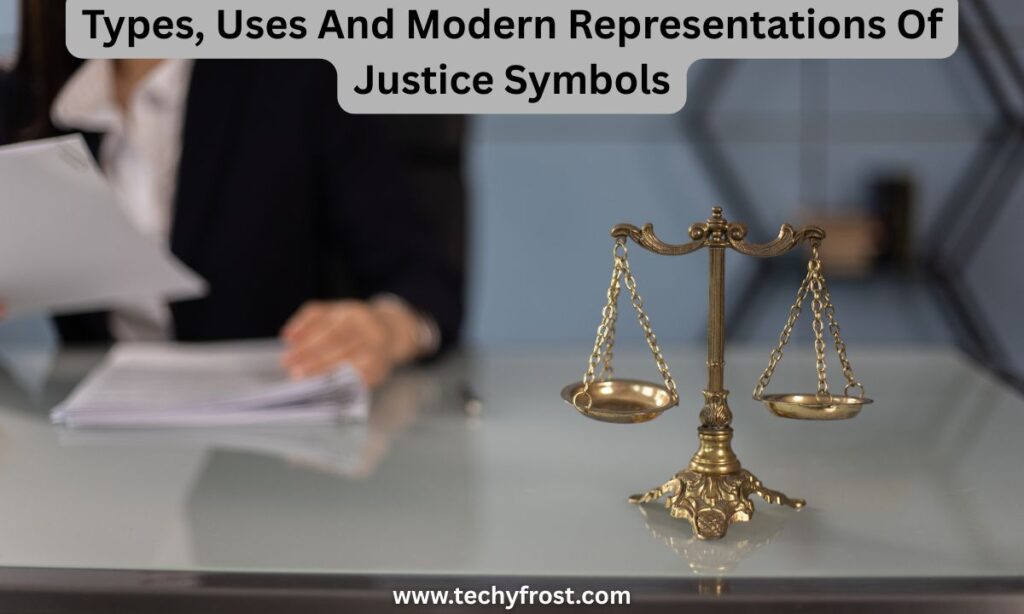
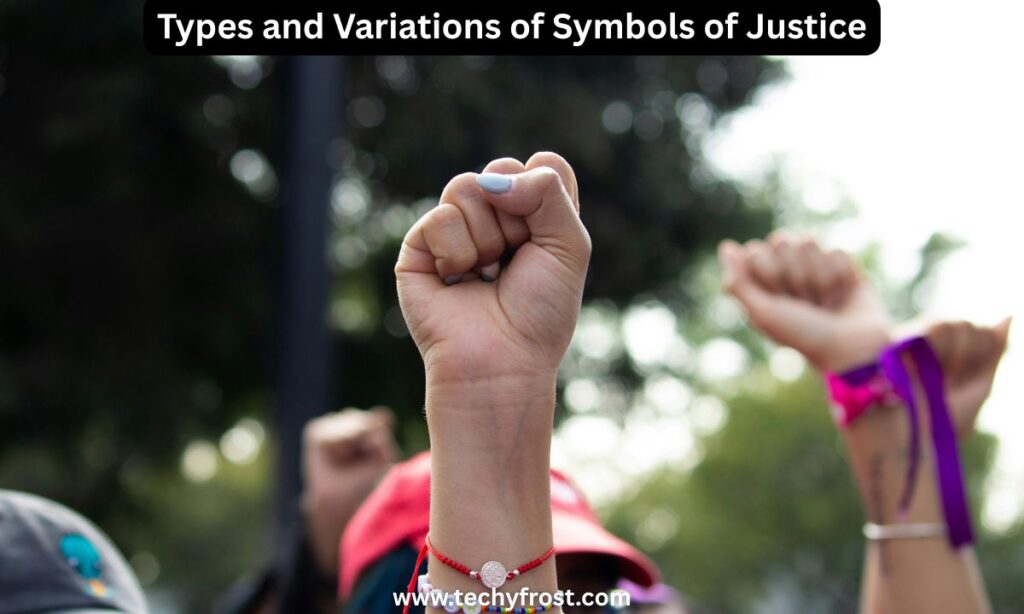
Modern representations of justice and equality increasingly blend traditional legal symbols with contemporary human rights imagery. The raised fist (representing power to the people), the equal sign (mathematical equality applied to human rights), and the rainbow flag (full inclusion in justice) have all entered the visual vocabulary of justice symbolism in the 21st century.
Celtic Symbols Of Justice
Celtic justice symbols draw on the rich visual tradition of knot-work, spirals, and interlocking patterns. The Celtic triple spiral (Triskelion) represents the cyclical nature of truth, the balance between worlds, and the continuity of moral law. Celtic knotwork, with its interlocking and continuous lines, symbolizes the interconnectedness of actions and consequences — a visual representation of moral accountability.
Universal Symbols Of Justice
Truly universal symbols of justice — recognized across wildly different cultures — are surprisingly few. The scales of justice, the blindfold, and the torch of truth come closest to genuinely universal status, appearing in some form across European, Asian, African, and American traditions.
Indian Court Symbols Of Justice
India’s legal system uses a distinctive visual vocabulary rooted in its ancient traditions:
- The Ashoka Lion Capital — four lions representing power, courage, confidence, and faith
- The Dharmachakra — the 24-spoked wheel of law, signifying perpetual motion toward righteousness
- The motto Satyameva Jayate — “Truth Alone Triumphs,” from the Mundaka Upanishad
- The Constitution of India — displayed in the 2024 redesigned Lady Justice as the source of legal authority
India’s 2024 Supreme Court Lady Justice statue, unveiled under Chief Justice DY Chandrachud, removed the traditional blindfold and replaced the sword with a copy of the Constitution — a bold symbolic statement prioritizing constitutional values over colonial-era iconography.
American Symbols Of Justice
American justice symbols combine ancient imagery with uniquely democratic values:
- The bald eagle — freedom and national sovereignty in the service of law
- Lady Justice — appears on the U.S. Department of Justice seal and countless courthouse facades
- The gavel — authority of judges and legislators
- The Constitution — the supreme legal symbol of American governance
- The Supreme Court building’s architecture — its Greek Revival pillars evoke Themis and the classical tradition of justice
Tattoo Symbols Of Justice
Justice tattoos have become a meaningful way for individuals to express personal commitments to fairness, truth, and moral integrity. Popular justice tattoo symbols include:
- Scales of justice (often with fine black-line detail)
- Lady Justice full figure (a complex, detailed tattoo)
- The sword alone (for those in legal professions)
- The blindfold motif
- Feather of Ma’at (popular in spiritual communities)
- Latin phrases: Fiat justitia ruat caelum — “Let justice be done though the heavens fall”
Symbols Of Justice Asia
Asian justice symbolism is rich and diverse:
- China: Dragon tortoise representing judicial authority; Balance scales in Confucian legal thought
- Japan: The chrysanthemum seal; the “Sword of Heavenly Origin” as divine justice
- India: Dharmachakra, Ashoka Lions, Satyameva Jayate
- Buddhism (Pan-Asian): The Wheel of Dharma representing the path to righteous living and just society
- Thailand: The Garuda — the divine bird of justice and royal law
The Symbols Of Justice
The complete canon of justice symbols includes ancient and modern, Eastern and Western, secular and sacred. Together they form a comprehensive visual language for one of humanity’s most essential values.
Common Symbols Of Justice
The most commonly encountered symbols of justice in everyday life:
- ⚖️ Scales of justice (courtroom seals, logos, emoji)
- Lady Justice statue (courthouses worldwide)
- The gavel (courts, auctions, legislative chambers)
- The law book (legal offices, educational institutions)
- The blindfold (artistic representations)
- The courthouse building itself
Court Symbols Of Justice
In formal court settings, specific symbols carry institutional authority:
- The judge’s robe — dignity, neutrality, separation of personal identity from judicial function
- The bench — elevated position representing authority and perspective
- The seal — official authentication of justice’s mandate
- The court’s coat of arms — institutional identity and legal lineage
Different Symbols Of Justice
Different traditions have produced genuinely different symbols of justice, each reflecting distinct cultural values:
| Tradition | Primary Symbol | Core Value Expressed |
|---|---|---|
| Western legal | Lady Justice with scales | Impartial, measured judgment |
| Egyptian ancient | Feather of Ma’at | Moral purity, truth |
| Greek ancient | Themis | Divine and natural law |
| Indian tradition | Dharmachakra | Righteousness, eternal law |
| Islamic tradition | Holy Quran | Divine justice, compassion |
| Celtic tradition | Triskelion | Cyclical truth, continuity |
| East Asian | Dragon / Balance | Imperial power, cosmic order |
Symbols Of Justice Images
Justice symbols appear in visual media ranging from ancient temple carvings to modern digital emojis. The ⚖️ emoji — a pair of balanced scales — is now arguably the most widely seen justice symbol in the world, appearing billions of times daily in digital communication. This democratization of justice imagery represents a fascinating new chapter in the evolution of these ancient symbols.
What Are Some Symbols Of Justice?
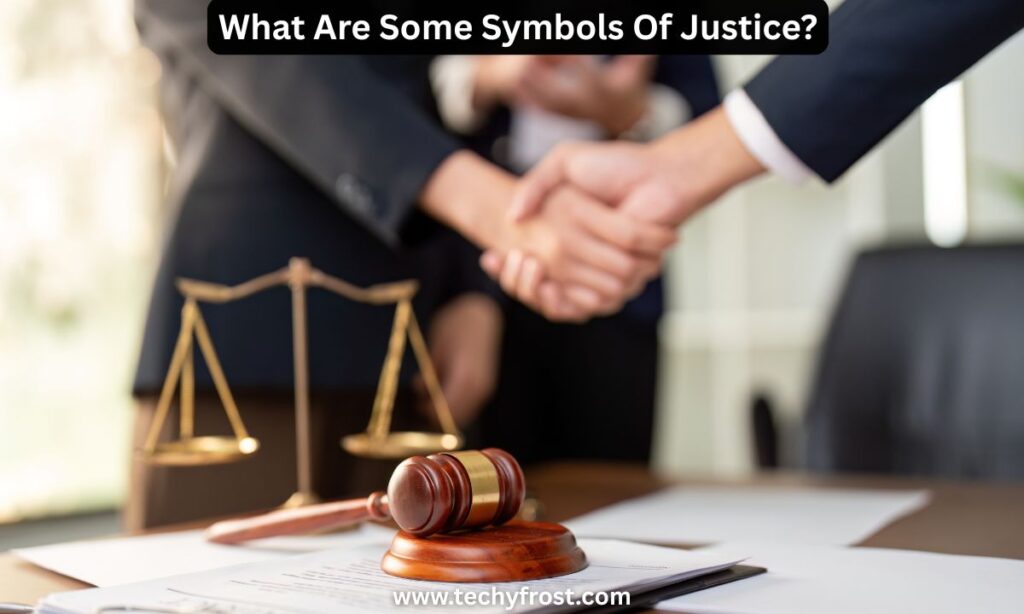
Some of the most powerful and widely recognized symbols of justice include:
- The scales of justice (balance and fairness)
- Lady Justice / Justitia (personification of law)
- The feather of Ma’at (truth and moral purity)
- The Dharmachakra (wheel of righteous law)
- The gavel (legal authority and finality)
- The laurel wreath (civic and moral honor)
- The pillars of the courthouse (structural stability of law)
- The torch of truth (enlightenment and transparency)
Deep Symbolic Meaning
Spiritual Level
At the spiritual level, symbols of justice connect human legal systems to cosmic or divine order. In virtually every major religious tradition, justice is not merely a human invention — it is a fundamental property of the universe. Ma’at in Egypt, Dharma in Hinduism and Buddhism, Divine Law (Sharia) in Islam, the Ten Commandments in Judaism and Christianity — all locate justice at the intersection of the human and the sacred.
Spiritual justice symbols remind communities that their legal systems are accountable not just to human power structures but to something greater. This gives justice symbols an ethical weight that purely procedural legal symbols cannot carry.
Psychological Level
Psychologically, justice symbols function as what researchers call moral anchors — visual cues that activate fairness-oriented thinking and reduce self-serving bias. Studies in behavioral psychology suggest that environments containing justice symbols (scales, blindfolds, Lady Justice) lead participants to make more impartial decisions.
These symbols also serve as emotional containers for our complex feelings about fairness, wrongdoing, and accountability. When we feel that justice has been served, we often describe the feeling with the language of balance — “the scales have been balanced,” “things feel right again.” The symbol and the emotion are inseparable.
Cultural Level
Culturally, justice symbols serve as collective touchstones — shared images that remind communities of their foundational values. When those symbols are displayed prominently (on courthouses, in seals, on currency), they reinforce social contracts and create a visual promise: this institution exists to serve fairness, not power.
Types and Variations of Symbols of Justice
Lady Justice
Lady Justice is the most comprehensive justice symbol, combining multiple meanings in a single figure. Her various representations across cultures and centuries reveal how societies have continuously renegotiated what they mean by justice.
The Scales of Justice
The scales trace directly to Egyptian mythology and have remained the most durable single object in the vocabulary of justice symbolism. In modern usage, they appear on court seals, legal logos, emoji, jewelry, and architecture worldwide.
The Sword of Justice
The sword’s dual nature — it can protect or punish, defend or destroy — makes it a particularly honest justice symbol. Justice requires not just ideals but enforcement. The double-edged sword acknowledges this reality.
The Blindfold
The blindfold remains one of the most philosophically rich justice symbols. It represents the aspiration that legal outcomes should be determined by facts and law alone, completely independent of who the parties are.
Ma’at Feather
The feather of Ma’at is a justice symbol of extraordinary delicacy and precision. A single feather — the lightest of all natural objects — measuring the weight of a human soul communicates that justice requires an almost impossibly fine sensitivity to truth.
Symbols of Justice Across Cultures
Ancient Egypt
Egypt gave the world the foundational imagery of justice as weighing and measurement. Ma’at’s feather, Anubis’s scales, and the Hall of Judgment established that justice is cosmic in scope and precise in execution.
Ancient Greece
Greece transformed divine justice into philosophical justice. With Themis and Dike, the Greeks began asking not just what justice demanded but why — what principles made something just or unjust. This philosophical turn gave Western legal tradition its characteristic emphasis on argument and reason.
Ancient Rome
Rome institutionalized justice, creating Justitia as a civic goddess and embedding justice symbols in the machinery of imperial governance. Roman legal tradition, with its emphasis on codified law and procedural fairness, directly shaped Western legal systems to the present day.
Eastern Traditions
Eastern traditions developed parallel but distinct justice symbolism. The Dharmachakra in Indian thought, the concept of Yi (righteousness) in Confucian Chinese tradition, and Buddhist ideas of karma as cosmic moral accounting all represent sophisticated non-Western frameworks for understanding justice.
Modern Society
Modern justice symbolism is hybrid and global. Contemporary legal systems draw on ancient symbols while adding new ones — the gavel, the Constitutional text, the scales emoji, the rainbow flag of inclusive justice. Justice symbolism in 2026 is more diverse, more democratic, and more digitally distributed than at any previous point in human history.
Symbols of Justice in Art, Movies and Pop Culture
Justice symbols have saturated popular culture in ways that both honor and complicate their original meanings.
In cinema, Lady Justice appears in countless legal dramas, often as the backdrop against which characters debate whether the system truly delivers on its promise. Films like Philadelphia, 12 Angry Men, and Just Mercy use justice imagery to heighten the emotional stakes of their narratives.
In comics and graphic novels, Justice is often personified as a superhero — a direct extension of the justice goddess tradition. DC’s Justice League explicitly names itself after the concept, while characters like Daredevil wear blindfolds evoking Lady Justice’s impartiality.
In music, justice appears as both aspiration and indictment. Artists from Bob Dylan to Kendrick Lamar have used justice imagery — scales, blindfolds, gavels — to comment on the gap between justice’s symbolic promise and its real-world delivery.
In visual art, justice symbols appear in both celebratory and critical works. Artists have depicted broken scales, bleeding swords, and Lady Justice with her blindfold removed — all powerful commentaries on the state of actual justice.
The ⚖️ emoji deserves special mention. In 2026, this tiny digital symbol appears in billions of social media posts, news articles, and messaging conversations daily — making it arguably the most widely seen justice symbol in human history.
Spiritual and Dream Meaning of Symbols of Justice
When justice symbols appear in dreams or spiritual visions, their meanings carry particular emotional weight.
Scales of justice in dreams typically indicate that the dreamer is weighing a difficult decision or feels that a situation in their life is unbalanced and seeking resolution. They may signal a need for fairness in a relationship or situation.
Lady Justice appearing in dreams often represents the dreamer’s conscience — their internal judge. Her presence may indicate feelings of guilt, a desire for acknowledgment, or a subconscious processing of fairness in personal relationships.
The sword in dreams connected to justice imagery suggests decisive action is needed. The dreamer may feel called to enforce a boundary, defend a truth, or take authoritative action in a situation where passivity has prevailed.
The feather appearing in spiritual contexts often signals lightness — an invitation to examine whether one’s actions and intentions are as pure and light as truth requires.
Positive vs Negative Meaning
Positive Meaning
At their best, symbols of justice inspire some of humanity’s noblest qualities:
- Courage to uphold truth even when it is costly
- Impartiality — judging situations on facts rather than feelings or favors
- Compassion — understanding that justice must account for human complexity
- Accountability — accepting that every action carries moral weight
- Hope — the belief that wrongs can be corrected and balance restored
Negative Meaning
In their shadow form, justice symbols can represent:
- Blind enforcement — rigid rule-application without compassion or context
- Vengeance disguised as justice — using legal forms to pursue personal revenge
- Symbolic performance — displaying justice imagery while practicing injustice
- Oppression — powerful systems using justice language to suppress dissent
- Disillusionment — when the gap between justice’s symbol and justice’s reality becomes too wide to bridge
Why Humans Are Attracted to Symbols of Justice
The human attraction to justice symbols is not superficial. It is rooted in some of our deepest psychological and social needs.
We are moral beings. Humans are unique among animals in their capacity to evaluate actions as right or wrong, fair or unfair. Justice symbols are external anchors for this internal moral sense — they make visible something that is otherwise invisible.
We live in groups. Justice is fundamentally a social phenomenon. For human communities to function, members must believe that violations of group norms will be addressed proportionally and impartially. Justice symbols communicate the existence and functioning of this social mechanism.
We crave meaning. Justice symbols connect our everyday experiences of fairness and unfairness to something larger — to history, to cosmic order, to divine intention. They place individual legal struggles in a framework of universal human values.
We need hope. Perhaps most powerfully, symbols of justice hold open the possibility that the world can be more fair than it currently is. They are future-oriented symbols — not just describing what is, but insisting on what should be.
In a world where injustice remains visible and persistent, the enduring power of justice symbols lies precisely in their refusal to accept the world as it is. They stand, balanced and unwavering, for what humanity has always believed the world should become.
Frequently Asked Questions
What is the most recognized symbol of justice?
Lady Justice (Justitia), typically shown blindfolded and holding scales and a sword, is the world’s most widely recognized symbol of justice.
What do the scales of justice symbolize?
The scales of justice symbolize impartiality and the fair weighing of evidence, ensuring that legal decisions are based on facts rather than bias or favoritism.
Why is Lady Justice blindfolded?
The blindfold represents impartiality — the principle that justice should be applied equally to everyone regardless of wealth, power, or social status. It appeared around the 15th century.
What is the feather of Ma’at?
The feather of Ma’at is an ancient Egyptian symbol of truth and moral purity. In Egyptian mythology, the soul of the deceased was weighed against this feather to determine if they had lived a just life.
What does the sword in Lady Justice’s hand mean?
The sword represents the power and authority to enforce legal judgments. Its double-edged nature symbolizes that the law applies equally in both directions.
What are Celtic symbols of justice?
Celtic symbols of justice include the Triskelion (triple spiral) representing cyclical truth and balance, and Celtic knotwork representing the interconnection of actions and consequences.
What is the Dharmachakra and how does it relate to justice?
The Dharmachakra, or Wheel of Law, is a central symbol in Indian legal and religious tradition representing righteousness, the eternal motion toward justice, and the principle that truth always triumphs.
What is the Indian court symbol of justice?
India’s primary court symbol is the Ashoka Lion Capital with the Dharmachakra, accompanied by the motto Satyameva Jayate (“Truth Alone Triumphs”). In 2024, India’s Supreme Court unveiled a new Lady Justice statue without a blindfold, holding the Constitution instead of a sword.
What justice symbols are used in tattoos?
Popular justice tattoo symbols include the scales of justice, Lady Justice, the sword, the blindfold, the feather of Ma’at, and Latin justice mottos like Fiat justitia ruat caelum.
Are there symbols of justice in pop culture?
Yes — justice symbols appear extensively in movies, comics, music, and digital culture. The ⚖️ emoji is now one of the most frequently seen justice symbols in the world, used billions of times daily across digital platforms.
Conclusion
Symbols of justice are among the most enduring and powerful images in human civilization. From the feather of Ma’at weighed in Egypt’s Hall of Judgment to the ⚖️ emoji trending on social media in 2026, these symbols have continuously evolved while holding fast to their core message: truth matters, fairness is possible, and no one should stand above the law.
Understanding these symbols — their history, their cultural variations, their psychological impact, and their potential for both inspiration and misuse — is not merely an academic exercise. It is a way of engaging more deeply with one of the values that makes human civilization worth having.
Every time you see Lady Justice on a courthouse wall, a scale balanced in a logo, or a gavel struck in a courtroom, you are witnessing a civilization’s ongoing promise to itself: that the pursuit of fairness will never be abandoned, no matter how difficult or imperfect the journey.
Justice is not just a symbol. But symbols help us remember what justice is for.

