

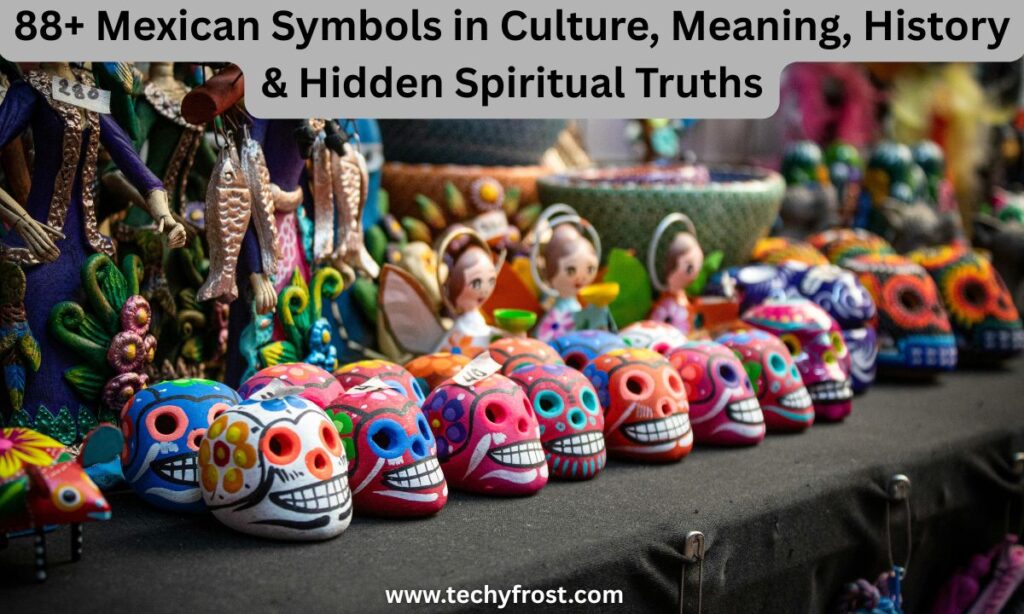
Mexico is one of the world’s most symbolically rich nations. Every icon, color, and creature carved into its ancient temples or painted on a Día de los Muertos altar tells a story stretching back thousands of years. Mexican symbols are not mere decorations — they are living languages, passed from one generation to the next through art, ritual, tattoo, and festival.
Whether you’re drawn to the fierce eagle of the national flag, the sacred spiral of the Aztec sun stone, or the humble marigold guiding souls home, each symbol carries layers of meaning that span history, spirituality, and identity. This guide explores 88+ Mexican symbols across culture, meaning, history, and hidden spiritual truths you may never have heard before.
What are Mexican Symbols?
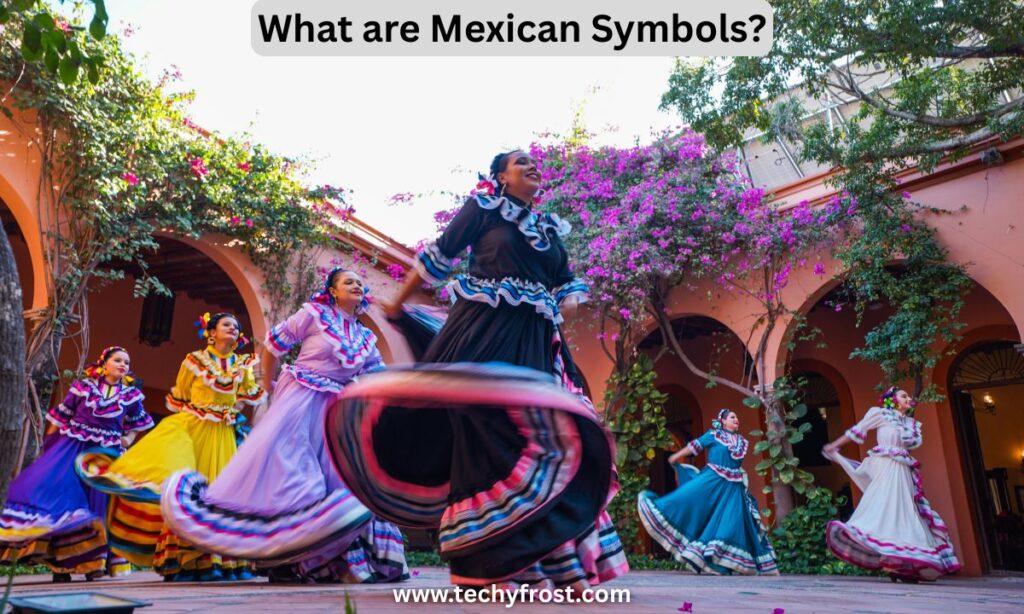
Mexican symbols are visual and spiritual representations rooted in the ancient civilizations of Mesoamerica — primarily the Aztec, Mayan, Olmec, Zapotec, and Toltec cultures — later blended with Spanish colonial and Catholic influences after the 16th century.
These symbols appear in mythology, architecture, national emblems, folk art, religious practice, and daily life. They encode complex ideas: the cycle of life and death, cosmic order, divine protection, agricultural seasons, and the relationships between gods, humans, and nature.
Today, Mexican symbols are also woven into tattoos, fashion, cinema, and global pop culture, carrying their ancient meanings into new contexts while remaining anchored to their cultural origins.
Traditional Mexican Symbols And Their Deep Meanings
Mexican Flag
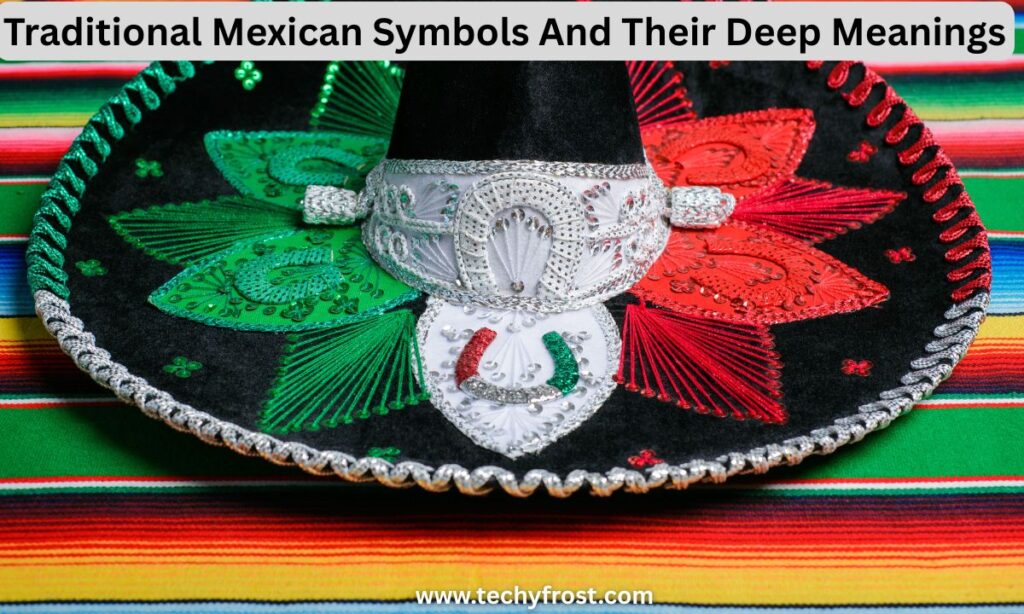
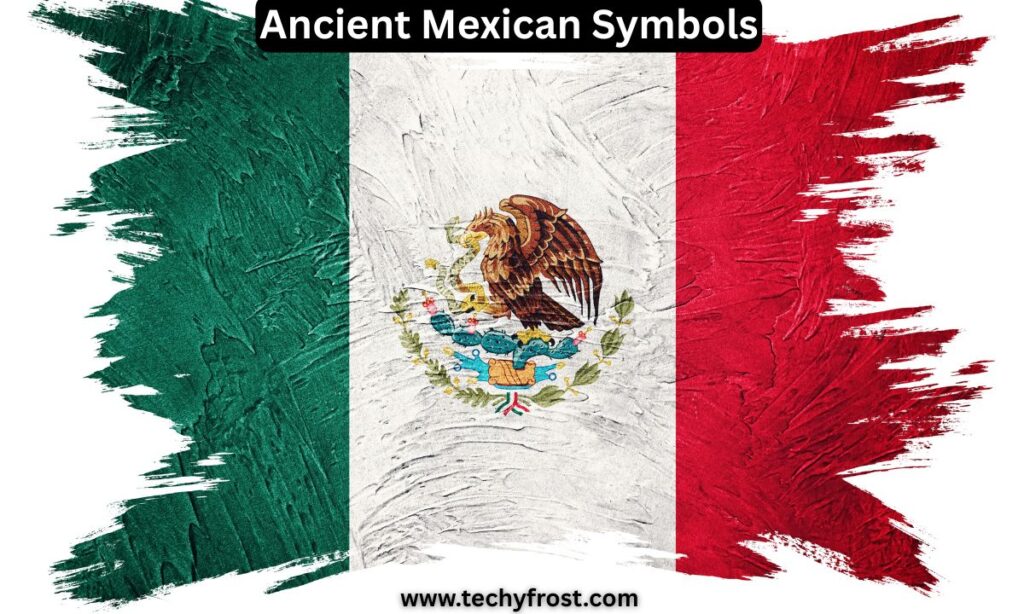
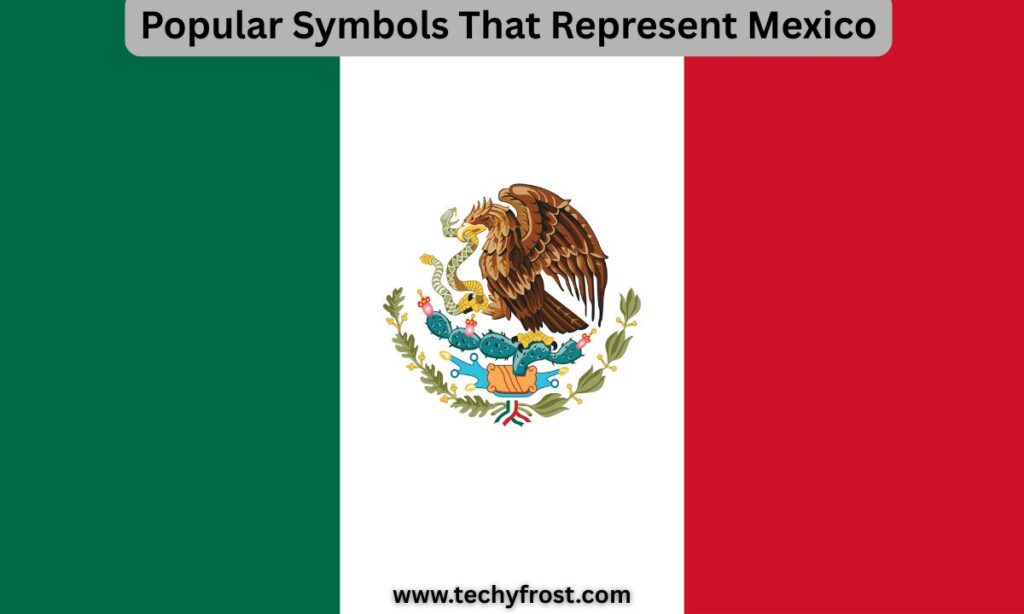
The Mexican flag — Bandera de México — is the nation’s most recognized symbol. Its vertical tricolor of green, white, and red carries deeply layered meaning:
| Color | Symbolism |
| Green | Independence, hope, and the lush natural landscapes of Mexico |
| White | Purity, unity of the Mexican people, and the Virgin of Guadalupe |
| Red | The blood of national heroes who fought for independence, passion, and struggle |
At the center sits the National Coat of Arms: an eagle perched on a cactus, devouring a serpent. This image is drawn directly from Aztec mythology, where the god Huitzilopochtli guided the wandering Mexica people to found their city at the exact spot where they would witness this sacred vision. That city became Tenochtitlan — modern-day Mexico City.
Mexican Symbols And Meanings
Mexican symbolism pulls from multiple civilizations and time periods. Here is a quick-reference overview of some of the most important:
| Symbol | Origin | Core Meaning |
| Eagle & Serpent | Aztec / National | Founding of Mexico, divine guidance |
| Quetzalcoatl | Aztec / Olmec | Creation, knowledge, wind, and rebirth |
| Aztec Sun Stone | Aztec | Cosmic cycles, time, and the five suns |
| Marigold (Cempasúchil) | Aztec / Folk | Death, remembrance, and guiding souls |
| Sugar Skull (Calavera) | Colonial / Folk | Honoring ancestors, life’s beauty |
| Virgin of Guadalupe | Catholic / Colonial | Divine protection, motherhood |
| Jaguar | Aztec / Mayan | Power, the underworld, warrior spirit |
| Serpent | Mesoamerican | Transformation, fertility, cosmic power |
| Hummingbird | Aztec | Resurrection, vitality, Huitzilopochtli |
| Butterfly (Papalotl) | Aztec | The souls of warriors, flickering fire |
Mexican Symbols Tattoos
Tattoo culture has given Mexican symbols a global stage. Indigenous cultures in Mesoamerica practiced ritual body marking long before the modern tattoo industry existed — warriors received markings to commemorate victories, and priests wore symbols to represent their divine connections.
Today, the most popular Mexican symbol tattoos include:
- Sugar skulls — colorful, intricately decorated, representing the beauty of life alongside the acceptance of death
- Eagle and serpent — strength, national pride, and Aztec heritage
- Virgin of Guadalupe — devotion, protection, and cultural identity
- Aztec calendar — connection to ancient wisdom and cosmic time
- Quetzalcoatl — transformation, spiritual power, and knowledge
- Marigold flowers — remembrance, love, and the journey between worlds
The Chicano tattoo movement, pioneered by artists like Freddy Negrete, developed a distinctive black and gray style that blended Mexican iconography with the lived experience of Mexican-Americans, turning the body into a canvas of cultural resistance and pride.
Mexican Symbols Copy And Paste
Many Mexican symbols have Unicode representations or emoji equivalents widely used in digital culture:
- 🦅 — Eagle (national symbol)
- 💀 — Skull / Sugar Skull (Día de los Muertos)
- 🌼 — Marigold / Cempasúchil
- 🐍 — Serpent (Quetzalcoatl, cosmic power)
- ☀️ — Sun (Aztec sun worship, Tonatiuh)
- 🌵 — Cactus (national emblem, Tenochtitlan founding)
- 🦋 — Butterfly (warrior souls, papalotl)
- 🐆 — Jaguar (underworld, warrior spirit)
Ancient Mexican Symbols
Ancient Mexican symbols predate written history and were carved into stone, painted in codices, and woven into textiles. The oldest come from the Olmec civilization (1500–400 BCE), which influenced every Mesoamerican culture that followed.
Key ancient symbols include:
- The Feathered Serpent — found in Olmec, Teotihuacan, and Aztec cultures, representing the union of sky (feathers) and earth (serpent)
- The Jaguar — a deity of night, rain, and the underworld across Olmec and Mayan traditions
- The Corn God — central to all Mesoamerican cultures because maize was the foundation of civilization
- The Spiral — representing water, wind, time cycles, and the movement of the cosmos
Indigenous Mexican Symbols
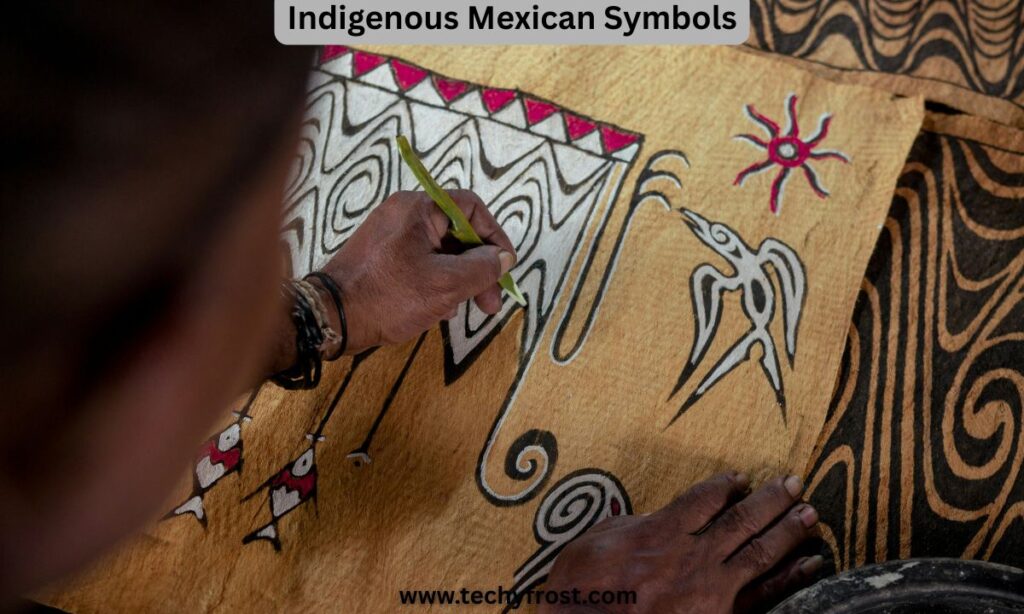
Indigenous Mexican symbols reflect the beliefs of dozens of distinct ethnic groups — Nahua, Zapotec, Mixtec, Otomi, Huichol, Totonac, and more. Each community has its own visual vocabulary:
- Huichol yarn art (nierika) — geometric symbols representing the divine world, visions from peyote ceremonies, and natural forces
- Zapotec glyphs — among the earliest writing systems in the Americas, used to record calendars and rulers
- Otomi embroidery patterns — birds, flowers, and animals that carry ancestral cosmological meanings
- Totonac voladores — a ceremonial ritual where fliers descend from a tall pole, symbolizing communication with the heavens
These symbols still serve as living tools of identity, spiritual practice, and language preservation in modern indigenous communities.
Traditional Mexican Symbols
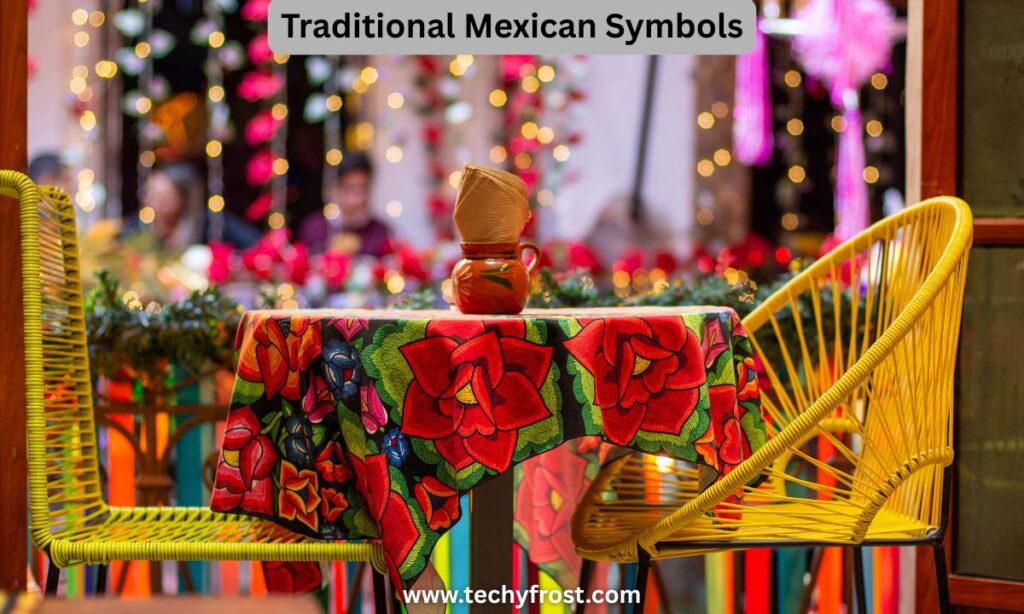
Traditional Mexican symbols are those that have crossed from ancient ritual into mainstream national and folk culture. They include:
- The eagle and cactus from the national coat of arms
- The Virgin of Guadalupe — arguably Mexico’s single most powerful cultural icon, combining Catholic Marian devotion with indigenous spiritual imagery
- Papel picado (perforated paper banners) — delicate and festive, representing the fragility of life
- Talavera pottery patterns — geometric and floral designs with Moorish, Spanish, and indigenous roots
- Huipil textile symbols — traditional garments embroidered with community-specific patterns
Traditional Mexican Symbols And Meanings
| Symbol | Meaning |
| Virgin of Guadalupe | Motherly protection, faith, national unity |
| Eagle on Cactus | National identity, Aztec prophecy fulfilled |
| Papel Picado | Joy, fragility of life, celebration |
| Talavera Tile | Cultural blending, artisan heritage |
| Marigold | Soul guidance, love for the departed |
| Sugar Skull | Life, death, and vibrant remembrance |
| Chili Pepper | Passion, vitality, earthly connection |
| Alebrije (spirit animal) | Dream world, creative soul, spiritual guide |
Meaning Traditional Mexican Symbols
At their core, traditional Mexican symbols express a worldview that does not separate the sacred from the everyday. Death is not the enemy — it is the companion of life. Nature is not a resource — it is a god. Time is not linear — it is a wheel. This philosophy saturates every symbol, from the corn cob painted on a temple wall to the marigold placed on a grandmother’s grave.
Mexican Symbols Of Love, Protection And Strength
Mexican Symbols Of Protection
Protection is a recurring theme across Mexican spiritual traditions:
- The Evil Eye (Ojo de Venado) — deer eye amulets used to deflect bad energy and protect children
- The Hamsa-influenced Ojo — red and black beaded eye symbols hung in homes
- Cross with roses — Catholic-indigenous hybrid symbols of divine shielding
- The obsidian mirror (Tezcatlipoca’s tool) — used by Aztec priests to see evil before it arrived
- Amulets of coral — red coral worn to protect infants from harm
Mexican Symbols Of Strength
- The Eagle — courage, vision, and warrior spirit in Aztec tradition
- The Jaguar — raw power, the night, and the fearless warrior class (Jaguar Knights)
- The Serpent — regeneration and primal force; the snake sheds its skin and is reborn
- The Obsidian Blade (Itztli) — sharp, uncompromising strength tied to the Aztec god of sacrifice
- The Warrior Sun — Tonatiuh, the sun god, who demanded blood to remain strong enough to rise each day
Mexican Symbols Of Love
- Marigold (Cempasúchil) — born from the Aztec myth of lovers Xóchitl and Huitzilin, the marigold represents eternal love that transcends death
- The Hummingbird — associated with the god of war and sun, but in folk tradition, a messenger of love and longing
- Red roses — intertwined with Catholic devotion and the Virgin, symbolizing divine and romantic love
- Sacred Heart (Corazón Sagrado) — a flaming heart pierced with a sword, representing passionate love, suffering, and faith
Important Mexican Symbols
The five most important Mexican symbols, by cultural reach and depth:
- Eagle and serpent on cactus — national identity
- Virgin of Guadalupe — spiritual and cultural mother
- Sugar skull — life, death, and joyful remembrance
- Quetzalcoatl — ancient wisdom and transformation
- Marigold — love, loss, and the bridge between worlds
Mexican Symbols Drawings
Mexican symbolic art is some of the most visually complex in human history. Aztec codices were illustrated manuscripts packed with symbolic drawings — calendars, gods, rituals, and historical events told entirely through imagery. Modern Mexican artists like Diego Rivera and José Clemente Orozco inherited this tradition, painting murals loaded with symbolic content on public walls across the nation.
New Mexican Symbols
Contemporary Mexican culture continues to generate new symbols. The alebrije — a fantastical painted wooden creature invented by artist Pedro Linares in the 1930s after a feverish dream — has become a beloved modern icon. The Lucha Libre mask represents anonymity, duality, and the theatrical battle between good and evil. And the green, white, and red color palette of the flag increasingly appears in global fashion as a statement of heritage and pride.
Aztec Mexican Symbols
The Aztecs left behind one of the richest symbolic vocabularies in history:
- Tonatiuh — the sun god, depicted at the center of the Aztec calendar
- Tlaloc — rain deity, symbolized by goggle eyes and fangs
- Coatlicue — earth mother, depicted with a skirt of serpents and a necklace of human hearts and hands
- Xipe Totec — god of seasons and agricultural renewal, represented by a flayed skin
- Miquiztli (Death) — the 6th day sign, linked to transformation rather than fear
Ancient Mexican Symbols And Meanings
| Ancient Symbol | Civilization | Meaning |
| Feathered Serpent | Olmec, Aztec | Creation, divine knowledge |
| Corn (Maize) | All Mesoamerican | Life, civilization, the gods’ gift |
| Jaguar | Olmec, Maya, Aztec | Underworld, power, night |
| Rain/Water Spiral | Aztec, Zapotec | Fertility, renewal, cosmic time |
| Death Skull | All Mesoamerican | The natural cycle, not an end |
What Are Some Mexican Symbols?
Some of the most recognized Mexican symbols include: the national eagle, Quetzalcoatl the feathered serpent, the Aztec Sun Stone, the Virgin of Guadalupe, sugar skulls, marigold flowers, the jaguar, papel picado, the obsidian blade, and the sacred heart.
Things That Represent Mexico
Beyond formal symbols, several things culturally represent Mexico worldwide:
- Mariachi music — joyful, melancholic, and deeply expressive
- Tacos and mole — food as cultural identity
- Frida Kahlo’s image — artistic resilience and indigenous pride
- The color palette — terracotta, turquoise, indigo, gold
- Lucha Libre — theatrical wrestling as a mirror of cultural duality
Mexican Symbols Culture
Mexican culture is a mosaic. Pre-Columbian indigenous traditions, Spanish colonial Catholicism, African influences from enslaved people brought during the colonial period, and modern global influences have all layered on top of each other. Mexican symbols reflect this layering — the Virgin of Guadalupe stands on a crescent moon in indigenous turquoise, a sugar skull is both pre-Columbian and Catholic, and an Aztec eagle wears a European heraldic style on the national flag.
Popular Symbols That Represent Mexico
Iconic Mexican Symbols
The most globally iconic Mexican symbols are the sugar skull, the Virgin of Guadalupe, the eagle-and-serpent national emblem, Quetzalcoatl, and the marigold. Each appears in art, fashion, film, and tattoo culture worldwide.
Symbols Of Mexican Culture
Mexican cultural symbols can be grouped into three broad families:
Pre-Columbian symbols — jaguar, eagle, feathered serpent, corn, obsidian
Colonial/religious symbols — Virgin of Guadalupe, sacred heart, cross-with-roses
Folk/festival symbols — sugar skull, marigold, papel picado, alebrijes, piñata
Mexico Symbols And Meanings
Every major Mexican symbol carries a dual meaning — one that faces outward (public, national, decorative) and one that faces inward (spiritual, ancestral, personal). The skull is festive and fearless on the outside; it is a meditation on mortality and love on the inside.
Mexican Symbolism
Mexican symbolism is built on the principle of duality: light and dark, life and death, earth and sky. The Aztec concept of Ometeotl — a dual god who was simultaneously male and female, creative and destructive — runs through the symbolic tradition like a spine. Nothing in Mexican symbolism is purely one thing.
Mexican Cultural Symbols
Key cultural symbols that define Mexico’s global identity:
- Frida Kahlo — personal suffering transformed into universal art
- Lucha Libre mask — identity, transformation, theatrical heroism
- Marigold — grief made beautiful
- Mariachi sombrero — regional pride and festive spirit
- Talavera tile — cultural fusion made permanent in ceramic
Symbols In Mexican Culture
Symbols in Mexican culture are never passive. They appear in active contexts: on altars, in processions, on bodies, in markets, in political murals, and in ceremonies. They are meant to do something — protect, honor, guide, commemorate, or invoke.
Mexican Heritage Symbols
Heritage symbols connect modern Mexicans to ancestral identity. The use of traditional Zapotec patterns in contemporary fashion, Aztec glyphs in graphic design, and indigenous floral motifs in embroidery are all ways that heritage symbols remain alive rather than becoming museum artifacts.
Mexican Protection Symbols
- Ojo de venado (deer eye seed amulet)
- Red coral jewelry
- Crossed arrows and obsidian in Aztec warrior tradition
- Copal incense — burned to cleanse spaces and ward off negative energy
- Image of San Miguel Arcángel — the warrior archangel, protector against evil
Deep Symbolic Meaning of Mexican Symbols
Spiritual Meaning
Spiritually, Mexican symbols express the idea that the visible world and the invisible world are in constant communication. The marigold’s scent calls the dead back to life. The eagle’s flight connects earth to heaven. The serpent’s molt connects mortality to rebirth. Copal smoke carries prayers upward. Every symbol is a bridge.
In Aztec cosmology, the universe had passed through four previous “suns” or ages before the current one. Human beings were created to sustain the fifth sun through sacrifice and ritual. Every symbol used in ceremony was part of this cosmic maintenance — without it, the world could end.
Psychological Meaning
Psychologically, Mexican symbols offer frameworks for processing the hardest human experiences — death, loss, transformation, and identity. The sugar skull teaches that death is not the negation of a person but their continuation in memory. The jaguar teaches that the dark parts of ourselves hold power, not just danger. The serpent teaches that shedding what no longer serves us is necessary for growth.
Carl Jung noted that symbols carry numinous power precisely because they hold paradox: the skull is both terrifying and beautiful. Mexican culture institutionalizes this paradox rather than resolving it.
Cultural Meaning
Culturally, Mexican symbols function as acts of resistance and pride. During Spanish colonization, indigenous symbols were suppressed. Their survival — encoded in festivals, textiles, and oral tradition — was a form of defiance. Today, when a Mexican-American tattoos an eagle on their arm or hangs a Guadalupe print on their wall, they are asserting a heritage that survived centuries of erasure.
Types / Variations of Mexican Symbols
1. Eagle and Snake on Cactus
This is Mexico’s founding image. According to Aztec legend, the wandering Mexica people were guided by their god Huitzilopochtli to build their city where they found an eagle devouring a serpent atop a prickly pear cactus. The image appears on the national flag, the coat of arms, and countless works of art. It represents destiny fulfilled, divine guidance, and the triumph of will over adversity.
2. Quetzalcoatl (Feathered Serpent)
Quetzalcoatl is one of the oldest and most powerful symbols in all of Mesoamerica. First appearing among the Olmecs around 1200 BCE, this feathered serpent was adopted by Teotihuacan, the Toltecs, and finally the Aztecs. For the Aztecs, Quetzalcoatl was one of two creators of the world and was credited with bringing humans the gifts of maize, books, and the calendar. He represents the union of opposites — the earthbound serpent and the sky-soaring quetzal bird — making him the ultimate symbol of spiritual aspiration.
3. Aztec Sun Stone
Often incorrectly called the “Aztec Calendar,” the Sun Stone carved in 1478 CE is actually a cosmological monument depicting the Aztec universe. At its center is the face of Tonatiuh, the sun god. Surrounding him are the four previous suns (ages of the world) and then the 20 day signs of the Aztec calendar. The stone was used in ritual contexts and represents the Aztec understanding of cosmic time — cyclical, powerful, and demanding of human participation.
4. Marigold Flower (Cempasúchil)
The cempasúchil is the flower of the dead. Its vivid orange-gold color and pungent scent are believed to guide the spirits of ancestors back to the living world during Día de los Muertos. In Aztec mythology, the marigold’s origin is a love story: two children, Xóchitl and Huitzilin, offered flowers to the sun god Tonatiuh every day. When Huitzilin died in battle, Xóchitl begged the sun to reunite them. The sun transformed her into the marigold, and Huitzilin returned as a hummingbird to drink from her petals — lover and beloved, forever entwined.
5. Sugar Skulls
Sugar skulls (calaveras) are handcrafted confections decorated with colorful foil, icing, and sequins. They are placed on Día de los Muertos altars (ofrendas) as offerings to deceased loved ones, often bearing the name of the person being honored. Far from being morbid, they are joyful — the skull’s decoration transforms death into an occasion for color, creativity, and love. In tattoo culture, the sugar skull has become one of the most recognizable Mexican symbols globally.
Mexican Symbols Across Cultures
1. Aztec Civilization
In Aztec Civilization, symbols were central to religion, governance, and daily life. They appeared in the 365-day agricultural calendar (xiuhpohualli) and the 260-day ritual calendar (tonalpohualli). Symbols in codices recorded history, tax obligations, and prophecies. Every god had associated symbols — animals, colors, days, and directions.
2. Mayan Culture
Mayan culture developed one of the most sophisticated symbolic systems in human history. Their hieroglyphic writing combined logograms and syllabic signs to record astronomical calculations, royal lineages, and religious myth with extraordinary precision. The Mayan Long Count calendar, which tracks vast cycles of cosmic time, used symbols to map reality on a scale that has fascinated the world ever since.
3. Spanish Colonial Era
The Spanish colonial era created a new layer of symbolism through forced and voluntary syncretism. Catholic saints were mapped onto indigenous deities — Tlaloc, the rain god, blended with images of Saint John the Baptist. The Virgin Mary took on indigenous characteristics in the apparition of the Virgin of Guadalupe, appearing to a Nahua man, Juan Diego, and leaving her image on his cloak in 1531. Colonial symbolism is therefore always a negotiation — two worldviews stitched together.
4. Modern Western Culture
In modern Western culture, Mexican symbols have been adopted — and sometimes appropriated — as aesthetic shorthand. Sugar skulls appear on Halloween merchandise. Aztec patterns are printed on yoga mats. The Day of the Dead has been embraced globally, particularly after the Pixar film Coco brought its imagery to billions of viewers. This reach is both a tribute to the power of Mexican symbolism and a reminder of the responsibility that comes with borrowing from living cultures.
5. Indigenous Modern Communities
For living indigenous communities in Mexico, symbols are not historical artifacts — they are active tools of identity, ritual, and communication. Huichol (Wixáritari) yarn paintings encode spiritual visions. Zapotec weavers preserve ancestral cosmologies in their rug patterns. Nahua communities continue to celebrate agricultural cycles tied to pre-Columbian symbolism. These are not performances of tradition — they are tradition, alive and evolving.
Mexican Symbols in Art, Movies & Pop Culture
Mexican symbols have achieved a global visual presence unlike almost any other regional culture:
- Frida Kahlo’s self-portraits are dense with Mexican symbolism — hummingbirds, monkeys, pre-Columbian artifacts, Diego Rivera’s portrait on her forehead
- Diego Rivera’s murals at the National Palace in Mexico City tell Mexico’s entire history through symbolic imagery
- Pixar’s Coco (2017) brought Día de los Muertos, marigold petals, sugar skulls, and the ofrenda altar to a global audience with extraordinary sensitivity
- Lucha Libre has inspired global fashion, art, and even professional wrestling worldwide
- Aztec patterns appear in collections by major fashion houses from Alexander McQueen to Louis Vuitton
- The TV series Narcos: Mexico uses the eagle and national imagery as symbols of sovereignty and corruption
- Mexican muralism, founded by Rivera, Orozco, and Siqueiros, is recognized as one of the most significant art movements of the 20th century
Spiritual & Dream Meaning of Mexican Symbols
When Mexican symbols appear in dreams, many traditions interpret them as messages from ancestors or the subconscious:
- Dreaming of an eagle — a call to rise above your circumstances; a message of power and clarity approaching
- Dreaming of a skull — not death, but transformation; the end of one chapter and the beginning of another
- Dreaming of marigolds — a loved one is near; a message of love from the other side
- Dreaming of a serpent — deep transformation is underway; something is shedding that no longer serves you
- Dreaming of a jaguar — confrontation with shadow self; a call to own your power fearlessly
- Dreaming of fire — purification, passion, the sun’s energy calling you to action
In Aztec spiritual tradition, dreams were one of the primary ways the gods communicated with humans. Specialized priests (tonalpouhque) were trained to read the symbolic content of dreams using the ritual calendar.
Positive vs Negative Meaning
Positive Meanings
- Life’s cyclical nature — Mexican symbolism frames death not as an ending but as a transformation
- Strength and resilience — the eagle, jaguar, and warrior imagery celebrate courage
- Connection and love — the marigold, hummingbird, and sacred heart honor bonds that transcend mortality
- Cosmic harmony — Aztec symbols reflect a universe in careful balance maintained by human reverence
- Cultural pride — Mexican symbols are among the world’s most powerful expressions of indigenous identity and survival
Negative Meanings
- Misappropriation — when Mexican symbols are used as costumes or novelty items without understanding their depth, they lose meaning and can cause harm to living communities
- Stereotyping — reduction of Mexico’s vast symbolic tradition to a handful of tourist-friendly images flattens a civilization of extraordinary complexity
- Suppression history — the story of many Mexican symbols includes centuries of colonial suppression; their survival represents painful history as much as triumph
- Glorification of sacrifice — some Aztec symbols, particularly those connected to human sacrifice, require careful contextual understanding rather than romanticization
Why Humans Are Attracted to Mexican Symbols
There is something universally compelling about Mexican symbols that transcends cultural familiarity. Several reasons explain their global appeal:
They hold paradox. The skull is both terrifying and celebratory. The serpent is both destructive and creative. Humans are wired to find meaning in symbols that contain contradictions, because life itself is contradictory.
They are visually extraordinary. From the geometric precision of the Aztec sun stone to the riotous color of sugar skull decoration, Mexican symbols are aesthetically powerful across cultures.
They speak to universal fears. Death, time, power, love — Mexican symbols address the experiences every human faces, regardless of cultural background.
They carry authenticity. In a world of manufactured imagery, symbols with thousands of years of use behind them carry weight. People sense that these images have been tested by human experience.
They survive. The fact that these symbols endured colonization, suppression, and the near-destruction of their originating cultures makes them feel resilient — and humans are drawn to anything that endures.
Mexican symbols are not simply art. They are arguments about what it means to be alive — fierce, beautiful, cyclical, and bound in love to everything that came before and everything that comes after.
FAQs About Mexican Symbols
What is the most important Mexican symbol? The eagle devouring a serpent on a cactus is the most nationally significant, but the Virgin of Guadalupe rivals it for cultural and spiritual depth.
What do Mexican symbols mean in tattoos? Most represent protection, strength, ancestry, remembrance of the dead, or cultural pride — depending on the specific symbol chosen.
What is the Mexican symbol for love? The marigold (cempasúchil) and the sacred heart are the most recognized Mexican symbols of love.
What do sugar skulls symbolize? Sugar skulls celebrate deceased loved ones during Día de los Muertos, representing the joy of life and the beauty of memory rather than fear of death.
What is Quetzalcoatl a symbol of? Quetzalcoatl symbolizes creation, knowledge, the calendar, and the union of earthly and divine realms.
What Mexican symbol represents strength? The eagle and the jaguar are both primary symbols of strength in Mexican tradition.
Are Mexican symbols still used today? Yes — in religious ceremony, national life, folk art, tattoos, fashion, and cinema, Mexican symbols remain vibrantly active.
Conclusion
Mexican symbols are among the most layered, beautiful, and powerful visual languages ever created by human civilization. From the stone-carved cosmologies of the ancient Aztecs to the sugar skull placed lovingly on a modern grandmother’s altar, every symbol carries thousands of years of meaning — a meaning that refuses to stay in museums.
Understanding Mexican symbols is more than an academic exercise. It is an invitation to see the world the way Mesoamerican civilizations saw it: cyclical, sacred, dual, and alive with connection between the living, the dead, the natural, and the divine. That worldview has something to teach everyone, regardless of heritage — and that is precisely why Mexican symbols have traveled so far from their origins and show no signs of stopping.

