

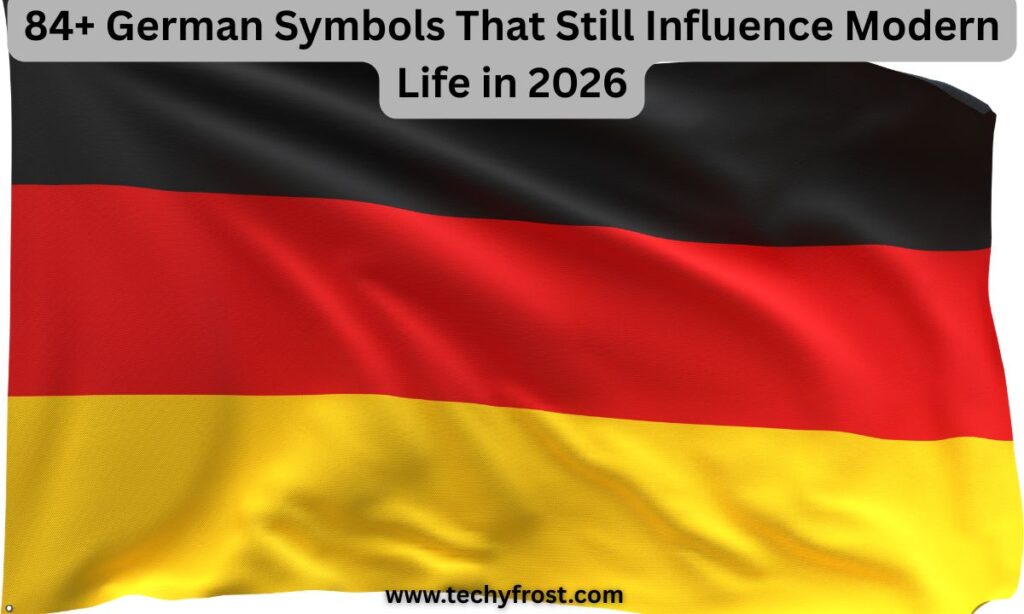
Germany’s history is written in pictures as much as in words. Long before anyone could read a sentence of German, people understood meaning through marks carved into wood, stamped onto shields, or stitched into a flag. That visual language never disappeared — it simply moved from tribal runes to a national eagle, from medieval crosses to coins in your pocket today.
This guide walks through more than 84 German symbols, their real history, and the controversies that still surround a few of them. Whether you’re researching heritage, a tattoo, or simple curiosity, you’ll find clear, accurate answers below — without the myths that usually surround this topic.
What are German Symbols?
German symbols are the visual marks, emblems, and icons that represent Germany’s history, government, regions, and culture. They show up on flags, coats of arms, coins, military insignia, and folk art.
Some are official, like the federal eagle used by the government. Others are cultural, like the colors black, red, and gold, or symbolic objects tied to German folklore. Together, they form a visual record of a country that has changed its borders, governments, and identity many times over the last 1,500 years.
Ancient German Symbols And Their Hidden Stories
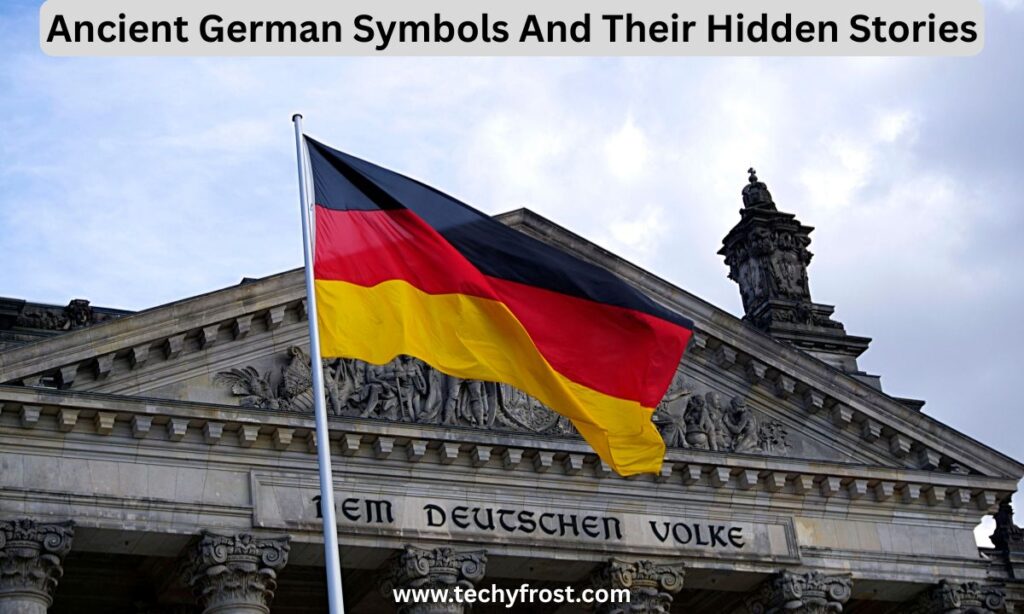
Before Germany existed as a unified nation, the land was home to dozens of separate Germanic tribes. Their symbols weren’t decorative — they marked status, protection, and belief.
Ancient German Symbols
The earliest symbols connected to German-speaking lands came from tribal carvings, pottery marks, and early writing systems rather than from any single nation. Oak leaves, eagles, and sun motifs appeared on early shields and jewelry, often standing in for strength, the heavens, or a specific clan.
Germanic Tribe Symbols
Each Germanic tribe — the Saxons, Franks, Alemanni, and others — used distinct marks to separate friend from rival during battle and ritual. Animal imagery was common: wolves for ferocity, horses for travel and status, and boars for courage. These weren’t standardized; a symbol carried by one tribe could mean something different two valleys away.
Germanic Symbols
“Germanic symbols” is the broader umbrella term, covering everything from runic alphabets to mythological imagery tied to Norse-influenced belief systems shared across early Northern Europe. Common examples include the raven (linked to wisdom and observation), the world tree motif, and the hammer shape associated with thunder and protection.
Evolution of German Symbols Through Different Eras (Ancient to 2026)
German symbolism didn’t develop in a straight line. Each political era reshaped existing symbols or replaced them outright.
| Era | Dominant Symbols | What Changed |
|---|---|---|
| Tribal Germania (before 800 AD) | Runes, animal totems, sun wheels | Symbols were spiritual and clan-based |
| Holy Roman Empire (962–1806) | Single and double-headed eagle | Eagle became tied to imperial power |
| German Empire (1871–1918) | Black-white-red flag, imperial eagle | First unified national symbols |
| Weimar Republic (1919–1933) | Black-red-gold flag, redesigned eagle | Symbols shifted toward democracy |
| Nazi Germany (1933–1945) | Swastika, NSDAP eagle | Older symbols hijacked for propaganda |
| Divided Germany (1945–1990) | Federal eagle (West), hammer and compass (East) | Two competing identities, one country |
| Reunified Germany (1990–2026) | Black-red-gold flag, federal eagle, EU stars | Symbols of unity, stability, and European cooperation |
This table shows why context matters so much with German symbols — the same shape can mean democracy in one decade and oppression in another.
Difference Between German Symbols and Germanic Symbols
People often use these terms interchangeably, but they aren’t the same thing.
| German Symbols | Germanic Symbols |
|---|---|
| Tied to the modern nation of Germany | Tied to ancient Germanic peoples and culture |
| Include the flag, federal eagle, government seals | Include runes, Norse-linked motifs, tribal totems |
| Mostly post-1871 in origin | Predate the German nation by over a thousand years |
| Politically and legally regulated | Mostly historical or mythological, not legally protected |
In short, “German” refers to the nation-state, while “Germanic” refers to a much older, broader ethnic and linguistic family that also includes early English, Dutch, and Scandinavian roots.
Misinterpretation and Controversy Around German Symbols
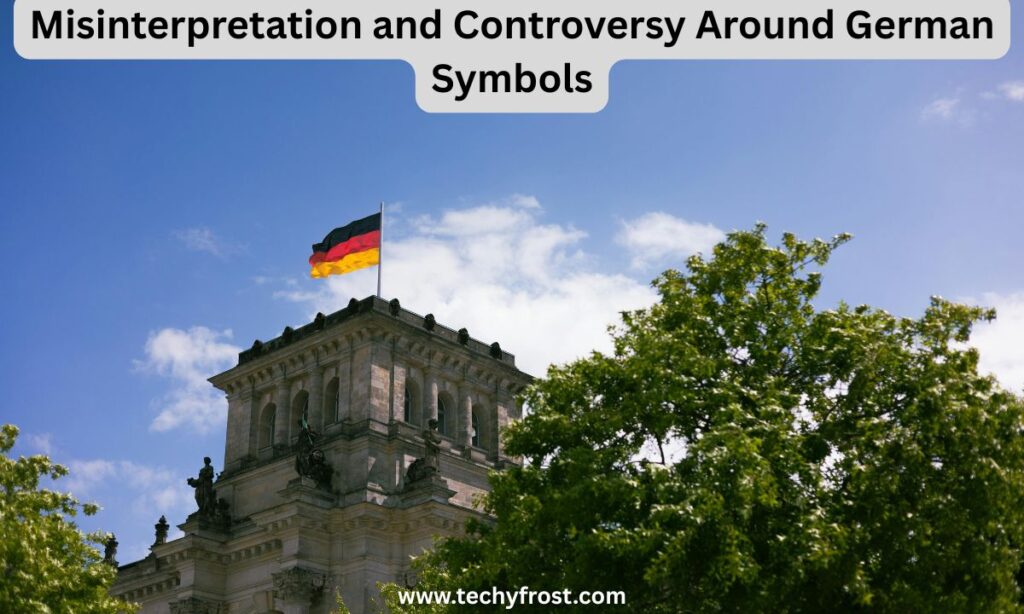
Few national symbol sets carry as much baggage as Germany’s. The core problem is that several ancient, neutral symbols were stolen and twisted by the Nazi regime in the 1930s and 1940s. The swastika is the clearest example — a sun symbol used peacefully across Asia and ancient Europe for thousands of years, now permanently associated with hate in most Western contexts.
This creates real confusion. Tourists sometimes mistake the Iron Cross for a Nazi symbol, when it actually predates the Nazi era by more than a century and remains a legitimate military honor. Certain runes are likewise normal in academic contexts but raise alarm when worn as jewelry, simply because extremist groups adopted them decades later.
Banned or Restricted German Symbols and Their History
Germany takes symbol regulation seriously, and the law is specific rather than vague.
- Legal basis: Section 86a of the German Criminal Code (StGB) prohibits the public display, production, and distribution of symbols belonging to organizations the courts have ruled unconstitutional.
- What’s covered: The swastika, SS runes, the Hitler salute gesture, and flags or insignia of banned far-right and far-left groups.
- Penalties: Violations can lead to fines or imprisonment of up to three years.
- Exceptions: Use in art, science, teaching, journalism, or civic education is generally permitted, since the goal is education, not promotion.
- Modern additions: Courts have extended the law over time to cover symbols associated with newer banned organizations, including certain extremist and militarist emblems that emerged after 2014.
This is one of the few areas of German law where a simple image can carry criminal consequences, which is why context always matters when discussing these particular symbols.
German Symbols in National Identity and Pride
Modern Germans rally around a smaller, more careful set of symbols than the country’s turbulent past might suggest. The black-red-gold flag is the centerpiece, flown during football tournaments, public holidays, and Unity Day celebrations. The federal eagle represents official authority without aggression — deliberately designed to look balanced rather than predatory.
National pride in Germany tends to express itself through these calm, democratic symbols rather than overt nationalism, a pattern shaped directly by the country’s 20th-century history.
How German Symbols Are Used in Flags, Coins, and Government Seals
Germany’s official symbols appear consistently across state institutions:
- The national flag — three equal horizontal bands of black, red, and gold, flown at federal buildings and embassies worldwide.
- Euro coins — German-minted coins feature the federal eagle on the national side, distinguishing them from coins minted in other Eurozone countries.
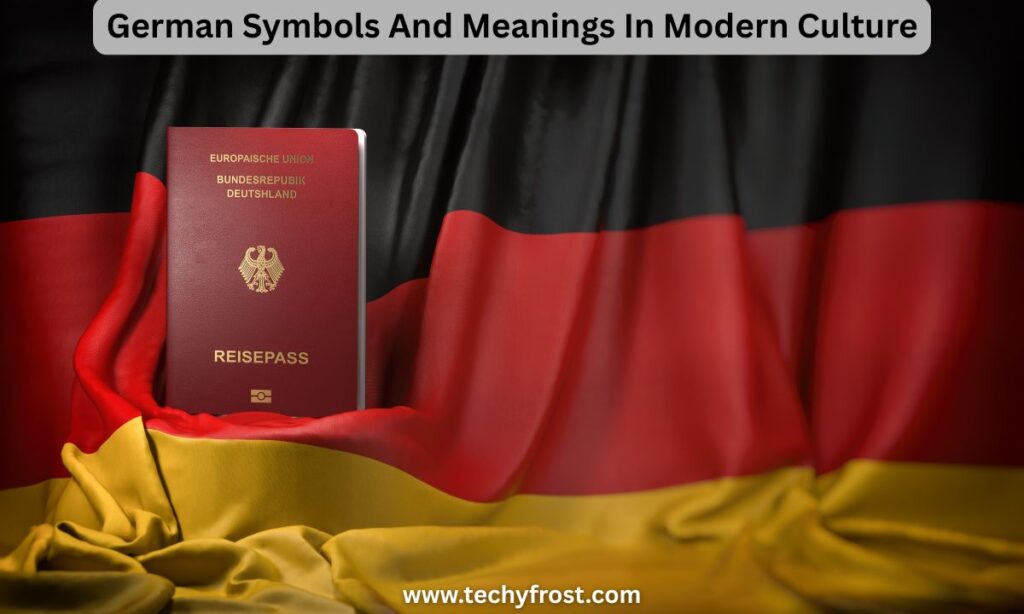
- Government seals — the Bundesadler appears on the presidential standard, federal ministry letterheads, and official passports.
- Regional coats of arms — each of the 16 German states (Länder) has its own historical emblem, often featuring lions, eagles, or castle imagery tied to local history.
German Symbols And Meanings In Modern Culture
Modern Germany blends formal national symbols with everyday cultural shorthand — language marks, folk imagery, and symbols people search for out of simple curiosity.
German Symbols And Meanings
| Symbol | Meaning |
|---|---|
| Black-Red-Gold Flag | Unity and freedom |
| Federal Eagle | Strength and democratic authority |
| Iron Cross | Military honor and bravery |
| Oak Leaf | Endurance and strength |
| Edelweiss Flower | Purity and alpine heritage |
| Brandenburg Gate | Peace and reunification |
German Symbolism
German symbolism leans heavily on restraint. Unlike flashier national identities, German visual culture favors simple shapes, muted colors, and balance — a reflection of post-war values around stability and humility rather than grandeur.
Symbols Of Germany
Beyond the flag and eagle, recognizable symbols of Germany include the Brandenburg Gate, the Berlin Wall remnants, the Christmas market star, and the beer stein, all of which represent different sides of German identity — political, historical, and cultural.
What Is The Symbol Of Germany?
If there’s one single answer, it’s the federal eagle (Bundesadler) combined with the black-red-gold flag. Together, these two form the official visual identity of the modern German state.
German Symbols Text
Some people search for “German symbols text” looking for special characters used in written German, such as ß (eszett), ä, ö, and ü. These aren’t national emblems, but they are essential, distinctly German text symbols.
German Symbols Letters
The umlauted letters (ä, ö, ü) and the sharp S (ß) are unique to German script. They change pronunciation and meaning, and you’ll rarely see them in any other major European language in the same combination.
German Symbols To Copy
Looking for symbols to copy and paste? Here are commonly searched ones:
- ß, ä, ö, ü, Ä, Ö, Ü
- € (Euro sign, widely used across Germany)
- ☥ and ᛟ style runic characters (used historically, sensitive in modern contexts)
- 🦅 (eagle emoji, often used informally to represent the federal eagle)
German Symbols Tattoos
Tattoo searches around German symbols usually focus on three categories: the Iron Cross, Germanic runes, and oak leaf designs. Because of Germany’s history, it’s worth researching any specific rune carefully before getting it permanently inked — some carry innocent historical meaning, while others have been co-opted by extremist groups.
Iconic, Ancient And Historical German Symbols
Iconic German Symbols
The federal eagle, the black-red-gold flag, and the Brandenburg Gate top most lists of iconic German symbols, recognized instantly both inside and outside the country.
Traditional German Symbols
Traditional symbols lean toward folk culture: the Lederhosen and Dirndl outfits, the cuckoo clock, and the Christmas pyramid all represent regional German traditions passed down for generations.
Famous German Symbols
Globally famous German symbols include the Berlin Wall (now a symbol of reunification rather than division), Neuschwanstein Castle, and the Volkswagen Beetle as an unofficial cultural icon.
Ancient German Symbols Tattoos
For tattoo seekers drawn to history rather than modern branding, ancient symbols like the Algiz rune (protection) or the Vegvisir-style compass motifs (though originally Icelandic, often grouped with Germanic imagery) remain popular choices.
Old German Symbols
Old German symbols include early heraldic shields from medieval free cities, guild marks used by craftsmen, and town seals that predate the modern German state by centuries.
Meaningful German Symbols
Symbols that carry the deepest meaning for modern Germans tend to be quieter ones: the Reichstag dome (transparency in government), the Holocaust Memorial in Berlin, and Checkpoint Charlie — each representing reflection rather than celebration.
German Symbols In War, Politics and Family
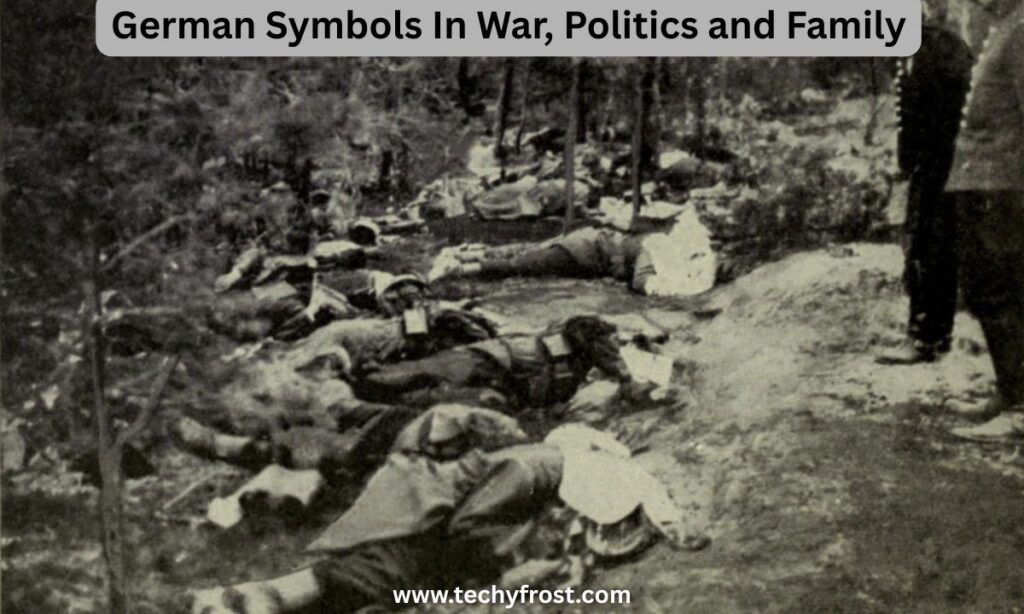
WW1 German Symbols
During World War I, the German Empire used the black-white-red flag and the Iron Cross extensively on uniforms, medals, and military vehicles. The Iron Cross specifically dates back to 1813, well before the war, and was reinstated as a military decoration during this period.
WW2 German Symbols
World War II symbols are the most controversial in German history. The swastika, the NSDAP eagle, and SS insignia were used as propaganda tools by the Nazi regime and remain banned under German law today.
WWII German Symbols
Beyond the banned emblems, WWII also produced symbols of resistance — the White Rose flyers and post-war reconstruction imagery now used to teach accountability and memory.
East German Symbols
The German Democratic Republic (East Germany) rejected the eagle entirely, adopting a hammer and compass surrounded by a wheat wreath. The hammer represented industrial workers, the compass stood for the intelligentsia, and the wreath of grain symbolized farmers — together forming a socialist alternative to West Germany’s federal eagle.
German Symbols For Family
Family-oriented German symbols include the house blessing (Hausspruch) carved above doorways, the family coat of arms tradition among older German families, and the Tannenbaum (Christmas tree) as a symbol of togetherness during the holidays.
Popular German Symbols
The most searched and recognized symbols today remain the flag, the eagle, the Brandenburg Gate, and the Oktoberfest beer stein — a mix of political and cultural icons that represent modern German life.
Deep Symbolic Meaning of German Symbols
Spiritual Meaning
Many ancient Germanic symbols carried spiritual weight tied to nature worship, protection from harm, and connection to ancestral gods like Odin and Thor. Modern German national symbols have largely shed this spiritual layer in favor of civic meaning.
Psychological Meaning
Symbols like the federal eagle are deliberately designed to feel stable and non-threatening — psychologists studying national branding note that Germany’s post-war symbols intentionally avoid aggressive imagery to rebuild public trust in institutions.
Cultural Meaning
Culturally, German symbols reflect a national habit of facing history directly rather than hiding from it. Memorial symbols, museum markers, and educational signage around former Nazi sites all reinforce a culture built on remembrance and responsibility.
Types / Variations of German Symbols
1. Federal Eagle (Bundesadler)
Germany’s official coat of arms, a black eagle with red beak, tongue, and feet on a gold field. It traces back to Charlemagne’s era and was formally readopted in 1950 after originating in the Weimar Republic.
2. Black-Red-Gold Flag
Adopted as the national flag, these three colors first appeared together during the 1848 democratic uprisings and were permanently established with the founding of the Federal Republic in 1949.
3. Iron Cross (Eisernes Kreuz)
Created in 1813 by King Frederick William III of Prussia, the Iron Cross was a military honor awarded for bravery, and a simplified version is still used by the modern German armed forces today.
4. Germanic Runes
The Elder Futhark alphabet, used by early Germanic peoples for writing and divination, included 24 characters, each carrying its own symbolic meaning tied to nature, fate, or protection.
5. Holy Roman Empire Eagle
The double-headed eagle, adopted by Emperor Sigismund in 1433, represented the dual rule over both the eastern and western halves of the empire and remains a key historical predecessor to today’s federal eagle.
German Symbols Across Cultures
Ancient Germanic Tribes
Tribal symbols focused on survival, loyalty, and nature — animal totems, protective runes, and clan markers dominated this earliest period.
Roman Influence
Roman contact introduced the eagle as an imperial symbol, which Germanic rulers later adapted once the Holy Roman Empire formed centuries later.
Medieval Europe
Heraldry spread rapidly across medieval Europe, and German free cities, noble houses, and guilds developed their own detailed coats of arms still visible on old buildings today.
Modern Europe
Within the European Union, Germany’s symbols now sit alongside EU stars and flags at most government buildings, reflecting a layered, shared European identity.
Global Influence
German symbols have influenced global design, from Bauhaus-inspired minimalism to automotive branding, where clean, geometric logos echo the same restrained aesthetic found in German symbolism.
German Symbols in Art, Movies & Pop Culture
German symbols appear constantly in film and art, often used to set historical tone instantly. War films use the Iron Cross and period flags to establish time and place, while contemporary German cinema frequently revisits the Berlin Wall and Brandenburg Gate as shorthand for division and reunification. In music and fashion, runic imagery occasionally resurfaces in metal and folk-inspired subcultures, though artists and brands tread carefully given the symbols’ sensitive history. Museums in Berlin and Nuremberg dedicate entire wings to explaining how these symbols were used, misused, and reclaimed for education.
Spiritual & Dream Meaning of German Symbols
In dream interpretation circles, eagle imagery — closely tied to German heraldry — is often read as a sign of ambition or rising above a difficult situation. Rune-based symbols, when they appear in dreams or meditation practices, are sometimes read through Norse-influenced folklore as messages about protection or hidden knowledge. These interpretations sit outside official German culture but remain popular among people drawn to Northern European mysticism.
Positive vs Negative Meaning
Positive Meanings
- Unity and democratic stability (the flag)
- Strength balanced with restraint (the federal eagle)
- Bravery and sacrifice (the Iron Cross)
- Protection and connection to nature (ancient runes)
- Remembrance and accountability (memorial symbols)
Negative Interpretations
- Hatred and genocide (the swastika, SS insignia)
- Division and surveillance (East German state symbols, in some contexts)
- Misappropriation by modern extremist groups (certain runes and folk symbols)
Why Humans Are Attracted to German Symbols
People are drawn to German symbols for a mix of reasons: the visual power of strong, simple shapes, genuine historical curiosity, family heritage research, and the emotional weight of symbols that represent both achievement and failure in the same national story. Few countries display their history so openly through imagery, and that honesty — flaws included — is part of what keeps people researching these symbols today.
Frequently Asked Questions
What is the most famous German symbol?
The federal eagle (Bundesadler), paired with the black-red-gold national flag, is the most widely recognized German symbol today.
Is the swastika banned in Germany?
Yes. Under Section 86a of the German Criminal Code, displaying or distributing the swastika is illegal outside narrow exceptions like education, art, and research.
What do German runes mean?
Germanic runes from the Elder Futhark alphabet each carried individual meanings tied to nature, fate, and protection, used for writing and ritual by early Germanic peoples.
What is the difference between German and Germanic symbols?
German symbols belong to the modern nation-state of Germany, while Germanic symbols come from ancient tribal peoples who predate Germany by over a thousand years.
Is it safe to get a German symbol tattoo?
Many German symbols, like the Iron Cross or oak leaf, are safe and meaningful choices, but some runes have been misused by extremist groups, so research is important before getting one permanently inked.
What is the national symbol of Germany?
Officially, it’s the federal eagle, used on government seals, coins, and the presidential standard since 1950.
Conclusion
German symbols tell a story few countries can match — one stretching from tribal runes carved into stone, through empires and world wars, to a calm, democratic flag flying over a reunified nation in 2026. Some carry pride, others carry warning, and knowing the difference matters more than ever. Whether you’re researching heritage, choosing a tattoo, or just satisfying curiosity, understanding the real history behind each symbol gives you a far richer picture than the image alone ever could.

