

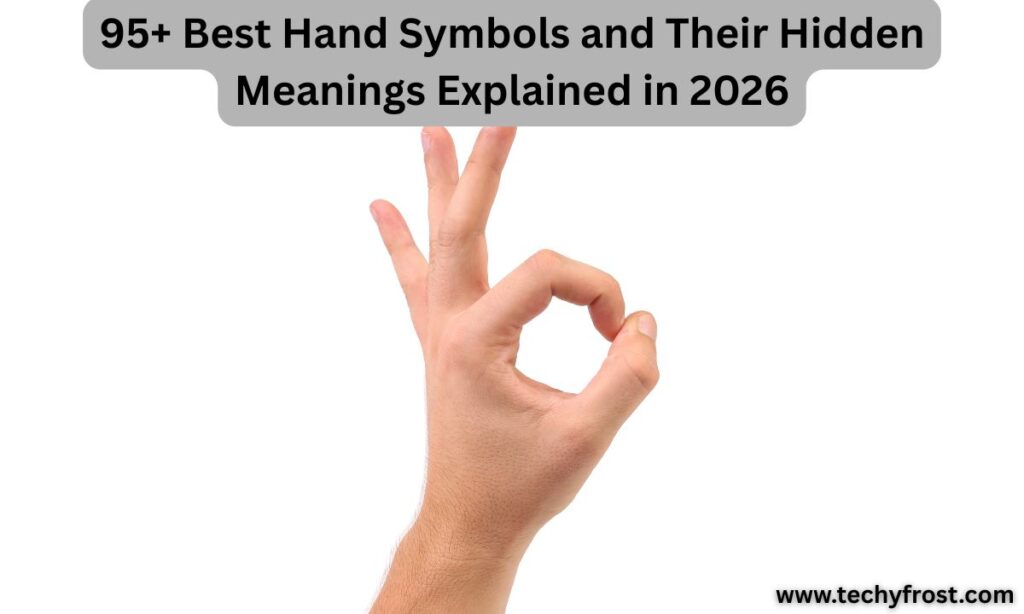
Long before the first alphabet was carved into stone, human hands were already telling stories. Cave painters in Indonesia pressed their palms against rock walls roughly 40,000 years ago — not randomly, but with intention. Those handprints meant: I exist. I was here. That silent power hasn’t gone anywhere. In 2026, hand symbols still appear in protest marches, religious ceremonies, tattoo studios, anime, social media, and everyday conversation.
This guide is the most comprehensive breakdown of hand symbols you’ll find anywhere — covering ancient traditions, spiritual meanings, modern gestures, religious icons, pop culture references, and psychological insights. Whether you’re researching symbolism, looking up a gesture’s cultural meaning, or just curious about that hand sign your favorite character flashes in a show, you’ll find your answers here.
What Are Hand Symbols?
Hand symbols are gestures or visual representations of hands that communicate ideas, emotions, beliefs, or power — entirely without words. They function as part of our nonverbal communication system and work almost instantly across language barriers.
The hand is what Aristotle called the “tool of tools.” It builds, heals, protects, blesses, and threatens. Because of this physical versatility, nearly every culture on earth has built its own rich system of hand symbolism. From the Egyptian hieroglyph for offering to the modern peace sign, these symbols carry centuries of meaning packed into a single gesture.
Key facts about hand symbols at a glance:
| Feature | Detail |
| Earliest known hand symbol | ~40,000 years ago (cave art, Indonesia & France) |
| Universal meaning | Varies by culture and context |
| Used in | Religion, medicine, protest, art, entertainment |
| Right hand symbolism | Action, giving, outward energy, logic |
| Left hand symbolism | Intuition, receiving, inner wisdom |
Hand Symbols And Meanings Guide
Hand Symbols And Meanings
Hand symbols carry layered meanings depending on culture, religion, and context. An open palm in one country signals welcome; in another, it’s a sharp insult. Understanding these differences matters — especially in a world where a quick gesture photographed and posted online can go viral globally within minutes.
Hand Symbol Meanings
At their core, hand symbols condense complex ideas into simple visual forms. The closed fist communicates resistance and collective power. The open palm radiates peace or surrender. Two palms pressed together speak of prayer and devotion across dozens of unrelated traditions worldwide.
Hand Symbol Meaning
The meaning of any specific hand symbol depends on three things: intent, context, and cultural background. The same two-finger gesture that signals “peace” in the United States signals “victory” in Britain when the palm faces outward — but flipping the palm inward turns it into a rude insult. Context is everything.
Hand Symbol Meaning Spiritual
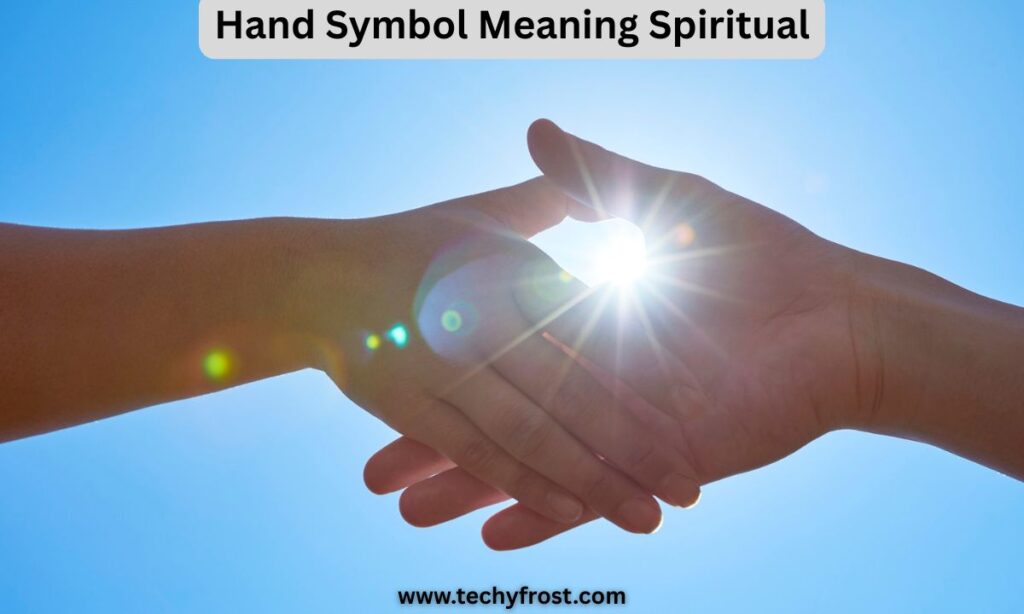
Spiritually, hands are believed to be channels of energy. In Reiki healing, practitioners direct healing energy through their palms. In many mystical traditions, the right hand represents giving and outward spiritual energy, while the left hand represents receiving and inner wisdom. This duality appears in Taoist philosophy as yin and yang — two opposing forces that are deeply complementary.
Hand Symbol
A hand symbol can be either a physical gesture (like raising a fist) or a visual/artistic representation (like the Hamsa). Both types carry symbolic weight that transcends the physical form of the hand itself.
Hand Symbolism
Hand symbolism is one of the oldest and most universal forms of human expression. Across traditions — from Hindu mudras to Christian laying on of hands to Native American sign language — the hand appears as a portal between the human and the divine, the physical and the spiritual.
Hand Symbolism Meaning
The deeper symbolic meaning of hands often centers on these core themes:
- Power and authority — rulers, priests, and leaders throughout history signaled control through deliberate hand gestures
- Healing and blessing — open palms extended toward another person represent the transfer of positive energy or divine grace
- Protection — ward-off gestures appear in virtually every ancient culture
- Creativity and craft — the working hand as symbol of human ingenuity
- Connection and unity — clasped hands, handshakes, and interlocked fingers across traditions
Hands Symbolism
In literature, film, and visual art, hands are used to convey what faces and words sometimes cannot. A trembling hand conveys anxiety. Gentle hands suggest tenderness. Clenched knuckles betray suppressed rage. Artists from Michelangelo to modern graphic novelists have used hand positioning as a primary storytelling tool.
What Do Hands Symbolize?
Hands symbolize action, intention, connection, protection, creativity, and divine power. They’re the bridge between inner thought and outer reality — what we feel in our minds becomes real in the world through what our hands do.
In American Indian culture, the hand connects to the Great Spirit. In Buddhism, it symbolizes protection. Celtic tradition links it to the rays of the sun. Chinese culture associates hands with longevity. Christian tradition uses the laying on of hands to represent blessing and the transmission of divine authority.
What Do Hands Represent?
Hands represent our capacity to shape the world — to build or destroy, to give or take, to heal or harm. That dual potential is precisely why hand symbolism is so powerful. Every major civilization has recognized that what a person does with their hands defines who they are.
What Does The Hand Symbol Mean?
The hand symbol broadly means presence, power, and intention. More specifically, meaning depends on position:
| Hand Position | General Meaning |
| Open palm facing out | Stop, warning, or greeting |
| Open palm facing up | Receiving, offering, surrender |
| Closed fist | Strength, resistance, solidarity |
| Pointing finger | Direction, accusation, authority |
| Hands clasped together | Unity, prayer, agreement |
| Hand over heart | Sincerity, devotion, love |
What Does A Hand Represent?
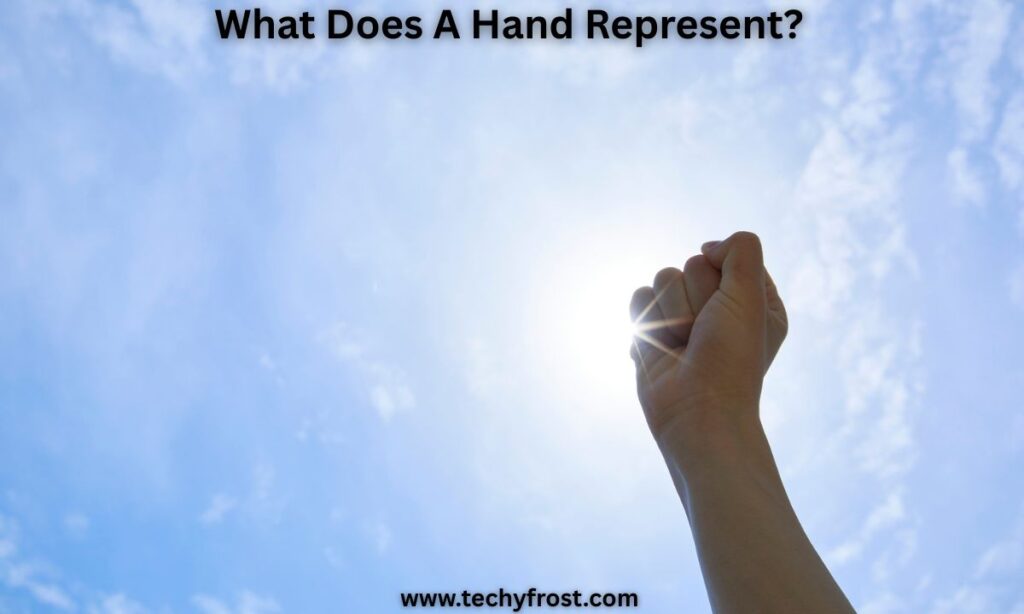
A hand represents human agency — the power to act and make choices. Spiritually, it represents the interface between human will and divine energy. In dreams, a hand often reflects your sense of control, your relationship with others, or your emotional readiness to reach out or hold back.
Symbolism Of Hands
The symbolism of hands runs through every layer of human culture: royal seals, religious iconography, protest movements, medical healing, artistic expression, and daily greeting rituals. That consistent presence across all of human history tells us something important — hands are not just practical tools. They are among our most expressive and symbolic body parts.
Hand Gestures And Modern Meanings
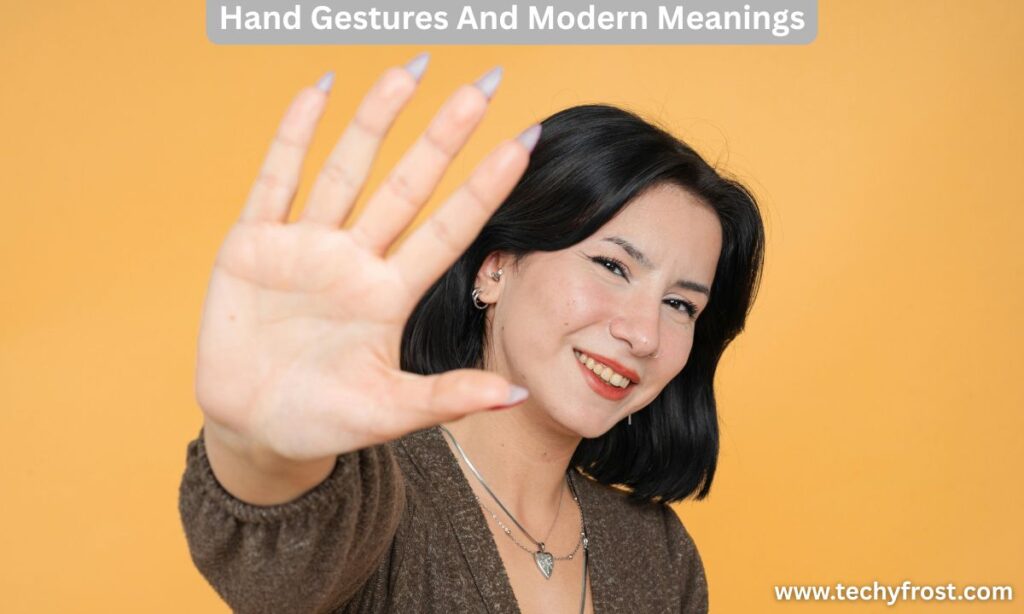
Hand Gestures Meaning With Pictures
Modern hand gestures are part of everyday nonverbal communication. Studies show that speakers who use deliberate hand gestures are perceived as more trustworthy, confident, and persuasive. Here’s a quick reference of common gestures:
| Gesture | Description | General Meaning |
| 👋 Wave | Open hand, side-to-side | Greeting or farewell |
| 👍 Thumbs up | Fist with thumb extended upward | Approval, agreement |
| 👎 Thumbs down | Fist with thumb pointing down | Disapproval, rejection |
| ✌️ V sign | Index and middle fingers raised | Peace (palm out) or Victory |
| 🤞 Crossed fingers | Index and middle finger crossed | Good luck or lying |
| 🤙 Shaka | Pinky and thumb extended, others curled | Relax, aloha, hang loose |
| 🤟 I love you | Thumb, index, and pinky extended | ASL sign for “I love you” |
| 🤘 Horns | Pinky and index extended, thumb out | Rock & roll or “evil eye” ward |
Hand Gestures And Their Meanings List
Beyond the basics, these gestures carry nuanced cultural weight:
- The steeple — fingertips together forming a pyramid; projects confidence and authority (associated with leaders and executives)
- The Merkel diamond — thumb and index fingertips touching in a diamond at waist level; signals authority without aggression
- Open palm sweep — broad, inclusive grand gesture; signals openness and inclusivity
- The chin grab — hand cupping the chin; signals deep thought or evaluation
- The wrist grab — gripping your own wrist; a self-soothing gesture indicating stress
Hand Signs With Meaning
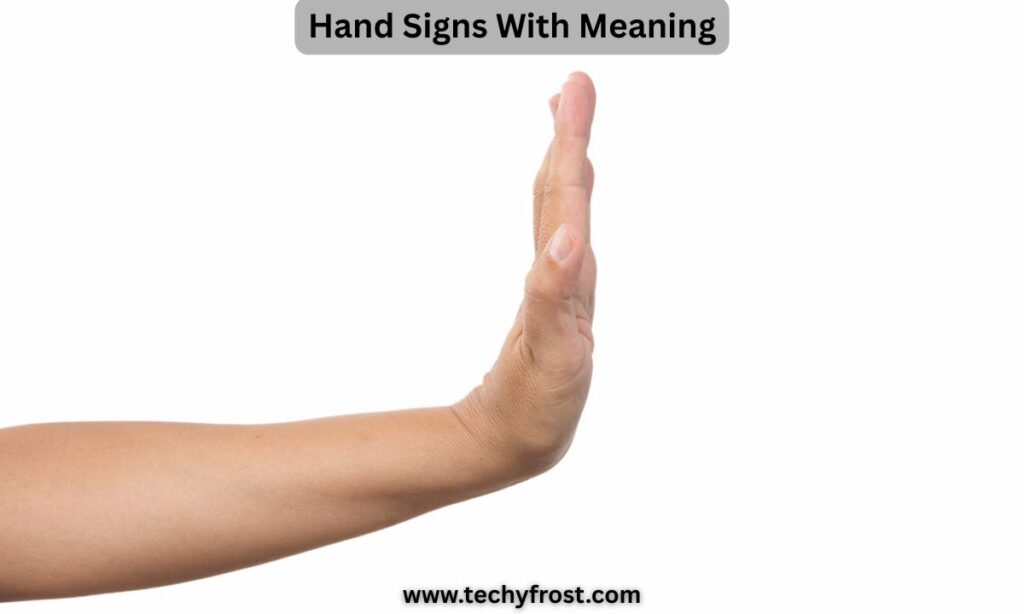
Hand signs carry compressed meaning. American Sign Language (ASL) is an entire language built on this principle — over 200,000 people in the US communicate primarily through hand signs. But hand signs also appear in military communication, sports officiating, traffic direction, underwater diving, and musical conducting.
Hand Signs
Hand signs are formalized gestures with agreed-upon meanings within a specific community or system. Unlike casual gestures, hand signs are standardized — the same sign means the same thing to every trained person in that system.
Hand Signs Meanings
Hand signs carry different meanings in different systems:
- ASL (American Sign Language): linguistic communication for Deaf communities
- Sports: referee signals, coaching signals from the dugout or sideline
- Military: tactical communication in noise-sensitive environments
- Scuba diving: safety communication underwater where speech is impossible
- Music: conductor signals to orchestral sections
Hand Signs And Meanings
The meanings of hand signs shift dramatically depending on system and culture. A “thumbs up” is positive in Western cultures but offensive in parts of the Middle East and West Africa. An “OK” circle (thumb and index finger) is positive in the US but offensive in Brazil and associated with a hate symbol in some modern online contexts.
Hand Signs With Deep Meaning
Some hand signs carry profound symbolic weight that goes far beyond simple communication:
- Namaste (Anjali Mudra): Palms pressed together at the chest — acknowledges the divine in another person; promotes mutual respect, love, and compassion
- Raised fist: Solidarity, resistance, collective power; used globally by labor, civil rights, and social justice movements
- Hand over heart: Sincerity, deep emotional honesty, personal pledge
- Open arms: Welcome, unconditional acceptance, invitation to embrace
Modern Hand Signs
In the social media era, new hand signs have emerged or been repurposed. The “heart hands” gesture (thumbs and index fingers forming a heart shape) became a global symbol of love and positivity largely through K-pop culture. The “finger heart” — a mini heart made by crossing the thumb and index finger — spread from South Korean entertainment worldwide.
7 Powerful Hand Gestures
These seven gestures carry outsized communicative power in modern life:
- Open palm (facing audience): Builds trust; one study found 84% positive audience response to speakers who use open palm gestures
- Listing with fingers: Anchors structure in a speech or presentation
- The steeple: Projects quiet authority and deep confidence
- Two-handed “everything” sweep: Creates an inclusive, expansive feeling
- The “you” open-palm point: Directly engages an audience member without aggression
- The precision grip (thumb + index): Signals detail, precision, and intellectual care
- The raised fist: Communicates passion, determination, and solidarity
Bad Hand Gestures Meaning With Pictures
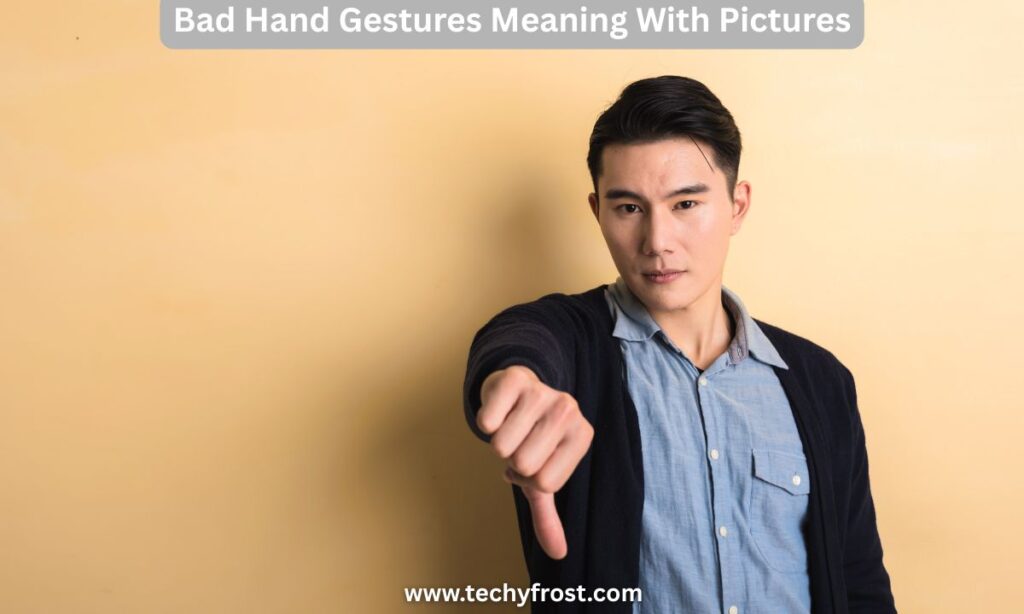
Some gestures that are neutral or positive in one culture are deeply offensive in another:
| Gesture | Positive Context | Offensive Context |
| Thumbs up | Western: approval | Middle East/West Africa: rude insult |
| “OK” circle | USA: okay, fine | Brazil: obscene; some communities: hate symbol |
| V sign (palm inward) | — | UK, Australia: offensive insult |
| Pointing index finger | General: direction | Many Asian cultures: rude |
| “Horns” sign | Rock culture: cool | Italy, Spain, Latin America: spouse unfaithful |
| Beckoning finger | USA: come here | Philippines, Japan, Malaysia: deeply rude |
Spiritual, Ancient And Cultural Hand Symbols
Hand Symbol Meanings Spiritual
In spiritual traditions worldwide, the hand is a conduit for energy, blessing, and divine communication. Spiritual hand symbols are used in meditation, healing rituals, prayer, and sacred ceremonies to channel, direct, or protect energy.
Hand Symbols Spiritual
Spiritual hand symbols appear across every major world tradition:
- Hamsa: Protection against the evil eye
- Mudras: Yogic and Buddhist energy seals
- Healing hands: Used in Reiki, Christian prayer, and shamanic traditions
- Prayer hands: Universal devotion symbol
- Hopi Hand: Spiral-palm symbol sending healing vibrations; represents the universe
Spiritual Hand Symbols
When placed in intentional positions during prayer, meditation, or ritual, hands are believed to align the human body with higher consciousness. Open palms placed upward signal surrender and readiness to receive. Hands placed together at the heart center signal inner devotion and unity of self.
Spiritual Hand Symbols And Meanings
| Symbol | Tradition | Spiritual Meaning |
| Hamsa / Hand of Fatima | Islamic, Jewish | Protection, blessing, strength |
| Abhaya Mudra | Hindu, Buddhist | “Fear not,” divine protection |
| Anjali Mudra | Hindu, Buddhist | Devotion, greeting the divine |
| Prayer hands | Christian | Supplication, reverence |
| Hopi Hand | Native American | Healing, connection to the Great Spirit |
| Healing hand | Reiki, shamanic | Transfer of healing energy |
Hand Meaning Symbol
The meaning of hand as symbol goes deeper than gesture — it touches the core of what makes us human. Our hands allow us to express love, create art, build shelter, tend wounds, and pray. Every civilization that has ever existed has recognized this and built symbolic systems around it.
Hand Symbols Meanings
Here is a broader breakdown of meaningful hand symbols and their core associations:
- Raised right hand: Oath-taking, divine authority, truth-telling
- Upward-pointing index finger: “One God” in Islamic tradition; directional authority in general
- Downward-pointing hand: Calling upon earth energy; in Buddhism, represents enlightenment (Bhumisparsha mudra)
- Clasped hands: Partnership, unity, treaty, prayer
- Hand radiating light: Divine power, illumination (common in medieval Christian art)
Hands Symbol Meaning
Two hands together — whether clasped, praying, or interlocked — universally represent union. The joining of two hands bridges separation: between individuals, between human and divine, between opposing forces seeking harmony.
Powerful Hand Symbols
The most powerful hand symbols in history share one characteristic: they compress enormous meaning into a single elegant form. The Hamsa. The raised fist. The peace sign. The prayer hands. Each one is instantly recognizable across cultural boundaries and communicates without a single word.
Ancient Hand Symbols And Meanings
| Ancient Symbol | Origin | Meaning |
| Cave handprint | Prehistoric | Identity, presence, “I exist” |
| Hand of Sabazios | Ancient Greece | Divine helping hand, protection |
| Mano Pantea | Ancient Egypt | Protection, divine power |
| Hand of Fatima (Hamsa) | North Africa/Middle East | Protection, blessing |
| Blessing hand | Ancient Rome | Imperial authority, divine favor |
| Mudras | Ancient India | Spiritual seals, energy direction |
Hand Symbols And Their Meaning
Every hand symbol in history encodes three things: who is using it, in what tradition, and with what intention. The same open palm that priests use to bless in Christianity signals “stop” in traffic law. Context, tradition, and intention determine meaning — not the physical form alone.
Religious, Occult And Pop Culture Hand Symbols
Christian Hand Symbols
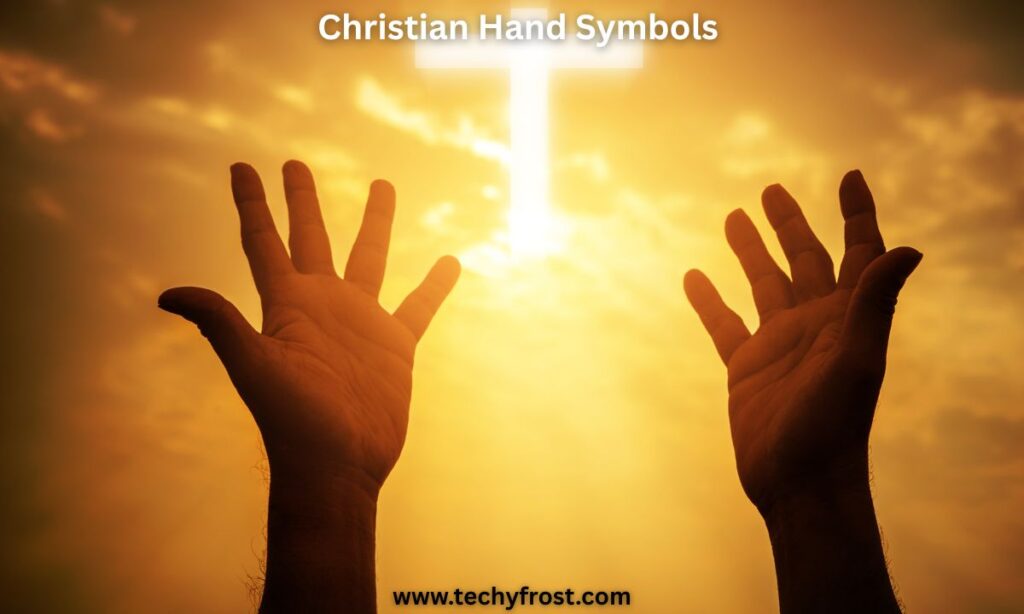
In Christianity, hand symbols carry profound sacred meaning:
- Laying on of hands: Blessing, healing, ordination — the transfer of spiritual authority from one person to another
- Raised hand of blessing: Three fingers extended represent the Trinity; used by priests and bishops during benediction
- Prayer hands: Palms together in supplication — humility and devotion before God
- Sign of the cross: Made with the right hand; affirms faith and invokes divine protection
Buddhist Hand Symbols
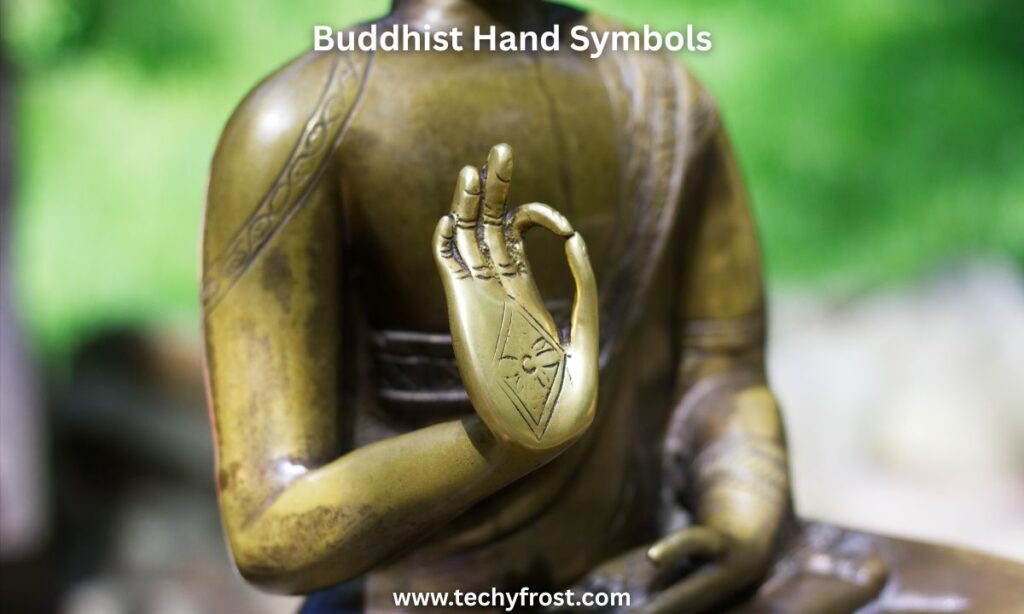
Buddhism has one of the richest vocabularies of hand symbols (mudras) in any tradition:
- Dhyana Mudra (Meditation): Both hands resting in the lap, right over left, thumbs touching — promotes inner stillness and concentration
- Bhumisparsha Mudra (Earth touching): Right hand pointing downward to touch the earth — represents the moment of Buddha’s enlightenment
- Abhaya Mudra (Fearlessness): Right hand raised, palm outward — “Fear not”; offers protection
- Vitarka Mudra (Teaching): Index finger and thumb forming a circle — promotes learning, personal growth, and the teaching of dharma
- Varada Mudra (Giving): Open palm facing downward or outward — generosity, compassion, the giving of blessings
Satanic Hand Symbols
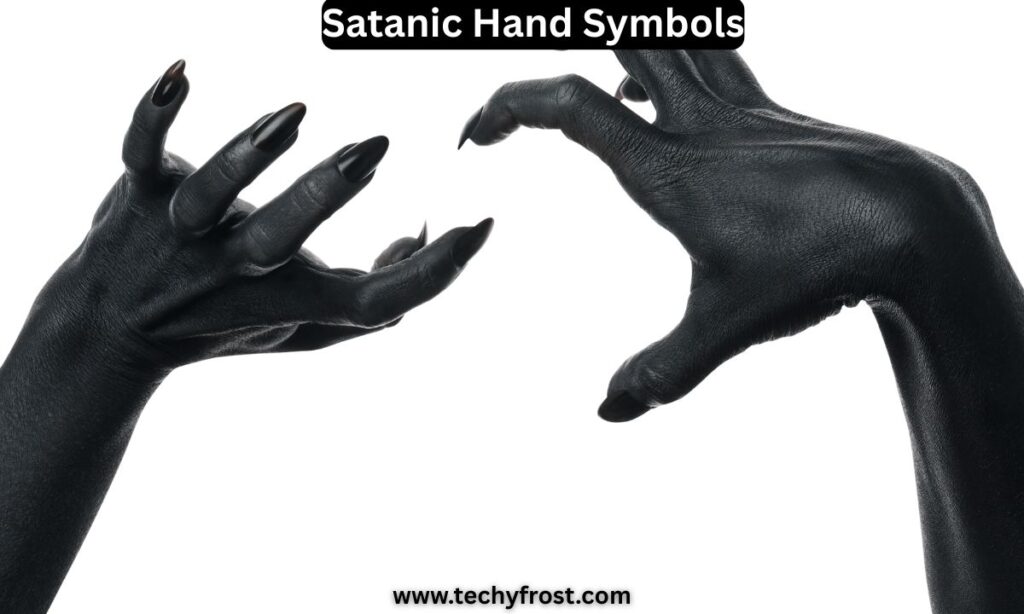
The “devil’s horns” gesture (index and pinky fingers raised, middle fingers curled, thumb extended) is widely used in rock music as a symbol of rebellion and energy. In occult and Satanic contexts, it is associated with invoking demonic or dark energies. However, this same gesture is the ASL sign for “I love you” and is used innocuously in many cultures worldwide. Context is the critical factor.
Satanic Hand Symbols And Meanings
Symbols associated with Satanic or left-hand path traditions include the inverted pentagram hand sign, the “as above, so below” gesture (one hand pointing up, one down), and various mirrored or inverted versions of religious hand signs. These are primarily recognized within occult study circles and are rarely encountered in mainstream settings.
Demonic Hand Symbols
In folklore and mythology, demonic hand symbols are those associated with summoning, cursing, or invoking dark forces. These appear in horror fiction, folk magic traditions, and occult texts. In modern pop culture, they frequently appear in horror films and heavy metal music aesthetics.
Occult Hand Symbols
Occult hand symbols span a wide range of esoteric traditions:
- The triangle hand (as above, so below): Fingers shaped into a triangle — alchemical symbol of transformation
- Hidden hand: Hand tucked into a coat or jacket — appears frequently in historical portraits and is associated with secret society membership
- Sign of the Master: Various grip and finger positions used in initiatory rituals
- The horned hand: Associated with warding off the evil eye in Mediterranean cultures long before its association with rock music
Illuminati Hand Symbols
The “Illuminati triangle” — thumbs and index fingers touching to form a pyramid/triangle shape — is frequently identified in media as a secret hand sign. While the historical Bavarian Illuminati did use symbolic communication, most modern “Illuminati hand sign” identifications in celebrity photos are disputed and debated. What is clear is that triangle and pyramid symbolism carries long historical associations with hidden knowledge, the all-seeing eye, and esoteric power.
Masonic Hand Symbols
Freemasonry has developed a detailed system of hand signs, grips, and gestures used during lodge rituals to identify fellow members and signal degree of initiation. Common Masonic hand symbols include:
- The Masonic handshake: Variations for each degree, involving specific thumb and finger pressure patterns
- The Masonic M: Middle and ring fingers held together while others spread — signals membership and rank
- The lion’s paw grip: A specific strong handgrip used in higher degree rituals
- The sign of distress: A raised arm gesture with specific arm positioning
Freemason Hand Symbols
Freemason hand symbols are initiatory signs — they function within a closed system as identification markers between members. Many of these symbols draw on older traditions including Egyptian, Solomonic, and Pythagorean symbolism.
Sorority Hand Symbols
Most sororities and fraternities have their own unique hand signs that represent membership and sisterhood/brotherhood. These are typically displayed at events, in photos, and during initiation. For example:
- Greek letter-shaped finger configurations
- Specific crossed-arm patterns
- Signature gestures unique to each organization’s founding tradition
Entertainment And Specialized Hand Signs
Naruto Hand Symbols
In the anime and manga series Naruto, hand seals (called “mudra” in Japanese) are required to perform most ninjutsu techniques. There are 12 basic hand seals, each named after one of the Chinese zodiac animals:
| Hand Seal | Animal | Associated Element/Use |
| Rat (Ne) | Rat | Water techniques |
| Ox (Ushi) | Ox | Earth techniques |
| Tiger (Tora) | Tiger | Fire techniques |
| Hare (U) | Rabbit | Wood techniques |
| Dragon (Tatsu) | Dragon | Earth/Fire techniques |
| Snake (Mi) | Snake | Earth techniques |
| Horse (Uma) | Horse | Fire techniques |
| Ram (Hitsuji) | Sheep | Wind techniques |
| Monkey (Saru) | Monkey | Earth/Lightning |
| Bird (Tori) | Rooster | Lightning techniques |
| Dog (Inu) | Dog | Water/Lightning |
| Boar (I) | Boar | Lightning techniques |
The most iconic single hand seal in Naruto is the Cross or Ram seal — index and middle fingers crossed — used most famously for the Shadow Clone Technique.
Domain Expansion Hand Symbols
In Jujutsu Kaisen, Domain Expansion hand signs draw from real Buddhist and Hindu mudras. Each character’s Domain Expansion uses a specific mudra that connects to spirits, gods, or spiritual concepts:
- Gojo’s Infinite Void uses a mudra invoking Taishakuten-in (Indra, king of gods in Hinduism)
- Sukuna’s Malevolent Shrine uses Enma Ten-In — the name of Yama, king of hell in Buddhism
This is a deliberate creative choice by the author — using ancient sacred hand positions to lend supernatural weight to the series’ most powerful techniques.
Solfege Hand Symbols
Solfege hand signs (also called Curwen hand signs or Kodály hand signs) are a music education tool where each hand position represents a note in the musical scale:
| Note | Hand Sign |
| Do | Closed fist |
| Re | Hand angled down and away |
| Mi | Flat hand, palm down |
| Fa | Thumb pointing down, fingers forward |
| Sol | Open flat hand, palm down |
| La | Hand curved downward |
| Ti | Fingers pointing up, palm in |
| Do (high) | Closed fist above head |
These signs are taught widely in elementary music education worldwide and are a direct physical encoding of musical pitch.
Deep Symbolic Meaning of Hand Symbols
Spiritual Level
At the spiritual level, hand symbols function as portals — physical gestures that create energetic or divine alignment. When a Buddhist monk forms a specific mudra, he is not simply making a shape; he is believed to be activating specific energetic pathways within the body. When a Christian priest extends hands in blessing, he is believed to transmit divine grace through that physical gesture.
The hand at the spiritual level represents conscious will directed by higher intention. Almost every mystical tradition — Sufism, Kabbalah, Tantra, shamanism — includes deliberate hand positioning as a core practice.
Psychological Level
Psychologically, hand symbols work because the brain processes visual gestures faster than language. Research in body language confirms that hand gestures directly affect how listeners perceive a speaker’s intelligence, trustworthiness, and emotional sincerity. We are hardwired to read hands — our survival once depended on knowing whether approaching hands carried weapons or came in peace.
Hand symbols also affect the person making them. Forming a power pose or a confident gesture actually triggers hormonal changes — studies suggest deliberate confident body posture, including hand positioning, can shift stress hormone levels measurably.
Cultural Level
Culturally, hand symbols serve as tribal identifiers — they mark group membership, shared belief, and collective identity. A peace sign identifies someone with certain countercultural values. A specific mudra identifies a practitioner of a specific yoga lineage. A sorority hand sign identifies a sister. At the cultural level, hand symbols are social glue.
Types and Variations of Hand Symbols
1. Hamsa Hand
The Hamsa is arguably the world’s most universally recognized protective hand symbol. An open palm with an eye at the center, it appears in both Islamic tradition (Hand of Fatima) and Jewish tradition (Hand of Miriam). It’s believed to ward off the evil eye and attract blessing, strength, and good fortune. The Hamsa is displayed facing up (projecting protection) or facing down (welcoming abundance). Today, Hamsa jewelry and wall art are enormously popular worldwide — worn by people of many faiths and none, simply as a symbol of protection and positive energy.
2. Mudras
Mudras are sacred hand gestures from Hindu and Buddhist traditions, with roots in ancient Indian healing philosophy (Ayurveda). The word “mudra” means “seal” or “mark” in Sanskrit. There are five categories: yogic, customary, spiritual, curative, and religious. Ayurveda teaches that each finger represents one of the five elements — fire, air, space, earth, and water — and that specific mudras activate or balance these elements within the body.
3. Raised Fist
The raised fist is the global symbol of resistance, solidarity, and collective power. Used by labor movements, civil rights activists, anti-colonial struggles, and social justice campaigns across the 20th and 21st centuries, the raised fist communicates: We will not be broken. Its power comes from its simplicity — a single closed hand, lifted.
4. Peace Sign
The two-finger V sign with palm facing outward became the universal peace symbol through the 1960s anti-war movement. It had earlier roots as Winston Churchill’s “Victory” sign during World War II. Today it’s one of the most photographed hand gestures in the world — appearing in selfies across every culture and continent.
5. Handshake
The handshake may be the most economically and socially significant hand symbol in human history. Originally an act of demonstrating that neither party carried a hidden weapon, it evolved into the primary gesture of agreement, trust, and mutual respect in business and politics worldwide. A firm handshake communicates confidence; a limp one communicates insecurity; and during the pandemic era, its temporary disappearance highlighted just how much social weight this single gesture carries.
6. Open Palm Blessing
Extended open palms — facing outward or upward — appear in blessing rituals across virtually every world religion and spiritual tradition. From the Aaronic blessing in Judaism to the papal blessing in Christianity to the Abhaya mudra of Buddhism, the open palm facing the recipient says universally: I wish you well. I give freely. I offer peace.
Hand Symbols Across Cultures
Ancient Civilizations
In ancient Egypt, hands appeared in hieroglyphics and temple art to represent offering and devotion. The hand hieroglyph itself (D46) represented the letter “d” and was used in words for giving. In ancient Rome, specific hand gestures communicated legal authority — orators and emperors used deliberate hand signs to signal command and deliver pronouncements. The mano cornuta (horned hand) was used across the Mediterranean to ward off evil long before any modern associations.
South Asian Traditions
India has the world’s most elaborate and codified system of hand symbolism. Classical Indian dance (Bharatanatyam, Kathak, Odissi) uses over 100 distinct hand gestures (hastas and mudras) to tell complete stories. Yoga traditions use dozens of mudras in practice. Hindu religious iconography depicts deities in specific mudra positions that communicate their divine function and character to devotees at a glance.
Middle Eastern Cultures
The Hand of Fatima (Hamsa) originated in North Africa and the Middle East and remains one of the most powerful protective symbols in the region. The right hand holds elevated status in Islamic tradition — it is used for eating, greeting, and all honorable actions. The left hand is considered impure in some traditions. Hand gestures in Arabic culture tend to be more expressive and larger in scope than in Northern European traditions.
Western Culture
Western culture has developed a relatively informal but rich system of everyday hand symbolism. The thumbs up and down — popularized in modern times but with debated ancient Roman roots — are among the most recognized gestures globally. The handshake dominates formal agreement. The middle finger has become one of the most universally understood offensive gestures in the world. And the peace sign, born in American countercultural protest, now appears on merchandise and social media worldwide.
East Asian Symbolism
In China and Japan, hand gestures appear prominently in Buddhist rituals, traditional theatre (Noh, Kabuki), and martial arts. In Japanese martial arts, specific hand positions concentrate chi energy for combat or healing. Chinese cultural tradition associates the open hand with longevity and benevolence. The number four (4) made by hand signals is avoided in some East Asian contexts because the word for four sounds similar to the word for death.
Hand Symbols in Art, Movies and Pop Culture
Hand symbols have been central to visual storytelling since before film existed. Michelangelo’s Creation of Adam centers entirely on two hands almost touching — the divine and human reaching across the gap of existence. Leonardo da Vinci used hand positioning in The Last Supper to reveal character, emotion, and intention without a word of text.
In cinema, directors use hands deliberately. The extended hand in E.T. echoes the Sistine Chapel. The raised fist in The Breakfast Club became an icon of youth rebellion. In horror films, grasping hands from darkness and clawing gestures signal terror and loss of control.
In pop culture, specific hand signs have become signature brand markers: Jay-Z’s diamond/triangle Roc-A-Fella gesture, various gang signs immortalized in hip-hop culture, the Vulcan salute from Star Trek (borrowed by Leonard Nimoy from a Jewish blessing gesture), and the heart hands popularized by K-pop artists BTS and BLACKPINK.
Spiritual and Dream Meaning of Hand Symbols
When hand symbols appear in dreams, they often carry significant spiritual meaning:
- Dreaming of open hands: Readiness to give or receive; emotional openness; approaching a period of generosity or abundance
- Dreaming of clenched fists: Suppressed anger or anxiety; a need to release control; preparing for a challenge
- Dreaming of healing hands: A desire for relief from emotional or physical pain; a healing energy entering your life
- Dreaming of many hands reaching toward you: Community, support, or feeling overwhelmed by demands
- Dreaming of a glowing hand: Spiritual awakening, divine guidance, or an approaching moment of clarity
- Dreaming of losing a hand: Fear of powerlessness, loss of agency, or anxiety about inability to complete an important task
Across shamanic traditions, dreams of hand symbols are taken seriously as messages from ancestors, guides, or the subconscious mind. In Jungian psychology, the hand in dreams represents the capacity for action and the expression of will.
Positive vs Negative Meaning of Hand Symbols
Not all hand symbols carry positive energy. The same physical form can represent protection in one tradition and threat in another.
| Symbol | Positive Meaning | Negative Meaning |
| Open palm | Peace, welcome, honesty | “Talk to the hand” (dismissal) |
| Pointing finger | Direction, guidance | Accusation, blame |
| Raised fist | Solidarity, strength | Threat, aggression |
| Horns sign | Rock energy, “cool” | Evil eye, occult invocation |
| Crossed fingers | Good luck, hope | Secret lie, nullifying a promise |
| Hidden hand | Humble reserve | Secret society, deception |
| Circle (thumb + index) | OK, perfect | In some cultures: zero, worthless, or obscene |
The lesson is consistent: no hand symbol carries fixed meaning in isolation. Every symbol is a conversation between maker and viewer, shaped by the cultural language both parties share.
Why Humans Are Attracted to Hand Symbols
The human attraction to hand symbols runs deeper than cultural habit — it’s neurological. Our brains devote an extraordinary amount of processing power to hands. The motor cortex allocates more space to the hands than to any other body part proportionally (this is visible in the classic “cortical homunculus” diagram). We are literally built to pay intense attention to hands.
Before writing, before complex spoken language, before cities — hands were how humans communicated across differences. An open hand meant safety. A closed one meant danger. Reading hand symbols was a survival skill.
Today, that hardwiring persists. We notice hands in a painting before faces. We watch a speaker’s hands as closely as their face. We instinctively look at the hands of someone we distrust. Hand symbols persist because they speak directly to one of the oldest parts of our brain — the part that knows, before thought arrives, whether we are safe or in danger, welcomed or rejected, blessed or threatened.
That ancient intelligence is why a simple open palm can still, across 40,000 years of human history, say everything that needs to be said.
Frequently Asked Questions
Q: What is the most universal hand symbol? The open palm is the most universally understood hand symbol — it communicates peace, welcome, or offering across almost all human cultures.
Q: What does the Hamsa hand symbol mean? The Hamsa represents protection against negative energy and the evil eye, and is a symbol of blessing and strength in both Islamic and Jewish traditions.
Q: What do hand symbols mean spiritually? Spiritually, hand symbols channel energy, connect humans to divine power, and are used in meditation, healing, prayer, and ritual to direct intention and consciousness.
Q: Are Naruto hand symbols real? Yes — Naruto’s 12 hand seals are based on the Chinese zodiac, and many are inspired by real Hindu and Buddhist mudras used in meditation and religious practice.
Q: What do hands symbolize in dreams? Hands in dreams typically represent your sense of control, agency, and readiness to act — or fears related to powerlessness or emotional disconnection.
Q: What does a raised fist mean? A raised fist is a global symbol of solidarity, resistance, and collective strength — used most prominently by labor, civil rights, and social justice movements.
Q: Are Masonic hand signs real? Yes — Freemasonry does use specific handshakes and hand signs as part of initiatory rituals, though their exact details are closely guarded within the organization.
Q: What does the peace sign hand gesture mean? The V-sign with palm facing outward means peace and became globally popular through the 1960s anti-war movement, though it carries offensive meaning if made with palm facing inward in some countries.
Conclusion
Hand symbols are among the oldest, deepest, and most persistent forms of human communication. From prehistoric cave handprints to modern social media gestures, from Hindu mudras to Masonic grips to anime hand seals — our hands have never stopped speaking.
What makes hand symbols enduringly powerful is their ability to bypass language entirely and communicate directly, emotionally, and spiritually. They carry thousands of years of collective human meaning in the simplest physical form. The next time you notice a hand symbol — in a painting, a gesture across a room, a piece of jewelry, or a character’s pose on screen — pause. What you’re seeing is one of humanity’s oldest and most expressive languages, still very much alive.
Understanding hand symbols doesn’t just satisfy curiosity. It deepens your reading of art, your awareness of cultural difference, your appreciation of spiritual practice, and your understanding of how deeply human the need to communicate truly is.

