

You’ve probably spotted a semicolon tattoo on someone’s wrist. You’ve seen green ribbons pinned to jackets. You’ve watched someone get a lotus flower inked on their shoulder and quietly wondered what it meant. These aren’t random aesthetic choices. Every single one of those images carries a story — often one of survival, healing, and the quiet courage it takes to keep going.
Mental health symbols have been part of human culture for thousands of years, from ancient Egyptian hieroglyphs to modern-day tattoo studios in Brooklyn. They give people a language when words fail. They build communities among strangers who share the same invisible struggles. And increasingly, they’re showing up everywhere — in pop culture, fashion, art, and clinical settings.
This guide breaks down 77+ mental health symbols with their full meanings. Whether you’re looking for a tattoo, researching for a campaign, or simply trying to understand what that image on your coworker’s water bottle means — you’re in the right place.
What Are Mental Health Symbols?
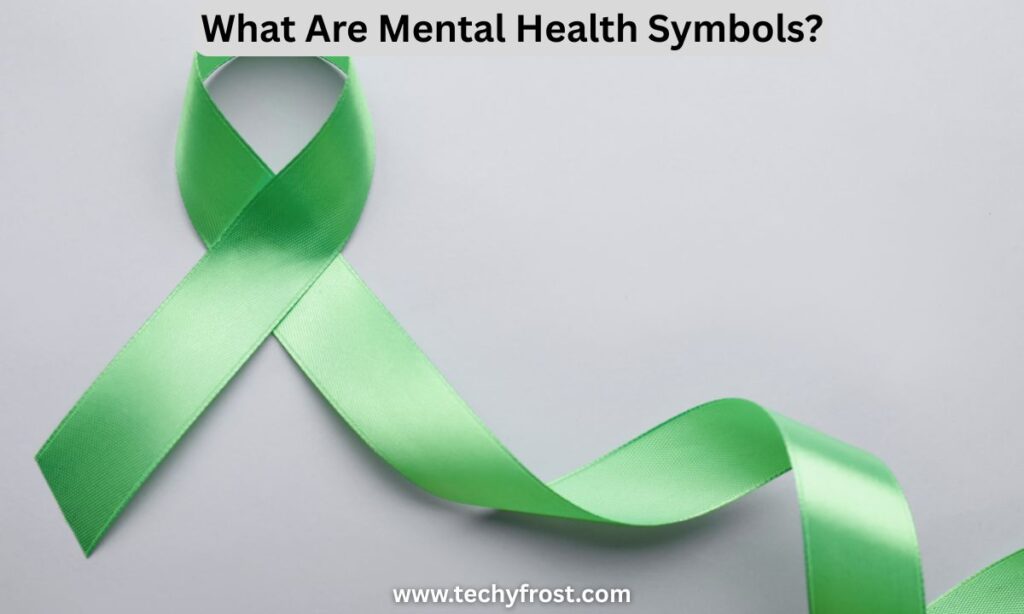
Mental health symbols are images, colors, objects, or marks that represent emotional and psychological well-being, struggle, recovery, or awareness. They function as a shared visual language — a way for people to communicate deeply personal experiences without needing to say a single word.
These symbols serve several key purposes:
- Raising awareness about mental illness and reducing the stigma around seeking help
- Building community among those who share similar experiences with anxiety, depression, trauma, or addiction
- Personal empowerment — wearing or displaying a symbol can reinforce a person’s own healing narrative
- Starting conversations that might otherwise never happen
The earliest recorded case of mental illness dates back to 1100 BC in ancient China. Since then, every culture has found ways to symbolize the inner emotional world. Today, mental health symbols range from clinical diagrams used by therapists to small tattoos worn as lifelong reminders of survival.
What makes them powerful isn’t the symbol itself — it’s the meaning people pour into it.
Mental Health Symbols And Meanings
Before we go deep into individual symbols, here’s a broad overview. Mental health symbols and meanings span several categories: awareness, recovery, strength, suffering, hope, and transformation.
| Symbol | Core Meaning | Associated Condition |
|---|---|---|
| Semicolon (;) | Your story isn’t over | Suicide prevention, depression |
| Green Ribbon | Universal mental health awareness | All mental illness |
| Butterfly | Transformation and rebirth | Anxiety, depression |
| Lotus Flower | Beauty from darkness | Trauma, addiction |
| Phoenix | Rising after destruction | Recovery, PTSD |
| Anchor | Stability and hope | Addiction recovery |
| Infinity Symbol (∞) | Endless healing journey | All mental health |
| Yellow Ribbon | Suicide prevention | Suicidal ideation |
| Silver Ribbon | Brain disorders | Schizophrenia |
| Lime Green Ribbon | Maternal mental health | Postpartum depression |
Mental Health Symbols Tattoos
Tattoos are one of the most common ways people wear mental health symbols. Unlike a pin or a bracelet, a tattoo is permanent — a deliberate statement about identity, survival, and personal truth.
The most popular mental health symbols for tattoos include the semicolon, butterfly, lotus flower, anchor, and phoenix. People often choose small, minimalist designs that carry massive personal weight. A tiny semicolon on the inside of a wrist. A small butterfly on the collarbone. A lotus behind the ear.
What unites these tattoos is their intention: they serve as permanent reminders of a battle fought and a choice to continue.
Symbols Of Mental Health Recovery
Recovery-focused symbols tend to emphasize forward movement, transformation, and hope. The most recognized symbols of mental health recovery include:
- The Phoenix — rebirth from ashes, the ultimate recovery metaphor
- The Lotus Flower — growing through mud into beauty
- The Rising Sun — new beginnings after dark nights
- The Butterfly — complete transformation from one state to another
- Broken Chains — freedom from what once held you captive
These symbols are used in treatment centers, recovery programs, support groups, and personal expression. They communicate that healing isn’t linear, but it is possible.
Mental Health Symbols Copy Paste
Many people search for mental health symbols to use digitally. Here are commonly used symbols you can copy and use in social media posts, messages, and campaigns:
Semicolon: ;
Green Heart: 💚
Butterfly: 🦋
Sunflower: 🌻
Lotus: 🪷
Infinity: ∞
Purple Heart (PTSD awareness): 💜
Yellow Heart (suicide awareness): 💛
White Ribbon: 🎗️
Brain: 🧠
Mental Health Tattoos
Beyond the symbols themselves, mental health tattoos as a broader category include phrases, dates, portraits, and abstract designs. Some people tattoo the name of someone lost to suicide. Others get dates that mark the day they chose to stay. The symbol matters less than the personal significance it carries.
Common placements for mental health tattoos include the inner wrist (highly visible to the wearer), the ribcage (private and personal), and the forearm (visible to others as a quiet conversation starter).
Mental Health Symbol Emoji
In digital communication, emojis have become unofficial mental health symbols. The green heart 💚 is widely used to signal mental health awareness and support. The butterfly 🦋 signals transformation and hope. The brain emoji 🧠 is commonly used in mental health content online.
The sunflower 🌻 represents seeking light during dark times — it always turns toward the sun. These emoji-based symbols don’t replace formal advocacy, but they make mental health conversations more accessible, especially among younger generations on platforms like TikTok, Instagram, and X.
Mental Health Symbol Drawing
Mental health symbols are popular in art therapy, illustration, and awareness campaigns. Common drawing themes include:
- Semicolons incorporated into butterflies or hearts
- Lotus flowers emerging from dark water
- Hands cradling a broken heart slowly mending
- Trees with roots that form a brain
- Open cages with birds flying free
These visual metaphors appear in mental health awareness posters, social media graphics, and therapeutic art exercises. Creating these drawings is itself a form of emotional processing for many people.
Popular Symbols For Mental Health Awareness
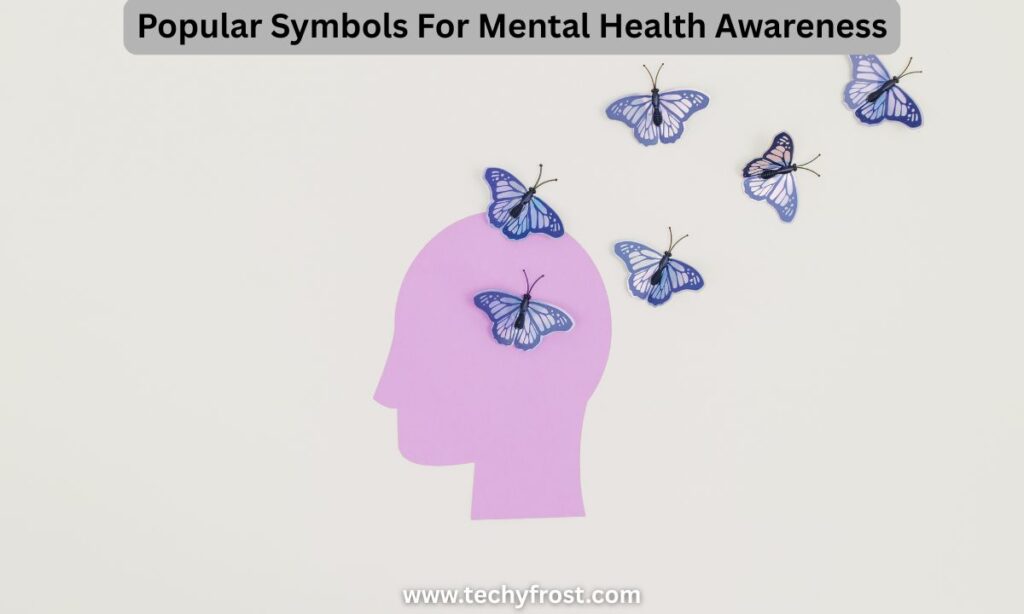
Semicolon Symbol Meaning Mental Health
The semicolon is the most recognized mental health symbol in modern Western culture. In grammar, a semicolon connects two related sentences when the writer could have stopped but chose to continue. That’s the metaphor: your life is the sentence. You are the author. You chose to keep going.
The movement was popularized by Project Semicolon, a nonprofit founded in 2013 by Amy Bleuel after she lost her father to suicide. The semicolon symbol meaning in mental health is directly tied to suicide prevention, depression awareness, and the courage it takes to stay alive through unbearable pain.
Today, millions of people worldwide wear semicolon tattoos as a permanent reminder that their story isn’t finished.
Symbol For Mental Illness
There is no single universal symbol for mental illness as a whole, because the term covers hundreds of distinct conditions. However, several symbols are broadly recognized:
- The green ribbon represents mental illness generally
- The silver ribbon represents schizophrenia and neurological brain disorders
- The gray ribbon is used in some contexts for depression
- The yellow ribbon represents suicide prevention
- The black ribbon is sometimes used to represent mourning those lost to mental illness
Symbols For Mental Health Awareness
Mental health awareness campaigns use a variety of symbols depending on the specific condition or message:
| Awareness Campaign | Symbol Used |
|---|---|
| General Mental Health | Green ribbon |
| Suicide Prevention | Yellow ribbon, semicolon |
| Anxiety | Labyrinth, teal ribbon |
| PTSD | Purple ribbon |
| Bipolar Disorder | Green and white ribbon |
| Postpartum Depression | Lime green ribbon |
| Schizophrenia | Silver ribbon |
| OCD | Teal ribbon |
Mental Health Symbolism
Mental health symbolism goes beyond awareness campaigns. Symbols carry emotional resonance because they communicate what language struggles to express. A person living with depression might deeply connect with imagery of heavy rain, shadows, or winter trees — not because those images are hopeless, but because they feel understood.
Symbolism in mental health works on three levels. First, the personal level — what a symbol means to the individual. Second, the cultural level — shared meaning within a community. Third, the universal level — archetypes that cross cultural boundaries and speak to something fundamentally human.
Mental Symbols
“Mental symbols” is a broad term that can refer to any image associated with psychological experience. These include:
- Mandalas — representing wholeness and inner calm
- Labyrinths — representing the journey through confusion toward clarity
- The eye — awareness and insight
- The brain — intelligence and mental capacity
- Clouds and storms — emotional turbulence
- Light through windows — hope despite confinement
Symbols Of Mental Health
The full range of mental health symbols is vast. The ones most embedded in global culture include the semicolon, green ribbon, lotus flower, butterfly, phoenix, anchor, infinity sign, and dreamcatcher. Each represents a different aspect of the mental health experience — from the darkest moments to the highest peaks of recovery.
Symbols For Mental Illness
Symbols for mental illness often reflect the invisible nature of these conditions. A cracked porcelain mask. A clear glass filled with dark water. A brain wrapped in storm clouds. These images capture the experience of carrying something invisible that feels impossibly heavy.
In clinical and advocacy contexts, ribbons remain the dominant symbol for specific mental illnesses, as outlined in the awareness campaign table above.
Symbols Of Suffering

Some of the oldest symbols in human history represent psychological suffering. Ancient cave paintings showed figures crouched in isolation — an early representation of what we’d now call depression. Greek tragedy used masks of anguish. Buddhist art depicted the suffering mind bound by chains.
Modern symbols of suffering include:
- Heavy rain and dark clouds
- Bare winter trees
- Cracked or broken objects
- Shadows that don’t match their source
- Empty chairs
These symbols aren’t hopeless — they’re honest. And acknowledgment of suffering is often the first step toward healing.
Symbols Mental Health
The phrase “symbols mental health” captures the broad intersection of visual language and psychological well-being. From the clinical symbols used in genograms to the lotus flower inked on a survivor’s skin, these images form a rich visual vocabulary for a deeply human experience.
Symbols For Mental Health
To summarize the landscape of mental health symbolism at a glance:
- Hope: Sunrise, phoenix, lotus, green ribbon
- Survival: Semicolon, anchor, mountain peak
- Transformation: Butterfly, phoenix, butterfly emerging from cocoon
- Community: Green ribbon, hands joined, open hearts
- Recovery: Broken chains, rising sun, phoenix, lotus
- Awareness: Colored ribbons (green, yellow, silver, teal, purple)
Mental Health Tattoo And Illustration Meanings
Genogram Mental Health Symbols
A genogram is a specialized clinical diagram used by therapists and mental health professionals. It resembles a family tree but goes far deeper — mapping emotional relationships, patterns of trauma, mental illness history, communication styles, and conflict between family members across generations.
Common genogram mental health symbols include:
- Squares for males, circles for females
- Horizontal lines for partnerships
- Vertical lines for parent-child connections
- Zigzag lines for conflict
- Double lines for enmeshed relationships
- Broken lines for distant or estranged relationships
Genograms help clinicians identify where behavioral patterns and mental health struggles originate within family systems. They’re a valuable tool in family therapy, social work, and trauma-informed care.
Men’s Mental Health Symbols
Men face unique barriers when it comes to mental health. Societal expectations around masculinity often discourage emotional expression, making it harder for men to seek help. According to public health data, men account for a disproportionate share of suicide deaths — a crisis that demands culturally relevant symbols.
Symbols that resonate strongly with men’s mental health tend to emphasize strength-based narratives:
- The lion — courage and power, reframed as the courage to be vulnerable
- The mountain — the climb, not just the summit
- The wolf — resilience and pack mentality
- Broken chains — freedom from stigma
- Anchor — holding steady during emotional storms
Campaigns like Movember and Man Therapy use strong visual symbolism specifically to reach men who might otherwise dismiss mental health conversations.
Tattoos Mental Health Symbols And Meanings
Here’s a detailed breakdown of common mental health tattoo symbols and what they represent:
| Tattoo Symbol | Meaning | Best For |
|---|---|---|
| Semicolon | “My story isn’t over” | Suicide survival, depression |
| Butterfly | Transformation and new life | Anxiety, eating disorders |
| Lotus Flower | Beauty from darkness | Trauma, addiction recovery |
| Phoenix | Rising after complete destruction | PTSD, addiction, major loss |
| Anchor | Stability when everything shifts | Anxiety, addiction |
| Infinity | Endless journey of healing | General mental health |
| Semicolon + Butterfly | Coming from darkness into life | Suicide survival + transformation |
| Mountain | The climb through difficulty | Depression, life challenges |
| Heartbeat line | Alive and choosing life | Survival, health struggles |
| Tree with roots | Groundedness and growth | Anxiety, identity work |
Mental Health Symbols And Their Meanings
The most complete answer to “mental health symbols and their meanings” involves understanding that symbols gain their power through shared and personal meaning simultaneously. The green ribbon means the same thing to a stranger and a loved one. But a personal phoenix tattoo earned after years of addiction recovery carries a weight that no one else can fully understand.
Both types of meaning matter. The collective symbols build awareness. The personal symbols build identity.
Mental Health Symbols And Meanings Tattoos
When choosing a mental health tattoo, consider:
- What does the symbol mean within its broader cultural context?
- What does it mean to you personally?
- Does the meaning feel stable — something that will still be true in 20 years?
- Does the placement match the intimacy of the meaning?
The best mental health tattoos honor both the shared language of the community and the unique story of the individual wearing it.
Depression Mental Health Symbols
Depression-specific symbols tend to reflect the experience of heavy, slow, invisible weight:
- Gray ribbon — used in some depression awareness contexts
- Bare winter tree — alive but stripped bare
- Fading candle — light diminishing but not yet gone
- Rain cloud — persistent heaviness
- Semicolon — choosing to continue during suicidal ideation
The butterfly and phoenix are also common in depression recovery contexts, representing the transformation possible when the darkness finally lifts.
Positive Mental Health Symbols
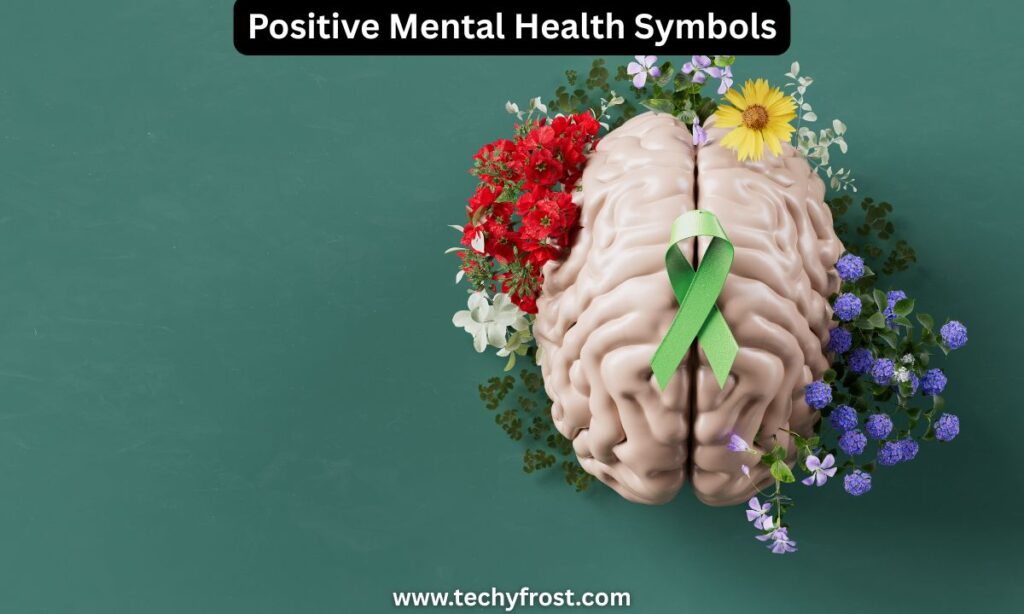
Positive mental health symbols focus on well-being, prevention, and flourishing rather than illness:
- Sunflower — always turning toward light
- Open bird cage with flying birds — liberation from limiting thoughts
- Rainbow — beauty after storms
- Green tree — growth, vitality, deep roots
- Sun — warmth, energy, new beginnings
These symbols are increasingly used in workplace wellness programs, school mental health campaigns, and positive psychology initiatives.
Mental Health Symbols Illustration
Illustration is a powerful medium for mental health symbols because it can show nuance, movement, and emotion that a simple graphic cannot. Popular illustration styles for mental health content include:
- Watercolor — soft, emotional, fluid
- Line art — clean, modern, therapeutic
- Black and gray realism — serious, contemplative
- Botanical — natural, grounding, hopeful
Mental health organizations frequently commission illustrators to create campaign imagery that balances vulnerability with hope.
Childhood Mental Health Symbols Illustration
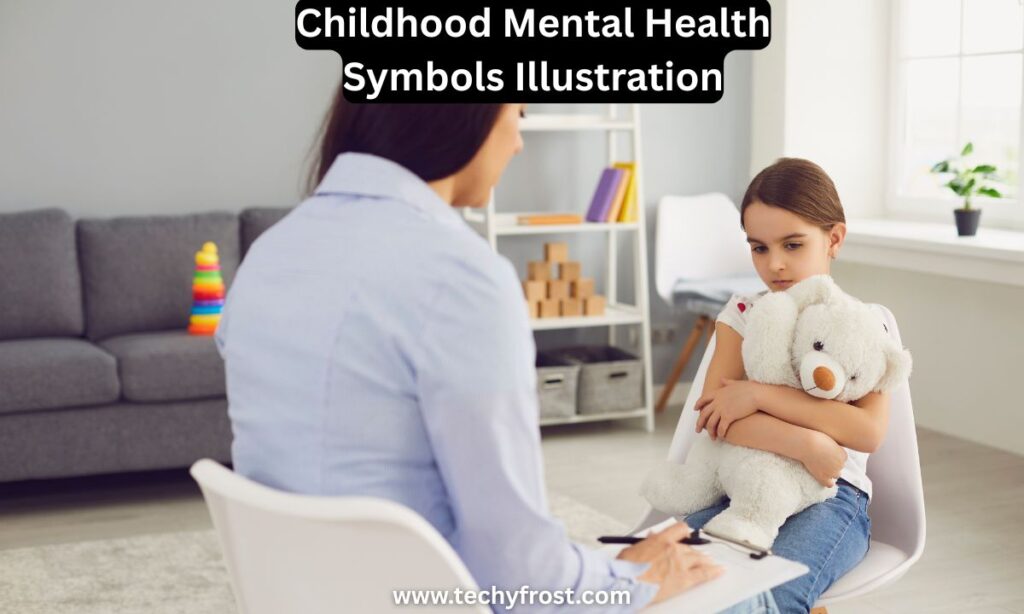
Children process mental health differently from adults, and the symbols used in childhood mental health contexts reflect that. Illustrations for children tend to be:
- Bright and colorful with clear emotional cues
- Character-driven (animals, friendly creatures)
- Focused on emotional vocabulary — naming feelings visually
- Simple but not simplistic
Common images include worried characters learning to breathe, sad animals finding friends, or tangled feelings slowly sorting themselves out. These illustrations are used in school counseling, therapy workbooks, and children’s mental health campaigns.
Childhood Mental Health Symbols Images
Key imagery used in childhood mental health education includes:
- Weather faces (storm = sad, sunshine = happy) for emotional literacy
- Feeling monsters or creatures that represent different emotions
- The “worry jar” — a visual metaphor for containing anxious thoughts
- A calm-down corner illustrated as a cozy, safe space
- Color-coded feelings charts
Anxiety Mental Health Symbols
Anxiety-specific symbols reflect the experience of internal turbulence despite external calm:
- A labyrinth — feeling lost or trapped in circular thinking
- Tangled thread — overwhelmed and unable to find a beginning or end
- A jar with butterflies inside — the physical sensation of anxiety
- Stormy sea — restlessness and unpredictability
- Mandala — used therapeutically as a grounding and calming focus
Mandalas in particular are both a symbol of anxiety experience and a tool for managing it — the act of drawing or coloring a mandala is used in mindfulness-based anxiety therapy.
Mental Health Symbols Clipart
Mental health symbols clipart is widely used in educational materials, presentations, social media graphics, and awareness campaigns. Common clipart themes include:
- Green ribbons and hearts
- Semicolon designs
- Butterfly and lotus combinations
- Brain illustrations with flowers growing from them
- Hands cradling hearts or heads
These images are available through platforms like Canva, Freepik, and Shutterstock for use in mental health advocacy content.
Deep Symbolic Meaning
Spiritual Level
On a spiritual level, mental health symbols represent the transformation of the soul through suffering. The lotus growing through mud reflects a spiritual principle found in Hinduism and Buddhism: that purity and enlightenment emerge precisely from difficult conditions. The phoenix carries spiritual rebirth symbolism found across Egyptian, Greek, Chinese, and Persian traditions. The infinity symbol echoes spiritual beliefs that healing is not a finite event but an eternal, evolving state of being.
Many people find that spiritual framing gives their mental health journey deeper meaning — not just “I survived” but “I was transformed.”
Psychological Level
Carl Jung’s work on archetypes established that certain images carry universal emotional weight across all human cultures. When someone living with depression sees a bare winter tree, something clicks internally. The symbol communicates what their mind has been struggling to articulate. That moment of recognition is itself therapeutic.
Psychologically, mental health symbols make invisible experiences visible. They externalize internal states, giving people a concrete anchor for feelings that otherwise feel uncontrollable. This is why art therapy, symbol work, and visual journaling are legitimate therapeutic tools used by licensed clinicians.
Cultural Level
Across cultures, the symbolism shifts but the function remains the same. Indigenous medicine wheels represent balance across physical, mental, emotional, and spiritual dimensions. Eastern mandalas represent wholeness and integration. Western ribbons represent solidarity and collective action. Each culture has encoded its understanding of psychological health into symbols accessible to its members.
The global mental health movement increasingly embraces symbols that cross language and cultural barriers, recognizing that mental health is a universal human concern that no single culture owns.
Types and Variations of Mental Health Symbols
1. Semicolon
The semicolon (;) is the single most recognized mental health symbol globally. Founded through Project Semicolon in 2013, the symbol spread virally across social media and into tattoo culture. It represents the grammatical choice an author makes to continue a sentence rather than end it — applied to life itself.
Variations: Semicolon butterfly (the semicolon forms the body), semicolon infinity, semicolon heart, semicolon combined with a heartbeat line.
2. Green Ribbon
The green ribbon is the international emblem for mental health awareness broadly. It represents hope, growth, and the collective effort to end stigma. First widely adopted in the early 2000s through advocacy organizations, the green ribbon now unifies awareness across schizophrenia, anxiety, depression, bipolar disorder, and dozens of other conditions under one color.
Variations: Lime green for maternal mental health and postpartum depression; green and white for bipolar disorder specifically.
3. Lotus Flower
The lotus grows from muddy, dark water but blooms into something strikingly beautiful on the surface. In Hinduism and Buddhism, it represents purity and enlightenment. In mental health contexts, it represents the possibility of beauty, growth, and healing even when your roots are deep in pain or trauma.
Variations: Blue lotus (spiritual clarity), pink lotus (compassion), white lotus (purity), lotus combined with semicolons or infinity symbols.
4. Butterfly
The butterfly’s metamorphosis is one of nature’s most compelling transformation stories. A creature that enters a chrysalis during one of its most vulnerable phases emerges completely changed. For those in mental health recovery, the butterfly represents the same possibility: that what feels like dissolution might actually be transformation.
Variations: Semicolon butterfly, watercolor butterfly, monarch butterfly (hope and migration), butterfly combined with broken chains.
5. Anchor
The anchor symbolizes stability, groundedness, and hope in the middle of emotional turbulence. When everything feels like it’s drifting — during addiction recovery, anxiety, grief, or trauma — the anchor represents something solid to hold onto.
Variations: Anchor with rope, anchor with infinity symbol, anchor with flowers, “I refuse to sink” anchor tattoo.
6. Phoenix
The phoenix is a mythological bird that dies in fire and is reborn from its own ashes. No symbol captures the recovery experience more completely. It speaks to those who have been utterly destroyed by mental illness, addiction, abuse, or trauma and have rebuilt themselves from the ground up.
Variations: Rising phoenix with flames, watercolor phoenix, phoenix feather, phoenix combined with lotus.
7. Infinity Symbol
The infinity symbol (∞) represents the ongoing, nonlinear journey of mental health recovery. It communicates that healing doesn’t have a finish line — it is a continuous, evolving process with setbacks and breakthroughs. It also represents the limitless potential for growth regardless of how severe the struggle.
Variations: Infinity with semicolon, infinity with heartbeat line, infinity with flowers, infinity with name or date inscribed.
Mental Health Symbols Across Cultures
Ancient Egypt
Ancient Egyptians used the Eye of Horus as a symbol of healing and protection. In a society that didn’t distinguish clearly between physical and mental ailments, protection of the mind was central to well-being. The ankh — representing life — was also used in contexts of healing and restoration.
Eastern Traditions
In Hindu and Buddhist traditions, the lotus flower, Om symbol, and mandala are all deeply connected to mental and spiritual health. The Om represents the interconnectedness of all life, promoting the inner peace that underpins psychological well-being. Mandalas — geometric patterns representing the universe — are used in meditation to center the mind and reduce anxiety.
Greek Mythology
The Greeks gave us some of the most enduring mental health symbols. Asclepius’ staff (a serpent-wrapped rod) remains the symbol of medicine and healing. The myth of Psyche — the personification of the soul — established the word “psyche” as the root of psychology. The labyrinth from the Minotaur myth represents the confusing, disorienting inner journey of psychological struggle.
Indigenous Cultures
Indigenous communities across the world have rich symbolic traditions related to mental and spiritual health. The medicine wheel used in many Native American traditions represents balance across four dimensions: physical, mental, emotional, and spiritual. Dreamcatchers filter out negative energies and thoughts. Feathers represent freedom, lightness, and the ease of genuine mental well-being.
Modern Western Culture
Modern Western culture has produced the most globally distributed mental health symbols — the semicolon, green ribbon, and yellow ribbon — largely through internet-driven awareness campaigns. Social media accelerated the spread of these symbols to billions of people, creating a genuinely global shared language for mental health experience.
Mental Health Symbols in Art, Movies and Pop Culture
Movies
Films have used visual symbolism to represent mental health states for decades. In A Beautiful Mind, the fractured, overlapping visual perspectives mirror schizophrenia’s disorienting experience. In Inside Out, Pixar built an entire visual language around emotional states, using color-coded characters that have since entered everyday conversation about feelings.
Paintings
Edvard Munch’s The Scream (1893) is perhaps the most globally recognized painting representing psychological anguish. Vincent van Gogh’s swirling skies in The Starry Night are widely interpreted as an expression of his turbulent mental state. Both paintings have been adopted by mental health advocates as representations of the inner experience of psychological distress.
Books
Sylvia Plath’s The Bell Jar uses the bell jar itself as a central mental health symbol — the suffocating, transparent container that isolates a person from normal life while keeping their deterioration invisible to others. The image has become cultural shorthand for depressive isolation.
Tattoos
As discussed throughout this guide, tattoo culture has become one of the primary channels for mental health symbolism in contemporary society. The semicolon tattoo in particular has been documented on millions of people worldwide, making it arguably the most worn mental health symbol in history.
Fashion
Green ribbon pins appear on lapels during Mental Health Awareness Month each May. Some fashion designers have incorporated semicolons, butterflies, and lotus motifs into collections focused on wellness themes. Wristbands, bracelets, and accessories carrying mental health symbols are produced by advocacy organizations as both fundraising tools and wearable solidarity markers.
Spiritual and Dream Meaning of Mental Health Symbols
In spiritual and dream interpretation traditions, mental health symbols take on additional layers of meaning. Dreaming of a butterfly often represents an upcoming transformation or the completion of a personal metamorphosis. A phoenix in a dream can signal that a period of destruction is finally giving way to renewal.
The lotus appearing in dreams is frequently interpreted as the spirit’s emergence from a period of suffering into clarity. An anchor in a dream suggests a need for stability or a reminder that you already possess groundedness you may have forgotten.
From a Jungian perspective, these symbols appear in dreams because they are archetypes — images so deeply embedded in the collective human unconscious that they communicate universal emotional truths across cultures and generations. When these symbols appear, either in dreams or waking encounters, they often signal that the psyche is processing something significant.
Positive vs Negative Meaning
Mental health symbols don’t exclusively represent darkness and struggle. Many carry powerfully positive connotations:
| Symbol | Positive Meaning | Challenging Meaning |
|---|---|---|
| Semicolon | Choosing life, continuing | The pause before that choice |
| Storm cloud | Internal strength weathered | Ongoing emotional turbulence |
| Broken chains | Freedom achieved | The weight once carried |
| Winter tree | Resilience, bare survival | Stripping away of everything |
| Dark water | Depth and introspection | Feeling submerged and drowning |
| Mask | Protecting the healing self | Hiding true suffering |
The same symbol can hold both meanings simultaneously. That duality is not a contradiction — it’s an honest reflection of what mental health recovery actually looks and feels like. You can acknowledge the pain and celebrate the survival in the same breath.
Why Humans Are Attracted to These Symbols
Human beings are symbol-making creatures. Long before written language, we used images to communicate experiences that words hadn’t been invented for yet. Mental health symbols tap into this ancient capacity.
Here’s why they resonate so deeply:
- They make the invisible visible. Mental illness is largely unseen. A symbol gives it a form — something that can be looked at, held, shared.
- They build community without words. Two strangers who both have semicolon tattoos immediately understand something important about each other’s story.
- They anchor identity. For someone in recovery, wearing a phoenix or lotus is a daily affirmation of who they’ve become.
- They reduce stigma. Every green ribbon on a jacket, every semicolon on a wrist, quietly normalizes the fact that mental health is something real, serious, and worth talking about.
- They give grief a home. When language breaks down — during crisis, after loss, in the depths of depression — symbols hold meaning that words cannot.
We are drawn to these symbols because they do what nothing else quite can: they say “I have been there, I am here, and I chose to continue” in a single image.
Conclusion
Mental health symbols are far more than decorative designs or campaign graphics. They are a living, evolving language built by and for people navigating some of the most difficult terrain a human being can face. From the ancient Egyptian Eye of Horus to a semicolon tattooed on a 22-year-old’s inner wrist, from the lotus in Buddhist meditation to the green ribbon pinned to a therapist’s office door — these symbols connect us across time, culture, and experience.
Understanding them means understanding something essential about what it is to be human: that we suffer, that we persist, and that we reach for meaning even in the darkest moments.
If a symbol in this guide resonated with you — whether you’re on a healing journey yourself or supporting someone who is — consider that the recognition you feel is already the symbol working. That click of “this is me” is exactly what these images were made for.
Frequently Asked Questions
What is the universal symbol for mental health? The green ribbon is the internationally recognized symbol for mental health awareness, representing hope, growth, and support for those living with mental illness.
What does the semicolon mean in mental health? The semicolon represents the choice to continue one’s story rather than end it — a symbol of survival, hope, and solidarity for those who have faced depression, suicide, or addiction.
What tattoo represents mental health? The most common mental health tattoos include the semicolon, butterfly, lotus flower, anchor, phoenix, and infinity symbol, each representing themes of survival and recovery.
What color represents mental health awareness? Green is the primary color of mental health awareness. Yellow represents suicide prevention, silver represents brain disorders, and purple represents PTSD.
What is the symbol for anxiety? Anxiety doesn’t have one official symbol, but commonly associated images include the labyrinth, mandala, tangled thread, and teal ribbon.
What does a butterfly tattoo mean in mental health? A butterfly tattoo represents transformation, hope, and rebirth — the idea that a person can emerge from their darkest period completely changed and stronger.
What is the symbol for depression? Depression is most commonly associated with the gray ribbon, bare winter tree imagery, and the semicolon (especially in the context of suicidal depression).
What are genogram symbols in mental health? Genogram symbols are clinical tools used by therapists to map family relationships, emotional patterns, and inherited mental health histories using shapes and connecting lines.

