

Puerto Rico is more than a Caribbean island — it’s a living tapestry of cultures, languages, and centuries of layered history. From the indigenous Taíno people who first carved petroglyphs into rock faces to the Spanish colonial era, the African diaspora, and a proud modern Boricua identity, every chapter of Puerto Rico’s story has left behind symbols. These symbols aren’t decorative. They carry memory, grief, resistance, and celebration all at once.
Whether you’re a Puerto Rican tracing your roots, a tattoo enthusiast researching meaningful designs, or simply curious about a deeply expressive culture, this guide covers 55+ Puerto Rican symbols, their meanings, origins, and why they still matter today.
What Are Puerto Rican Symbols?
Puerto Rican symbols are visual representations — animals, plants, celestial figures, geometric patterns, and national emblems — that communicate the island’s cultural values, spiritual beliefs, and collective identity. These symbols draw from three distinct traditions:
- Taíno indigenous culture (pre-Columbian, dating back thousands of years)
- Spanish colonial influence (16th century onward)
- African and Caribbean traditions (brought through the slave trade and diaspora)
Together, they form a rich symbolic language that Puerto Ricans carry with them across generations and borders. You’ll find these symbols carved in cave walls, woven into flags, tattooed on skin, painted on murals, and printed on everything from coffee mugs to fine jewelry.
What makes Puerto Rican symbols uniquely powerful is that many of them survived conquest, colonization, and near-cultural erasure — and came back stronger. They are not just decorations; they are acts of cultural survival.
Puerto Rican Symbols And Their Cultural Meanings
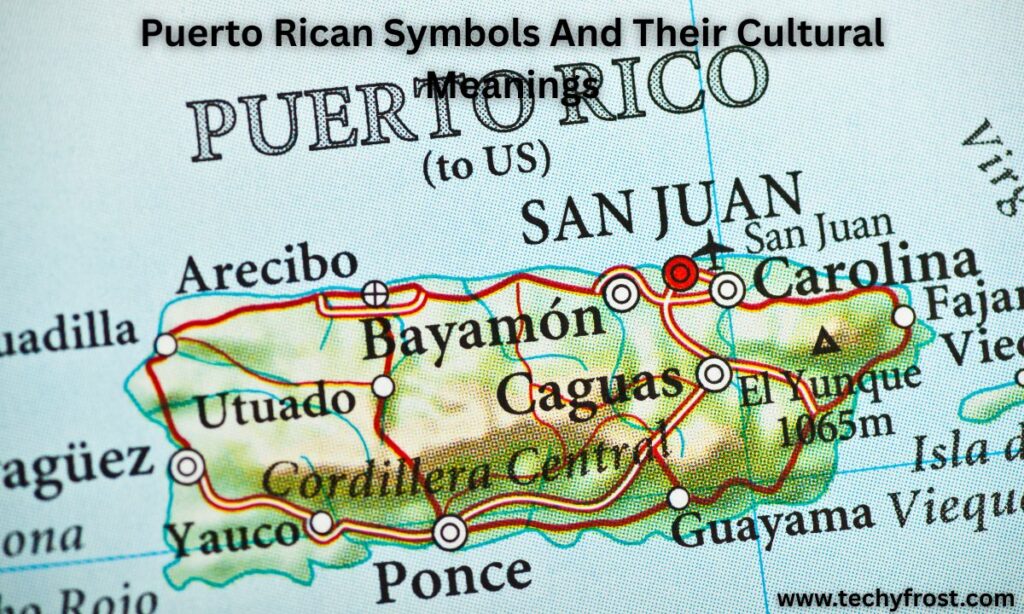
Puerto Rican Symbols And Meanings
Every Puerto Rican symbol carries a specific cultural weight. Here is a quick-reference overview of the most significant ones:
| Symbol | Origin | Core Meaning |
| Coquí Frog | Taíno / Natural | Home, identity, pride |
| Sol de Jayuya (Taíno Sun) | Taíno / Petroglyph | Life, divine energy, protection |
| Puerto Rican Flag | Colonial/Independence era | Freedom, sacrifice, unity |
| Flor de Maga (Hibiscus) | Natural / National | Beauty, resilience, island life |
| Atabey | Taíno Deity | Motherhood, fertility, fresh water |
| Cemi | Taíno Spiritual | Ancestral spirits, divine protection |
| Taíno Spiral | Taíno / Petroglyphs | Cosmic energy, cycles of life |
| Toa Symbol | Taíno Legend | Motherhood, transformation |
| Eternal Lovers | Taíno | Love, fertility, tribal equality |
| Coat of Arms | Spanish Colonial | Authority, historical legacy |
These symbols aren’t locked in history books. Walk through Old San Juan, browse any local artisan market, or scroll through Puerto Rican social media — and you’ll see them everywhere.
Puerto Rican Symbols Tattoos
Tattoos are one of the most intimate ways Puerto Ricans express cultural pride, especially in diaspora communities across New York, Chicago, Orlando, and Philadelphia. Puerto Rican symbol tattoos are not just body art — they are declarations of belonging.
The most popular Puerto Rican tattoo symbols include:
- The Coquí frog — For those who want to say, “No matter where I am, Puerto Rico lives in me”
- Sol de Jayuya (Taíno Sun) — Represents ancestral pride and strength; deeply popular as a sleeve or chest piece
- Puerto Rican flag — Often combined with other symbols like the coquí or hibiscus
- Atabey (frog-legged goddess) — A symbol of womanhood, protection, and indigenous identity
- Taíno spirals and geometric patterns — Worn to honor indigenous heritage
- Flor de Maga — A feminine symbol of natural beauty and island connection
If you’re choosing a Puerto Rican symbol for a tattoo, research its origin and meaning first. These symbols carry real cultural weight, and wearing them with knowledge makes the art more meaningful — for you and for the culture.
Taino Symbols And Meanings
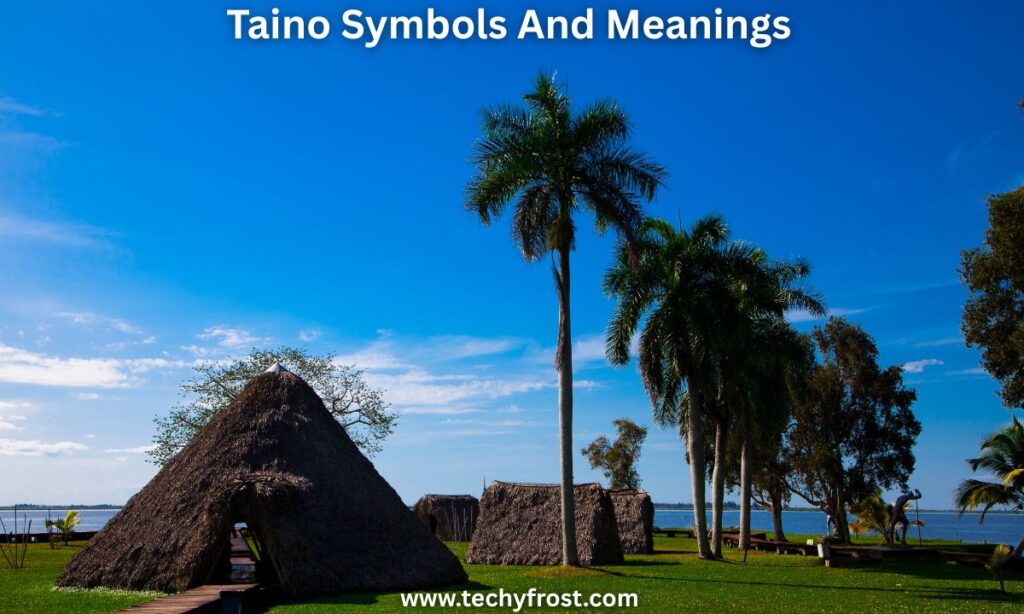
The Taíno were the indigenous people of Puerto Rico and the Caribbean. Before Spanish colonization in 1493, they had developed a sophisticated civilization with its own government, spiritual system, and artistic language. Their symbols — mostly petroglyphs (carved) and pictographs (painted) — can still be found on cave walls and rocks across Puerto Rico.
Key Taíno symbols and their meanings:
- Coquí — Resilience, connection to the land, guardianship
- Atabey — Mother goddess of fertility and fresh water, depicted with a woman’s body and frog’s legs
- Yúcahu — The supreme male deity connected to the sun, agriculture, and fertility
- Jurakan — The god of hurricanes and winds; the root of our modern word “hurricane”
- Cemi — Sacred figures representing ancestral spirits; shamans used them for guidance and protection
- Toa — Motherhood, transformation (derived from the legend of the Guahoyona)
- Eternal Lovers — Two birds connected beak-to-beak, representing equality and tribal love
- Turtle — Maternal figure, origin of life, connection to the earth
- Spiral — Cosmic energy, the endless cycle of life, both material and immaterial
- Sun and Moon — Cosmic balance; the Taíno believed both were born from the same sacred cave
One of the earliest written records of Taíno symbols was made by Fray Ramón Pané, a Spanish priest who arrived with Columbus. His records, though filtered through a colonial lens, remain one of the few historical documents referencing Taíno spirituality directly.
Puerto Rican Symbols Copy And Paste
Many people search for Puerto Rican symbols to use in digital communication, social media bios, or design projects. Here are some commonly used digital symbols associated with Puerto Rico:
🇵🇷 — Puerto Rican Flag
🐸 — Coquí Frog (general frog emoji used to represent the coquí)
🌺 — Hibiscus / Flor de Maga
☀️ — Taíno Sun / Sol de Jayuya
🌀 — Taíno Spiral
🌴 — Palm tree (general island symbol)
⭐ — The white star from the Puerto Rican flag
For authentic Taíno petroglyph-style graphics and symbols, you’ll need to search dedicated cultural or design platforms, as Unicode doesn’t have specific Taíno character sets.
Puerto Rico Taino Symbols
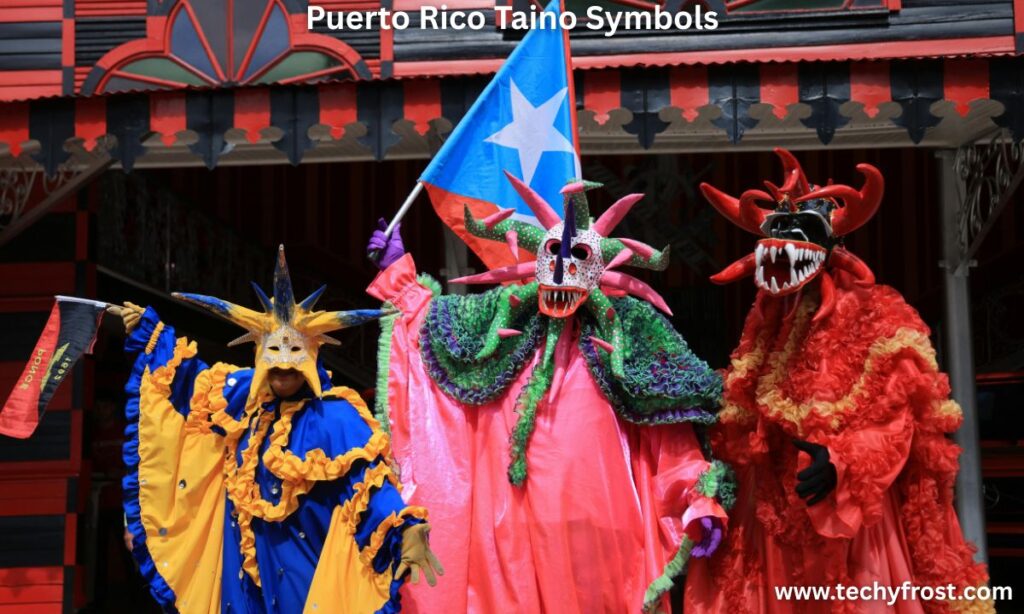
Puerto Rico has several locations where you can see original Taíno symbols up close. These sacred sites preserve thousands of years of indigenous history:
- Caguana Indigenous Ceremonial Park (Utuado) — The most important ceremonial site in Puerto Rico, featuring monoliths and petroglyphs of Taíno deities
- Piedra Escrita (Jayuya) — A boulder in a river covered in Taíno petroglyphs
- Cueva del Indio (Arecibo) — Coastal cave with carvings facing the ocean
- Río Blanco (Naguabo) — Another significant petroglyph site in eastern Puerto Rico
Taíno symbols found here repeatedly include the frog-legged Atabey figure, the sun face, spirals, and abstract figures representing Cemis (spiritual entities).
Puerto Rico Taino Symbols Tattoos
Taíno-inspired tattoos have seen a major cultural revival, particularly among younger Puerto Ricans reconnecting with indigenous heritage. These tattoos are powerful statements of identity and resistance — honoring a people who were nearly erased by colonization yet whose genetic, linguistic, and cultural legacy lives on.
Popular Taíno tattoo designs:
- Atabey figure — Fertility, protection, womanhood
- Sol de Jayuya — The circular sun face; possibly the most tattooed Puerto Rican symbol in the US
- Cemi figures — Ancestral spiritual connection
- Spiral patterns — Cosmic energy and life cycles
- Coquí in Taíno style — Indigenous identity + island pride
- Great Taíno Seal — Two branches with 24 Cojobana leaves representing tribal lineage
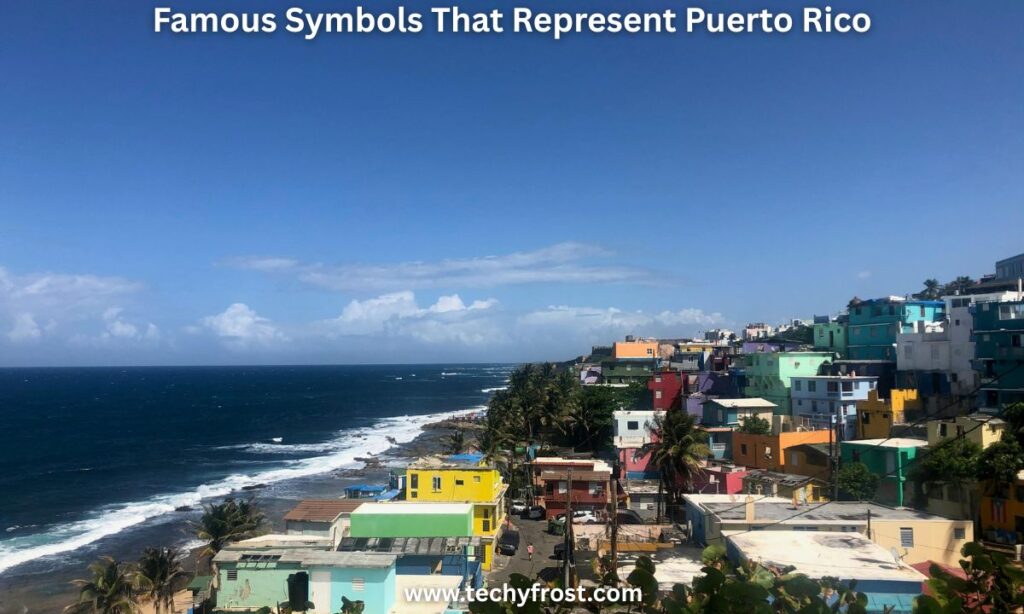
Famous Symbols That Represent Puerto Rico
Taino Sun Symbol Meaning
The Sol de Jayuya — or Taíno Sun — is perhaps the single most recognizable indigenous symbol from Puerto Rico. It’s a circular petroglyph featuring a stylized face with radiating spokes, discovered in Jayuya in central Puerto Rico.
What does the Taíno Sun symbolize?
- Life force and energy — The sun provided warmth, grew crops, and sustained communities
- Yúcahu — The supreme Taíno deity; the sun was seen as his physical manifestation
- Strength and longevity — The Taíno believed the sun god gave strength and long life to both people and harvests
- Protection — The radiating rays were seen as divine shields
- Cosmic balance — The Taíno believed the sun and moon were born from the same cave (Mautiatibuel), balancing night and day
Today, the Sol de Jayuya appears on T-shirts, murals, jewelry, and body art across Puerto Rico and the diaspora. It represents not just ancient belief — it represents the survival of Taíno culture into the modern era.
Puerto Rico Symbol Frog
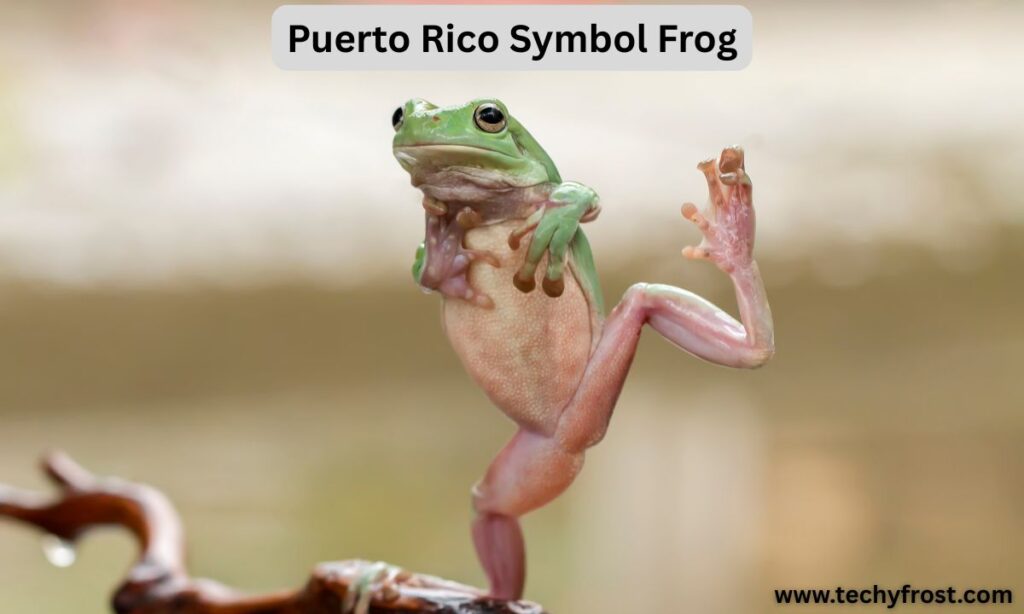
The Coquí (Eleutherodactylus coqui) is a tiny tree frog native exclusively to Puerto Rico. It gets its name from its distinctive nighttime call — “co-QUEE” — which echoes across the island every evening at dusk. No bigger than a thumb, this small amphibian carries enormous cultural weight.
Why is the Coquí so important?
- It is endemic to Puerto Rico — found nowhere else on Earth in its natural habitat
- Its call is the unofficial soundtrack of Puerto Rican life
- The phrase “De aquí como el coquí” (“From here like the coquí”) expresses deep roots and belonging
- In Taíno mythology, men who could not care for their children were transformed into frogs (connected to the Toa legend)
- Today there are 17 known species of coquí, though several are endangered due to deforestation
The coquí appears in children’s books, fine art, restaurant logos, tourism campaigns, and countless tattoos. It is the emotional heart of Puerto Rican identity.
Puerto Rican Symbols Toa
The Toa symbol is one of the most emotionally resonant symbols in Taíno culture. The legend behind it is striking: the god Guahoyona abducted all the women of the island. Left without their mothers, men tried desperately to care for hungry children. The word Toa means “mother” in Taíno. The children cried out “toa toa” pleading for their mothers, and the men, unable to console them, were transformed into frogs.
The Toa symbol, therefore, represents:
- Motherhood and maternal love
- Transformation (men becoming frogs)
- Grief and longing
- The sacred role of women in Taíno society
It’s a deeply feminine and emotionally layered symbol — often chosen by Puerto Rican women as a tattoo to honor their mothers or their own role as mothers.
Taino Puerto Rican Symbols
Beyond the most famous symbols, Taíno culture left behind dozens of meaningful images found in caves and ceremonial plazas:
| Taíno Symbol | Meaning |
| Herons / Cranes | Masculinity, human characteristics |
| Conch Shell | Communication, community, strength |
| Turtle | Origin of life, earth, fertility |
| Twin Figures | Duality — day/night, wet/dry seasons |
| Frog-Legged Woman | Atabey, mother goddess |
| Funerary Urn | Honoring the deceased |
| Hand Mortar | Daily life, agriculture |
| Maize (Corn) | Sustenance, agriculture, Yúcahu |
Puerto Rican Tattoos
Puerto Rican tattoos as a genre blend Taíno imagery, national pride, and personal storytelling. The most popular choices in this genre include:
- The Puerto Rican flag — Often styled with the coquí perched on it
- Sol de Jayuya combined with the flag
- Coquí frog — With the phrase “Boricua” or “De aquí”
- Atabey — A symbol of indigenous womanhood and protection
- Flor de Maga — In vibrant crimson and green
- El Morro (Castillo San Felipe del Morro) — The historic San Juan fort
- Coat of Arms — For those who want to represent the official national identity
Puerto Rican Taino Symbols
The Taíno left behind a symbolic language carved into the rock of their homeland. These carvings — called petroglyphs — are found at over 200 known archaeological sites across Puerto Rico. The Caguana Indigenous Ceremonial Park in Utuado is the most significant, containing enormous monoliths engraved with deities and abstract figures used in ritual ballgames and ceremonies.
Puerto Rico Symbols
Here is a comprehensive list of 55+ symbols that represent Puerto Rico:
Natural / Animal Symbols:
- Coquí frog
- Flor de Maga (national flower)
- Puerto Rican Parrot (Cotorra)
- Leatherback Sea Turtle (Tinglar)
- Paso Fino Horse
- El Pitirre (Puerto Rican Pewee bird)
- Stripe-headed Tanager (national bird)
- Iguana
- Cobo (conch shell)
- Manatee
Taíno Symbols: 11. Sol de Jayuya (Taíno Sun) 12. Atabey (frog-legged goddess) 13. Cemi figures 14. Taíno spiral 15. Toa symbol 16. Eternal Lovers 17. Twin figures 18. Coquí in Taíno style 19. Great Taíno Seal 20. Yúcahu figure 21. Jurakan (hurricane god) 22. Turtle symbol 23. Conch shell symbol 24. Bird (heron/crane) figures 25. Maize symbol 26. Moon figure 27. Cave (Mautiatibuel) 28. Funerary urn 29. Hand mortar 30. Abstract Cemi faces
National / Official Symbols: 31. Puerto Rican Flag 32. Coat of Arms 33. “La Borinqueña” (national anthem) 34. El Morro fortress 35. La Fortaleza (Governor’s Palace) 36. San Juan Gate
Cultural / Modern Symbols: 37. Piragua (shaved ice cart) 38. Lechón (roasted pork) 39. Vejigante mask 40. Bomba drum 41. Plena music 42. Cuatro (traditional instrument) 43. Three Kings / Reyes Magos 44. El Yunque rainforest 45. Bioluminescent bay 46. Coffee plant (Café de Puerto Rico) 47. Plantain / Tostones 48. Old San Juan cobblestones 49. Salsa dance 50. Coconut palm 51. Ceiba tree 52. Rum / Bacardi 53. Mundillo lace 54. Santos de palo (carved saints) 55. Hammock (hamaca — Taíno origin) 56. Barbecue/Barbacoa (Taíno origin) 57. Hurricane symbol (Jurakan — Taíno origin)
Symbols Of Puerto Rico
The official national symbols recognized by the Commonwealth of Puerto Rico are:
- National Flag — Five alternating red and white stripes with a white star in a blue equilateral triangle
- National Flower — Flor de Maga (Hibiscus elatus), native to the island
- National Bird — Stripe-headed Tanager (Spindalis portoricensis)
- National Tree — Ceiba (Ceiba pentandra)
- National Animal — Coquí frog (unofficial but universally recognized)
- Coat of Arms — Granted by the Spanish Crown in 1511, one of the oldest in the Americas
Puerto Rican Protection Symbols
Several Puerto Rican and Taíno symbols are specifically associated with protection:
- Cemi figures — Used by Taíno shamans and caciques (chiefs) to invoke protection from ancestral spirits
- Atabey — As mother goddess, she is invoked for protection during childbirth and illness
- Sol de Jayuya — The sun’s radiating rays symbolize divine protection and strength
- Vejigante mask — Used during Carnival to ward off evil spirits
- Azabache (black jet stone) — A protective amulet, especially for infants, rooted in both African and Spanish tradition
- Figa (hand amulet) — A closed-fist charm for warding off the evil eye, popular in Puerto Rican folk traditions
Traditional Puerto Rico Symbols And National Identity
Things That Represent Puerto Rico
When people think of Puerto Rico, certain images arise immediately:
- The sound of the coquí at night
- The vibrant Vejigante masks at Carnival
- The cobblestone streets of Old San Juan
- The flavors of lechón, mofongo, and café puertorriqueño
- The red and white flag with its lone white star
- The rhythm of salsa and bomba
- El Yunque — the only tropical rainforest in the US National Forest system
Each of these is a symbol in its own right — a cultural shorthand for Puerto Rican life.
Puerto Rico Symbols And Meanings
| Symbol | What It Means |
| Coquí Frog | Home, belonging, the island itself |
| Sol de Jayuya | Life, divine power, indigenous identity |
| Flag (red stripes) | The blood that feeds the government |
| Flag (white stripes) | Rights of man, individual freedoms |
| Flag (blue triangle) | The ocean surrounding the island |
| Flag (white star) | The Commonwealth of Puerto Rico |
| Coat of Arms | Historical authority, colonial legacy, pride |
| Flor de Maga | Natural beauty, endemism, femininity |
| Ceiba Tree | Strength, rootedness, Taíno cosmology |
| Vejigante Mask | African-Caribbean spiritual fusion, festivity |
Puerto Rico National Symbols
Puerto Rico’s national symbols span both official designations and cultural consensus. Officially, the island recognizes a flag, coat of arms, anthem, flower, bird, and tree. Culturally, the coquí frog is perhaps the most universally acknowledged symbol — appearing more often than any official emblem in everyday Puerto Rican life.
The coat of arms, granted by King Ferdinand II of Spain in 1511, is one of the oldest in the Americas. It features a lamb (representing Saint John the Baptist, patron saint of San Juan), a yoke, arrows, castle towers, and a Latin inscription — a complex emblem reflecting the island’s layered identity.
Puerto Rico Symbol
If you had to name the one symbol of Puerto Rico, most Puerto Ricans would say the coquí. It is the living heartbeat of the island — present in every backyard, every rainforest trail, every warm Caribbean night. Its call is home.
Deep Symbolic Meaning
Puerto Rican symbols operate on multiple levels simultaneously. Take the coquí: on the surface, it is a small frog. Look deeper, and it becomes a symbol of indigenous identity (Taíno), ecological endemism (found nowhere else), cultural pride (Boricua identity), and even diaspora longing (Puerto Ricans abroad who miss that nighttime sound).
Or consider the flag. The equilateral blue triangle originally appeared in a darker blue in independence-era flags — deliberately changed from the light blue of the American flag to assert a distinct Puerto Rican identity. That design choice carries 130 years of political history within it.
This layered meaning is what makes Puerto Rican symbols so powerful. They hold time. They hold memory. They hold the voices of people who are no longer here and the declarations of people who are still fighting.
Types and Variations of Puerto Rican Symbols
The Coquí Frog
The coquí comes in 17 known species. The most culturally significant is Eleutherodactylus coqui — the common coquí. Its nighttime call, the simple two-note “co-QUEE,” is the sound every Puerto Rican carries in their memory. In Taíno art, the coquí was depicted as a small humanoid frog figure, often integrated into larger ritual scenes.
The Sun Symbol (Taíno Sun)
The Sol de Jayuya exists in multiple variations — found at different petroglyph sites, each slightly different in the arrangement of its rays and facial features. The core design is always circular, with a stylized face at the center and radiating spokes around it. Modern adaptations add color, fine line details, or integrate it with other cultural symbols.
The Puerto Rican Flag
The flag has two recognized variations: the official light blue triangle (adopted in 1952 under the Commonwealth) and the darker navy blue version associated with the independence movement. Both are in active use today, and which version someone chooses often reflects their political perspective.
The Coquí Taíno Symbol
The Coquí Taíno is a specific Taíno artistic representation of the frog — stylized, geometric, and ceremonial in appearance. It differs from naturalistic modern depictions and connects the frog directly to Taíno spiritual practice. It appears as petroglyphs, in jewelry, and as a design motif in Puerto Rican craft.
The Hibiscus Flower
The Flor de Maga (Hibiscus elatus) is Puerto Rico’s national flower. Its striking crimson-to-pink blooms are endemic to the island. It symbolizes the vibrant natural beauty unique to Puerto Rico — something that cannot be transplanted and survives only in its homeland.
The Taíno Spiral
Found at dozens of petroglyph sites, the Taíno spiral symbolizes cosmic energy — the unending flow of life, time, and natural force. It also represents fresh water and the water cycle, critically important to an agricultural people. The spiral appears in ceramic art, cave walls, and modern-day tattoo designs.
Puerto Rican Symbols Across Cultures
Puerto Rican symbols don’t exist in isolation — they exist in conversation with other cultures. The African diaspora brought protective amulets, spiritual practices, and rhythmic traditions that merged with Taíno and Spanish symbols. Words like hamaca (hammock), barbacoa (barbecue), huracán (hurricane), and coquí entered Spanish — and eventually English — from the Taíno language, showing how deeply indigenous symbolism embedded itself in the region’s cultural fabric.
The Vejigante mask, worn during Carnival celebrations in Ponce and Loíza, illustrates this fusion beautifully. In Ponce, masks are made from papier-mâché with multiple pointed horns — rooted in Spanish carnival tradition. In Loíza, they are made from coconut shells — reflecting West African influence. Same name, same occasion, two distinct cultural expressions on the same island.
Puerto Rican Symbols in Art, Movies and Pop Culture
Puerto Rican symbols have migrated powerfully into global pop culture:
- Lin-Manuel Miranda’s work consistently incorporates Boricua pride — from Piragua vendors in In the Heights to the Puerto Rican flag imagery in his public statements
- Bad Bunny, the global reggaeton superstar, regularly incorporates Puerto Rican flag imagery, Taíno symbols, and coquí references in his artwork and music videos
- Jennifer Lopez has spoken about the Puerto Rican flag and coquí as personal symbols of identity
- The animated short “El Coquí” has introduced the symbol to children across Latin America
- Puerto Rican visual artists like Jorge Zeno incorporate Taíno petroglyphs into contemporary fine art
- The Museo de Arte de Puerto Rico houses extensive collections showing how Taíno symbols evolved through colonial and modern eras
In tattoo culture, the Sol de Jayuya is among the top 20 most requested designs in cities with large Puerto Rican populations.
Spiritual and Dream Meaning of Puerto Rican Symbols
In Puerto Rican folk spirituality — blending Catholic, Taíno, and African traditions (often called Espiritismo) — symbols carry active spiritual power.
- Dreaming of the coquí is considered a sign of connection to home, ancestors, and roots; it can signal that a deceased loved one is nearby
- The Taíno Sun in dreams is associated with incoming strength, clarity of purpose, and divine favor
- Atabey appearing in a dream is often interpreted as a call to honor women in one’s life, or a sign of fertility and new beginnings
- The Puerto Rican flag in a dream can signal a need to reconnect with one’s cultural identity, especially for diaspora Puerto Ricans
- Spirals in dreams represent ongoing transformation and personal cycles — the dreamer may be in a period of deep change
In Taíno cosmology, the boundary between the physical and spiritual worlds was thin. Cemis (sacred figures) served as conduits between humans and spirits, and symbols were believed to literally hold power — not merely represent it.
Positive vs Negative Meaning
Like all symbols, Puerto Rican icons carry complex, sometimes contradictory meanings depending on context:
| Symbol | Positive Meaning | Complicated/Negative Meaning |
| Puerto Rican Flag | Freedom, unity, pride | Historical — was once banned under U.S. rule (Gag Law, 1948) |
| Coat of Arms | Official heritage, history | Represents Spanish colonization for some |
| Sol de Jayuya | Indigenous pride, strength | Sometimes appropriated without cultural understanding |
| Vejigante mask | Celebration, cultural fusion | Can be commercialized without honoring its African-Caribbean origins |
| Coquí | Pride, belonging, home | Considered an invasive species when found in Hawaii |
| Taíno symbols generally | Indigenous resilience | Debate exists over who has the right to use them commercially |
Understanding both sides of these symbols is part of cultural literacy — and it deepens respect for the real human stories behind each image.
Why Humans Are Attracted to Puerto Rican Symbols
Symbols work because they compress enormous meaning into a single image. Puerto Rican symbols are particularly compelling for several reasons:
1. They carry survival stories. Many of these symbols — the Taíno sun, the coquí, the flag — represent cultures that were nearly destroyed and yet persisted. Humans are drawn to stories of resilience.
2. They are visually striking. The geometric boldness of Taíno petroglyphs, the rich crimson of the Flor de Maga, the clean geometry of the flag’s triangle and star — these are aesthetically powerful designs that communicate instantly.
3. They bridge personal and collective identity. Puerto Rican symbols work both for private meaning (a tattoo honoring your abuela) and collective expression (waving a flag at a parade). That dual function is rare and powerful.
4. They connect to something ancient. In a world of constant digital noise, symbols that date back 3,000+ years offer a sense of continuity and rootedness that people deeply need.
5. They are alive, not museum pieces. These symbols are not preserved behind glass. They are sung, worn, spoken, carved, and tattooed into living skin by real people every day. That vitality is irresistible.
Frequently Asked Questions
Q: What is the most famous Puerto Rican symbol? The coquí frog is widely considered the most iconic, alongside the Sol de Jayuya (Taíno Sun) and the Puerto Rican flag.
Q: What do Taíno symbols represent? They represent deities, forces of nature, daily life, and spiritual beliefs of Puerto Rico’s indigenous people.
Q: What does the Taíno Sun mean? It represents life, divine energy, protection, and the supreme deity Yúcahu; it’s the most tattooed Puerto Rican symbol in the US diaspora.
Q: What is the national flower of Puerto Rico? The Flor de Maga (Hibiscus elatus), a crimson hibiscus-like flower endemic to the island.
Q: What does the coquí represent in Puerto Rican culture? Home, pride, belonging, and the uniquely Puerto Rican identity — summarized by the phrase “De aquí como el coquí.”
Q: Are Taíno symbols still used today? Yes — they appear in tattoos, jewelry, murals, cultural ceremonies, and everyday art across Puerto Rico and the diaspora.
Q: What is the Toa symbol? A Taíno symbol representing motherhood and transformation, rooted in the legend of men turned into frogs after losing their mothers.
Q: What is the meaning of the Puerto Rican flag’s colors? Red stripes = blood sustaining the government; white stripes = individual freedoms; blue triangle = the surrounding ocean; white star = Puerto Rico itself.
Q: What are Puerto Rican protection symbols? Cemi figures, Atabey, the Taíno Sun, the azabache amulet, and the Vejigante mask are all associated with protection in Puerto Rican tradition.
Q: Where can I see original Taíno symbols? The Caguana Indigenous Ceremonial Park in Utuado, Piedra Escrita in Jayuya, and Cueva del Indio in Arecibo are the top sites.
Conclusion
Puerto Rican symbols are far more than decorative images — they are a living archive of one of the most complex, layered, and resilient cultures in the world. From the tiny coquí frog whose nighttime call still echoes across the island to the ancient Taíno sun carved into rock thousands of years ago, these symbols carry the weight of survival, the joy of belonging, and the quiet insistence of a people who refuse to be forgotten.
Whether you’re exploring these symbols for a tattoo, cultural research, heritage work, or simple curiosity, approach them with the same respect you’d give to any sacred language. Learn the stories behind them. Understand who created them and why. And if you carry one with you — in ink, in jewelry, or in your heart — carry it with intention.
Porque somos de aquí, como el coquí. Because we are from here, like the coquí.

